
Dublin school board keeps Pool on as interim superintendent
The board ended negotiations with its sole finalist for the job because of salary demands.
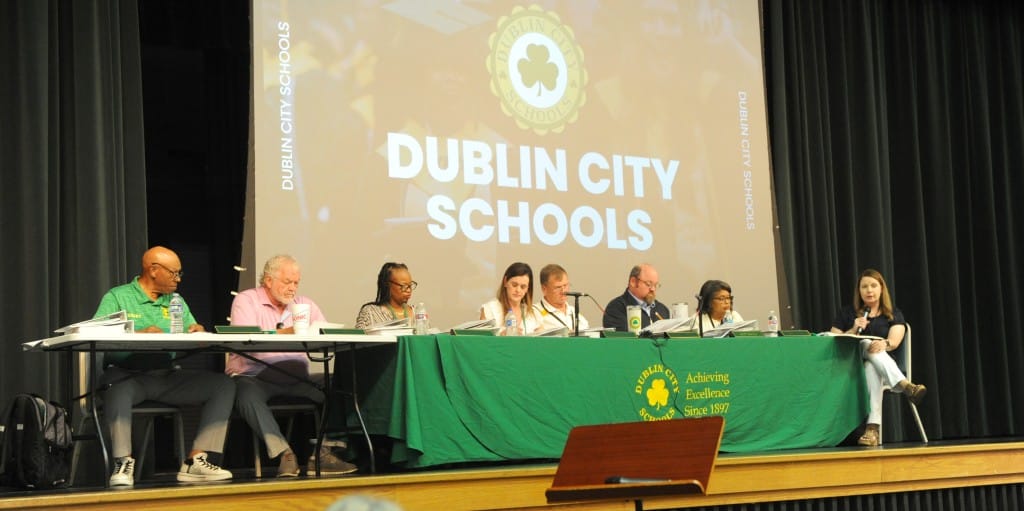
Interim Superintendent Marcee Pool (right) updates the Dublin City Board of Education during a meeting last month/RODNEY MANLEY
The Dublin City Board of Education voted after a marathon closed meeting on Thursday to extend interim Superintendent Marcee Pool’s contract through next June – or until the board hires a superintendent.
Pool, who had been the district’s curriculum director, has served as interim superintendent since last September, when Fred Williams stepped down to take an early retirement after the severity of the school district’s most recent financial troubles was revealed.
“We wanted to provide stability for our students, staff and teachers,” said board Chairwoman Amanda Smith. “She’s knowledgeable about what’s going on, and she’s done a great job. She’s dug us out of a huge hole.”
Board members believed they had filled the position following a nationwide superintendent search conducted by the Georgia School Boards Association.
The board offered the job last month to Marietta City Schools human resources director DeMarcos Holland, naming him the sole finalist from among two dozen candidates. However, the board finally withdrew its offer after several weeks, unwilling to accept Holland’s increased salary demands.
Smith said the board will continue the search for a new superintendent.
Pool – or whoever is superintendent – faces a daunting task in turning around the struggling school system while working with a school board whose own future is in jeopardy.
The board faces a suspension hearing on Wednesday before the state Board of Education, required by law because of the district’s low accreditation rating. The state board will decide whether to recommend to the governor that local board members be suspended and removed from office.
State officials last fall projected Dublin City would end of the current fiscal year with a $13.4 million deficit. The district has significantly cut spending – which included midyear terminations of several dozen teachers and other staffers – but still owes the state about $4 million in overdue payments to the State Health Benefit Plan.
Georgia Department of Education officials contacted the Dublin district last August after learning the system owed $5.6 million to the state health plan after not paying in contributions for the entire fiscal year 2025. The system had not completed an audit since 2021, and after a closer look at the finances, state School Superintendent Richard Woods declared the district on a “path to insolvency.”
A subsequent special examination by the state Department of Audits and Accounts, requested by local lawmakers, confirmed the root causes – overhiring and overpaying employees, wasteful spending and lax oversight – but also identified specific concerns ranging from late tax payments to the IRS, “abnormally” high credit card spending and unwarranted travel and expenditures.
The audit also noted instances of family members traveling on out-of-town leadership retreats at the system’s expense and undocumented payments to a local florist.
The Georgia Bureau of Investigation is investigating at the request of Dublin Circuit District Attorney Harold McLendon.
Williams, who took office in 2015, was promoted from within after working in the Dublin system as teacher, coach and then administrator. At the time, the district was in similarly dire financial straits. He inherited a multi-million dollar deficit and, with the aid of COVID funds, managed to get the system out of the red briefly in 2021.
Despite warnings in 2022 from the state officials, the system continued to rely on pandemic money to fund positions and programs it could not afford.
The board is set to approve a $41.1 million budget for fiscal year 2027, a significant reduction from the approved $47.5 million budget last year, for fiscal year 2027 that would end with a $1.5 million total surplus and general fund balance of $821,314.
However, those surplus balances do not reflect the almost $5.2 million in liabilities owed in unpaid contributions to the State Health Benefit Plan.
The budget shows the board continuing to make monthly payments of almost $300,000 to repay the state plan.
Author

Related Articles
Twiggs County Public Schools ban cell phones in the classroom, in compliance with new GA law
Twiggs County Public Schools banned the use of phones in the classroom in compliance with GA House Bills 340 and 1009, also dubbed the “Distraction-Free Education Act.”
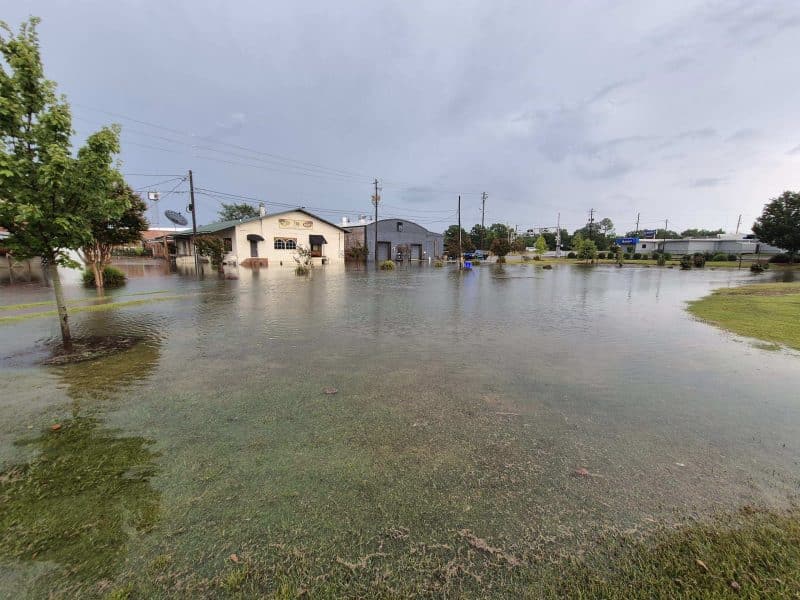
Sunday’s flash flooding believed to be Dublin’s worst in a half-century
City of Dublin officials said last Sunday’s flood, where a lot of rain hit the downtown area in a short amount of time, was something that has not happened in the last 50 to 100 years.

Dublin Recreation Authority wins bid for the 2028 Diamond Youth Baseball World Series. Officials excited about economic impact
The Dublin-Laurens County Recreation Authority won the 2028 bid to host the Diamond Youth Baseball World Series, bringing with it an estimated $2 million economic impact.