
State report: Fiscal mismanagement, ‘culture of excess’ led to Dublin City Schools’ budget crisis
Without Department of Education’s intervention, school system “would no longer exist,” document says.
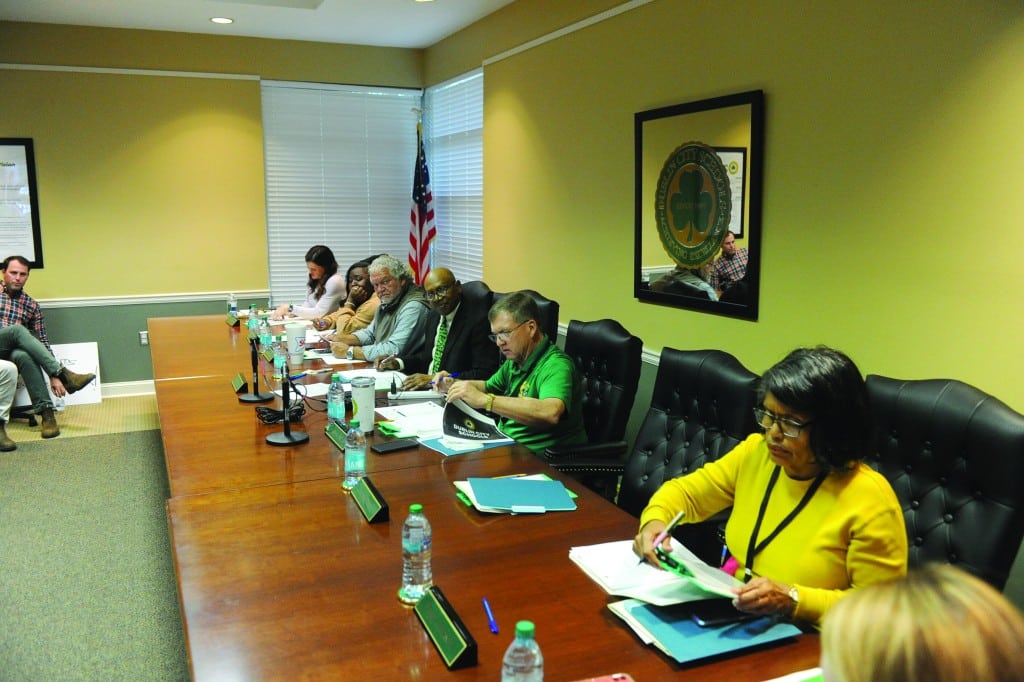
A summary report from the state blames the Dublin City Schools deficit crisis on financial mismanagement and a “culture of excess,” and says the district would not have survived without state intervention.
The report, issued Wednesday by the Georgia Department of Education, also notes that a second advance on state funding – $1.5 million – has been approved for the system to meet payroll and other obligations for the month of October.
“It is apparent – based on the information currently provided by the district, which in most cases is still unaudited – that Dublin City Schools’ financial situation was not caused by enrollment or tax base issues. Instead, our initial findings suggest it was the result of financial mismanagement, lack of fundamental financial knowledge and processes, and a culture of excess related to programs and personnel,” the report states.
The report outlines the state’s “escalated” response since being notified Aug. 11 that the Dublin district had not paid $5.6 million in State Health Benefit Plan contributions and then learning the system faced a $13.4 million deficit by fiscal year’s end. When “it became clear that Dublin City Schools was on a direct path to insolvency and financial crisis,” state education officials established a Financial Improvement Plan, advocated for the advance funding to meet payroll, appointed a special advisor for on-the-ground support and hired temporary consultants to assist with district finances.
“To be clear, these were drastic and unprecedented actions. … It is likely that without these interventions, teachers and staff would have lost their health insurance and gone without pay, and Dublin City as a school system would no longer exist.”
The report goes on to say that the COVID funding “served to mask the district’s underlying financial/budgetary issues” and allowed the district to report positive fund balances for several years. While noting that progress had been made, the report describes the district’s current financial situation as “tenuous.”
“It is critical to note that while Dublin City Schools staff have cooperated with the Georgia Department of Education, the district’s financial situation remains tenuous. Continued QBE advances – which at this time are the district’s only realistic path to current solvency – have equal potential to endanger its stability in the coming fiscal year, when the district will have a temporary gap in QBE because those funds were advanced.
“Additionally, Dublin City Schools’ FY24 and FY25 audits have not yet been completed, and may reveal further fiscal challenges or liabilities beyond those currently identified.”
The detailed report also discussed Dublin City Schools’ history of financial struggles, noting that it reported a deficit each fiscal year from 2011 to 2020. The system had been designated as “high-risk” by the Department of Audits and Accounts, which then removed that designation when the district completed its 2021 audit. Still, the system remained on the state’s radar.
“While Dublin City Schools has experienced periodic financial challenges, these prior issues never approached the scale or severity of the insolvency identified in mid-2025. Nevertheless, GaDOE’s Financial Review team provided monitoring and guidance throughout this period, working within the limited scope of its statutory authority to obtain information, encourage corrective action, and support the district’s efforts toward financial recovery,” the report stated.
“Throughout the years preceding August 2025, GaDOE issued corrective action and deficit elimination letters, reviewed and tracked district submissions, conducted site visits and cross-functional monitoring, and repeatedly followed up to obtain information and ensure progress. Cross-functional monitoring is conducted by GaDOE’s Office of Federal Programs to monitor districts’ use of federal funds.”
The report also notes that state officials were aware but not OK with the school system failing to complete an audit after 2021, and that they often had difficulty in getting requested financial information in a timely manner.
“From Dublin City’s submission of its FY21 audit to the notification by the Georgia Department of Community Health (OCH) in August 2025 that the district had not paid SHBP, the district did not complete its FY22, FY23, FY24, or FY25 audits, although it received numerous reminders and correspondence from GaDOE directing it to do so. While the district reported some requested financial information to GaDOE during this time, the information was often delayed, unaudited and did not reflect the full scope of financial problems the district was experiencing. Additionally, the infusion of funds from the federal Elementary and Secondary School Emergency Relief Fund (ESSER) during the pandemic allowed Dublin City Schools to report a positive fund balance over several years, which served to mask the district’s underlying financial/budgetary issues.
“Following the end of ESSER funding, it appears – based on early analysis of unaudited financial data – that Dublin City Schools did not make the necessary reductions to bring spending back in line with their income. Those decisions, coupled with DCH’s notification of the district’s unpaid SHBP obligations, caused the district’s deficit to balloon quickly and triggered the severe financial crisis outlined in this report.
Although districts are required by law to submit an annual audit, no penalties currently exist for districts that submit a late audit or do not submit an audit to DOAA – a loophole Superintendent Woods has called on the General Assembly to close. Even when Dublin City Schools reported unaudited financial information that began to show a deficit again in 2024, because they were not completing their official audits, they could not be placed on high-risk status by DOAA.”
The school system, which has been criticized by state School Superintendent Richard Woods for a lack of transparency, released the state summary report on its website on Wednesday. School officials also issued a news release announcing the report and thanking the Department of Education for its help in developing a “comprehensive Financial Improvement Plan to restore fiscal stability and rebuild public trust.”
The release listed highlights of the system’s progress to include:
• A deficit reduction plan is in place to help the district reach a balanced budget by FY2027.
• Improved cash flow and payroll management have resulted in verified savings of approximately $4.7 million.
• The district is receiving hands-on support from GaDOE financial consultants and a special advisor who are assisting daily in reviewing and improving financial systems.
• All FY23 audit materials have been submitted, and the district is working with the Department of Audits and Accounts to ensure full transparency.
• The district expects in the next few months to discover more information pertaining to its audits. “We have been told we will have the information from the special examination audits in November. And we have been told we will have the results of the FY23 audits in December.”
Dublin’s deficit crisis led state Superintendent Richard Woods to propose sweeping reforms to provide, among other things, more state oversight over the fiscal responsibilities of local school boards. Woods’ proposals to the General Assembly were included in the report.
“The events in Dublin City Schools have highlighted the limits of Georgia’s current statutory framework for school district fiscal oversight, revealing significant gaps and limitations, and underscoring the need for stronger early-warning supports, clearer structures of accountability, and additional tools for state agencies to intervene,” Wednesday’s report said.
The school system’s former finance director, Chad McDaniel, resigned in late August, though the problems detailed in the report began before he took over in 2024 following the retirement of Christi Thublin. Its former school superintendent, Fred Williams, stepped down last month, taking an early retirement.
For more on this story, see Saturday’s Courier Herald.
Author

Related Articles

Hiding in crawl space does not keep police from finding suspect
Man arrested after a tip led police to his hiding spot.

Arrest made in Vinson Village shooting. City ramps up policing in wake of gun crimes
An 18-year old is in custody in connection to recent shooting near Vincent Village, while local police ramp up efforts to tackle gun violence.

State calls for hearing on suspension of the Dublin City school board
The Georgia Board of Education has announced a hearing to decide the fate of the Dublin City school board.