
WestRock merges with European paper giant
Paper packaging manufacturer WestRock has merged with European counterpart Smurfit Kappa to create global paper concern.
Paper packaging manufacturer WestRock has merged with European counterpart Smurfit Kappa to create global paper concern.
The new company, Smurfit Westrock, debuted on the New York Stock Exchange earlier this month after gaining approval from domestic and international regulators. The company manufactures the paper used to produce bags, boxes and other cardboard containers.
“Combining Smurfit Kappa and WestRock creates a world-leading sustainable packaging player, bringing together a tremendous depth of experience and expertise from both companies,” said CEO Tony Smurfit in a press release. “We believe that this combination has created the ‘go-to’ leader and partner of choice in sustainable packaging. I’m proud to be chosen to lead this great team of people.”
Based in Dublin, Ireland, Smurfit Westrock has more than 100,000 employees in 40 countries around the world, including the former WestRock facility in East Dublin along the Oconee River, where temporary signs bearing the new name have already been posted at the plant’s entrance. The company’s North American headquarters is in Atlanta.
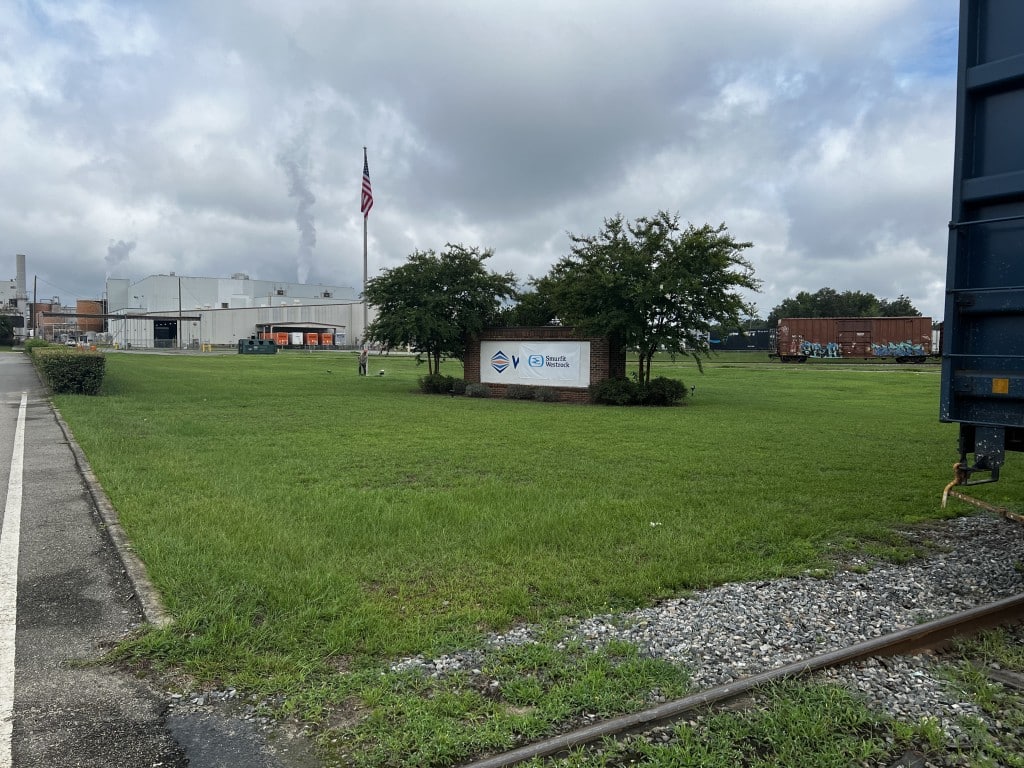
“Day to day the biggest thing we’re going to do is change the name,” said Brian Kinsey, the general manager of the site on Papermill Road. “We’re just a bigger company.”
About 300 workers are employed locally. The staff at the East Dublin plant produce about 600,000 tons of paper annually. The massive rolls are shipped to converter facilities across the country to be turned into boxes and bags.
“We ship to customers as far away as California,” Kinsey said. “Smurfit Westrock also has their own converter facilities, so we also ship to ourselves.”
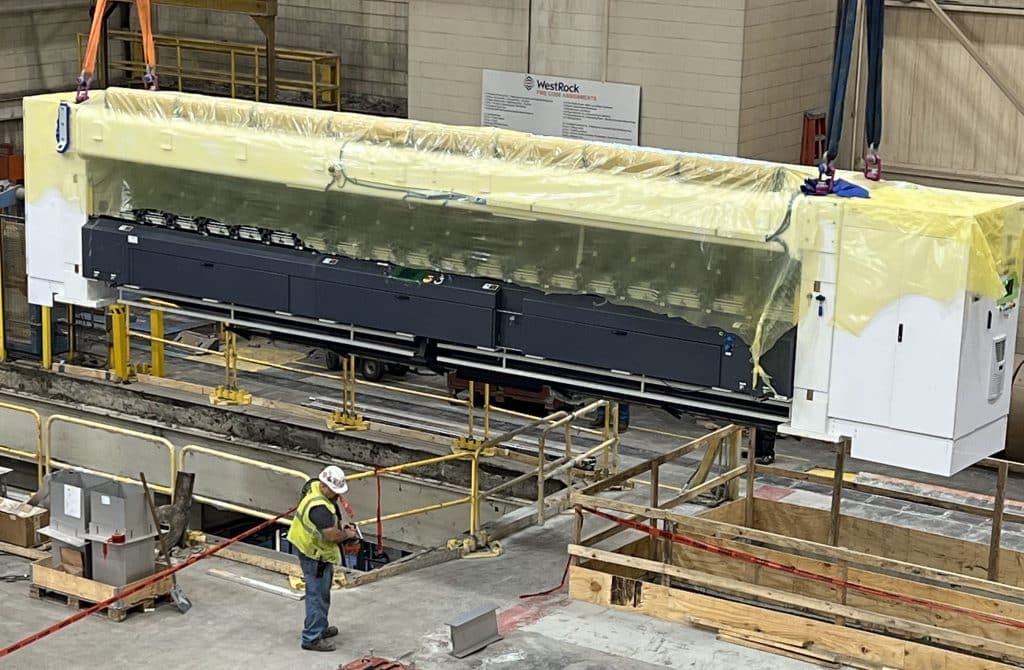
Before the merger the plant invested $30 million in new equipment to improve safety and streamline production. The new winder machine was delivered this summer and activated July 1. It safely cuts finished rolls of paper, which weigh as much as 30 tons, to client specifications. The fully automated process limits human contact reducing the risk of plant accidents and injuries.
Smurfit Westrock worked with the Dublin-Laurens County Development Authority, the Heart of Georgia Altamaha Workforce Board and the Heart of Georgia Altama Regional Commission to secure a $200,000 grant to help offset the cost of training employees on the new equipment.
“The Dublin-Laurens County Development Authority is pleased to be able to parter with Smurfit Westrock and the facility’s local leadership to support this effort and help bring resources to assist this outstanding existing industry,” said Ryan Waldrep, president of the authority. “The recycle paper mill remains a tremendous asset to our industrial base and community and an innovative leader in the paper manufacturing industry.”
Paper manufacturing has a long history in Laurens County. The local mill opened in 1979 as Southeast Paper. It was purchased by WestRock in 2015. The plant not only has an economic impact but has an environmental one as well. As one-time use plastics have fallen out of favor with many consumers, paper, a renewable and easily recyclable resource, is as popular as ever.
“Once upon a time the bag was big and then it wasn’t. Plastic was cheap and it took its place,” Kinsey said. “Sustainability pushed the bag back.”
All of the paper produced in Dublin is made with recycled paper and cardboard, reclaimed at Smurfit Westrock recycling centers or purchased from large grocery story chains. The plant also maintains a water treatment facility. All water taken from the river and streams is cleaned before it is released.
Challenges facing the mill is maintaining its workforce. The average employee age is about 45 years old and worker turnover stands at about 50 percent.
“Over the last five years we’ve really leaned into our local schools. How do we prepare the next generation of workers for manufacturing?” said Tanya Rogers, Smurfit Westrock’s HR manager. “Everything is moving toward automation. The more they know about automation the better we’ll be. We need more and more electrical and automation engineers.”
Rogers said the business worked with local high schools and the technical college to advise on and provide training opportunities.
“We’re in a good community and we appreciate the connections we’ve been able make,” she said. “The demand is there and it will continue to grow.”
Author

Related Articles
Forgotten no more: Sign marks spot of old Royal Chapel School
A green sign was placed on the roadside to highlight the location of a school that for a decade once housed African American children. While the buildings that made up Royal Chapel School have long been removed from this now private property, those who attended are glad to finally be recognized.
Qualifying for county elections to begin next week
Those with aspirations to run for county commissioner or a county school board seat will have their chance next week.
Literacy event shows importance of reading to young kids
Research shows that 80 percent of human brain structure is developed before the age of 3. Local school officials are working to show parents of young children that literacy begins at home.