
Public not allowed to take electronic devices into courtrooms
Electronic devices not allowed to be taken into Laurens County Courtrooms
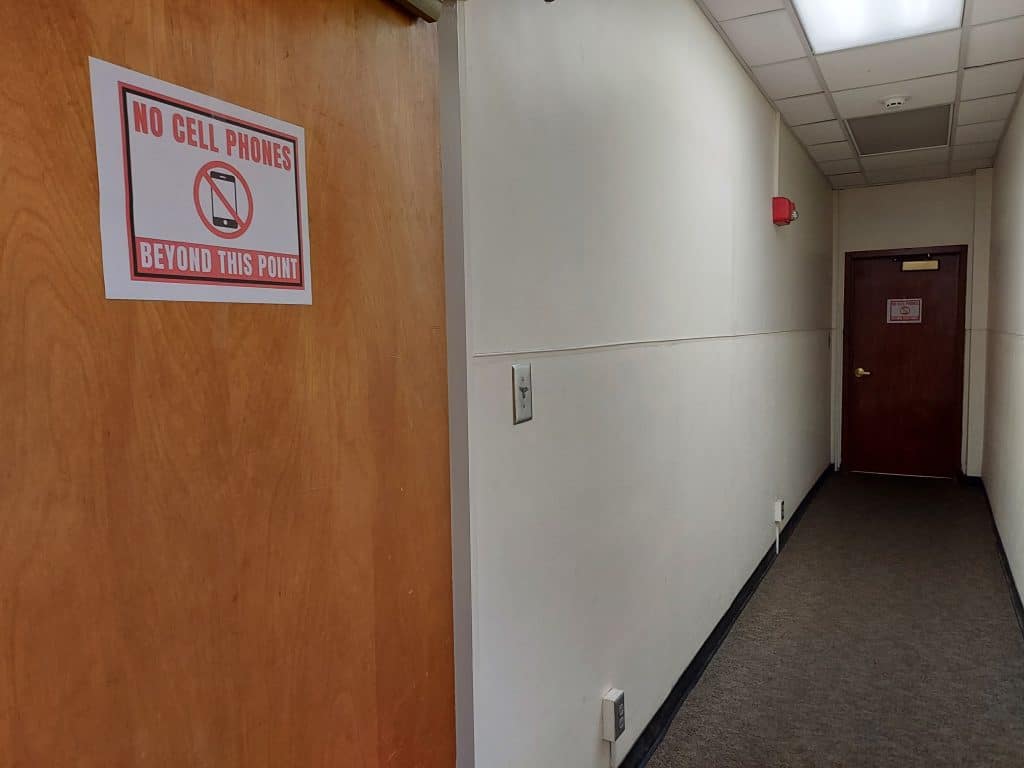
Starting immediately, people attending courtroom proceedings at the Laurens County Courthouse will no longer be allowed to carry their electric devices into the courtroom.
Laurens County sheriff’s Lt. Colby Clements said the ruling went into effect Friday, but since there were no court proceedings, Monday was the first day deputies had to inform people entering the courthouse.
The order was signed by Superior Court Chief Judge Jon Helton, Superior Court Judges Jud Green and Trey Taylor, Probate Court Judge Genola Jackson, Magistrate Court Judge Colby Crabb and Juvenile Court Judge Penny Snipes last week.
“One of the main issues we had was there were not supposed to be any recording devices, photographing or any of that within the courtrooms, and it has been happening consistently,” Clements said. “This is a way to put a stop to it. Basically, it got abused as far as too many people trying to film, cell phones going off and people watching videos in the middle of court. This is going to help with witness tampering, jury tampering and any of that kind of stuff.”
According to the order, “electronic devices” include mobile cellular phone, smartphone, tablet, laptop, smart watch or any device capable of communications, recording, photographing or transmitting data. No cellphones will be allowed in any of the four courtrooms inside the courthouse.
“We will not hold them for people,” Clements said. “The judge specifically put in that the court will not assume any responsibility for lost, stolen or damaged devices. It does say that court security personnel may prohibit entry of electronic devices into the courthouse or courtroom. We are not holding on to them for anybody.”
Those entering the courthouse will go through a security checkpoint, where they will be asked to place the items in their pockets in a container and bags will go through a scan while the person walks through a metal detector.
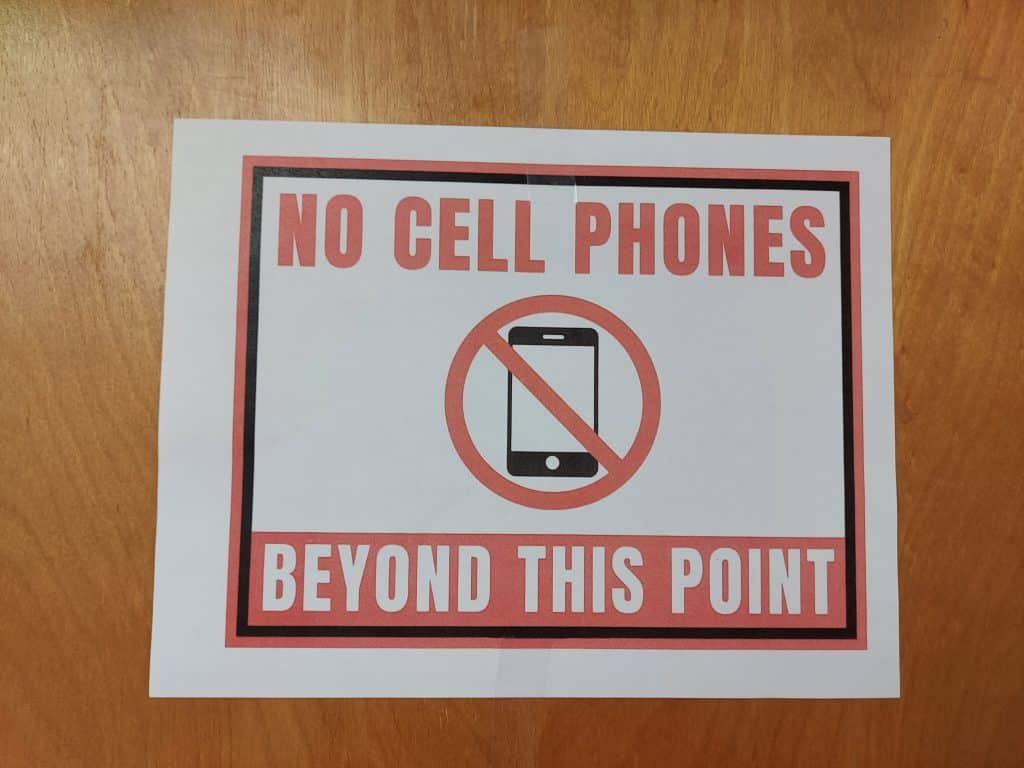
“We will generally ask where they are going,” Clements said. “We will inform them about the signs, which are temporary right now but we will get some permanent signs made.”
If they need to make a phone call for a ride, people can use one of the courthouse phones or ask a deputy. Electronic devices can be used within common areas of the courthouse, except for the following:
– No photographing, audio recording or video recording anywhere in the courthouse without prior authorization of the court.
– No live streaming, broadcasting or transmission of any court-related proceeding is permitted without express court approval.
– All devices must be used in a manner that does not disrupt courthouse operations or interfere with court security.
Security will be authorized to enforce these and may restrict possession or use of devices as necessary.
The following are exempt from the ban on electronic devices in the courtrooms: attorney licensed to practice law, employees of attorneys, law enforcement officers, court personnel and any other individual granted express permission by the court.
In compliance with Uniform Superior Court Rule 22, any self-represented party will have to obtain prior approval from the presiding judge before going into the courtroom with an electronic device. Those allowed to have an electronic device in the courtroom will need to make sure the device is off or placed on silent mode to make sure the proceedings are not disrupted.
Unless they have a specific order from the court, no one will be allowed to photograph, record audio, record video or capture images or sounds within any courtroom. No one will also be allowed to livestream, broadcast or transmit courtroom proceedings. This goes for everyone, including those authorized to have electronic devices in the courtrooms.
The media can request photographing, recording or broadcasting proceedings as governed by applicable Georgia law and court rules. The requests must be submitted in advance to the presiding judge. The court will approve or deny these requests, impose limitations or conditions on coverage and revoke previous granted permission at any time.
Jurors and witnesses will not be able to bring cellphones or other electronic devices into the courtrooms unless authorized by the court. Failure to comply may result in confiscation of the device, removal from jury service or contempt proceedings.
For those who try to sneak a cell phone or electronic device inside one of the four courtrooms, they may face the following results:
– Denial of entry to the courtroom or courthouse
– Removal from the courtroom
– Confiscation of the device for the duration of proceedings
– Revocation of permission to possess a device
– Contempt proceedings or other sanctions as deemed appropriate.
“Judge Green made an announcement in his court that the phone would be confiscated and they would be looking at contempt,” Clements said. “The order also gives us the authority to kick people out of the courtroom and courthouse.”
Clements also wanted people to remember that they are not allowed to bring knives or guns inside the courthouse. Those wearing steel-toe boots will be asked to remove them so they can be checked.
“We want to make sure there are no knives or guns hidden in the boots,” he said. “We get people to take them off and run (the boots) through the metal detector. They can wear them. It used to be we allowed them in, but it came to our attention that people may try to sneak a gun or knife in these boots. The same thing with metal tumblers. We will not allow them to come through unless they are an employee.”
Author

Related Articles

Sheriff fires deputy over domestic violence charge
Laurens County deputy fired following investigation into his domestic violence arrest.

Duluth man arrested for high speed chase through town
A Duluth man told authorities he wrecked on purpose after leading them on a two-county chase last Saturday.

Remembering Dinkheller: Fallen officer’s father sees his son’s video 24/7
Deputy Kyle Dinkheller’s father remembers his son’s sacrifice.