
The art of long-snapping: Bleckley County prospects Lassiter, Register excel at football’s most overlooked job
Inside the “best long-snapper room in America” at Bleckley County High School, and how the Royals’ sought-after special teamers Zayden Lassiter and Cody Register make the most underappreciated discipline in football look automatic.
It may be up for debate how Bleckley County stacks up against others in Middle Georgia at different positions this season, but there’s little question heading into the fall that the Royals will be the deepest team around at one: long snapper.
They already had one of the area’s best sending the ball back for their special teams units in rising senior Zayden Lassiter, who recently committed to do the same for Georgia Tech.
This past offseason, Bleckley inadvertently added a second nationally rated prospect at the position when Trinity’s Cody Register transferred to Cochran, though the fact was as a bit of a surprise for head coach (and Zayden’s dad) Von Lassiter, who didn’t realize that the talented defensive lineman’s versatility in the third phase extended beyond just punting and kicking.
“The first day he was here, Georgia texted me and said you’ve got the best long snapper room in America,” Coach Lassiter said. “I didn’t know he long snaps, and we talked about it.”
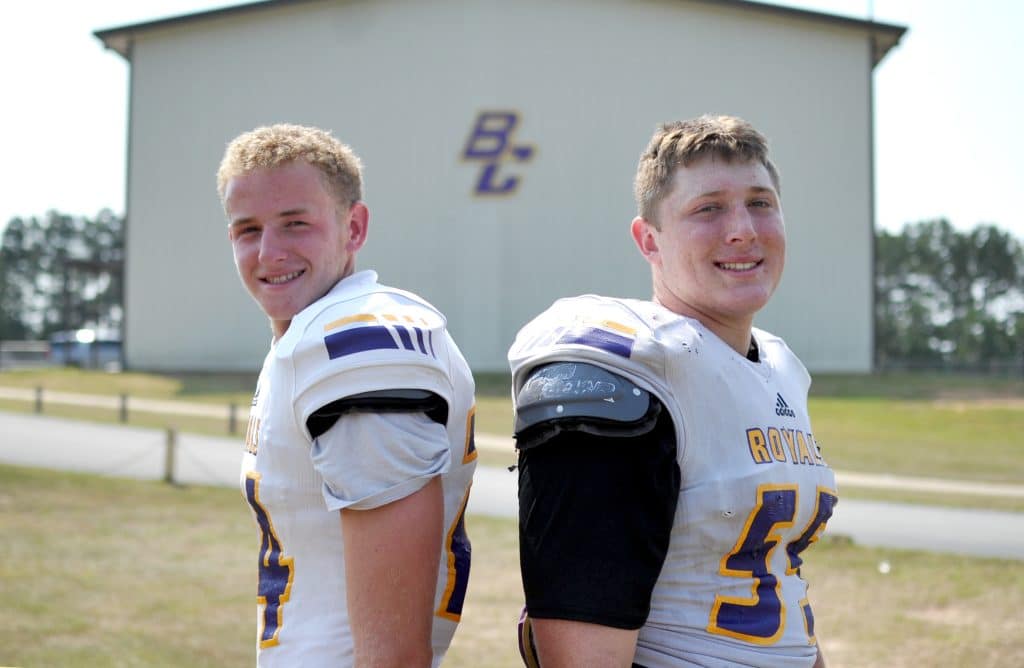
Their job is easily the most anonymous in football, but these two, just a class year apart, have become some of the country’s most well-known as the cream of the crop in this unique niche of the kicking game.
Both have received high marks from evaluators at the nationwide camps and showcase events, sponsored by various special teams-dedicated scouting services, they’ve attended.
Rubio Long Snapping, the most widely respected outlet, tabs Zayden as a five-star prospect, and ranks him No. 3 overall among snappers in the class of 2027.
The former quarterback and tight end now focuses pretty much exclusively on the craft, which has gained him not only the interest of the Power 4, but prestigious recognition including a recent Navy All America Game invite as well.
“It’s great,” Zayden said. “I’ve worked since ninth grade to get (the opportunity), been to camps, college camps, put in all the work to get it, and it’s finally come out to be something I wanted.”
When all is made official, he’ll also be a second in his family to sign D1 at the position, following his oldest brother Zach, who snapped at Mercer, and later Western Kentucky.
Rubio doesn’t compile more than an early top 20 for any class besides the current one, but also has Cody – with a two-star endorsement – on its radar for the 2028 wave.
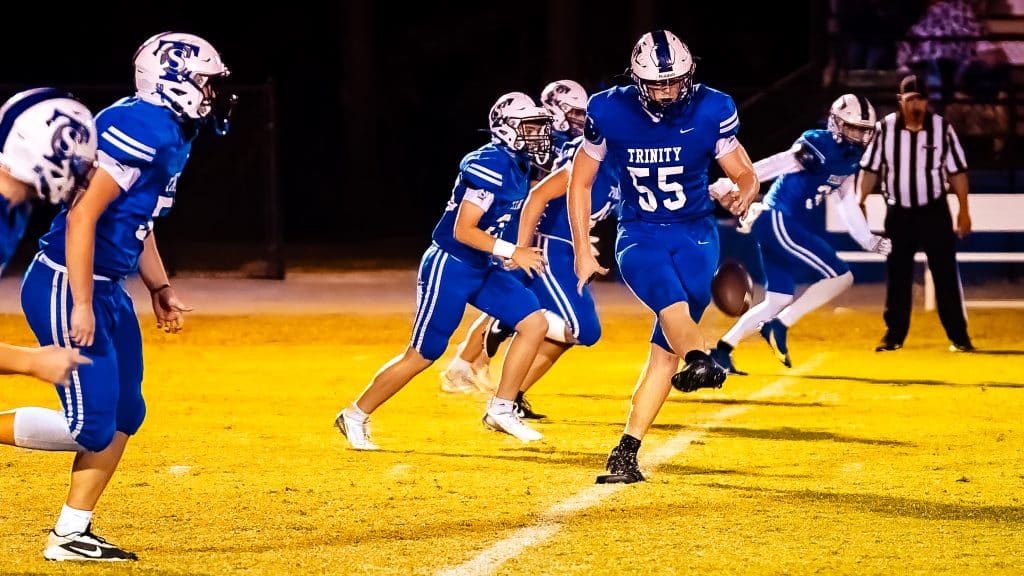
It was a role he handled for the Crusaders as both a freshman and sophomore, working in tandem with his older brother Wade, their standout kicker and punter who is now doing the latter as a freshman at the University of Georgia. That, on top of leading the Trinity defense in tackles (101) and tackles for loss (16).
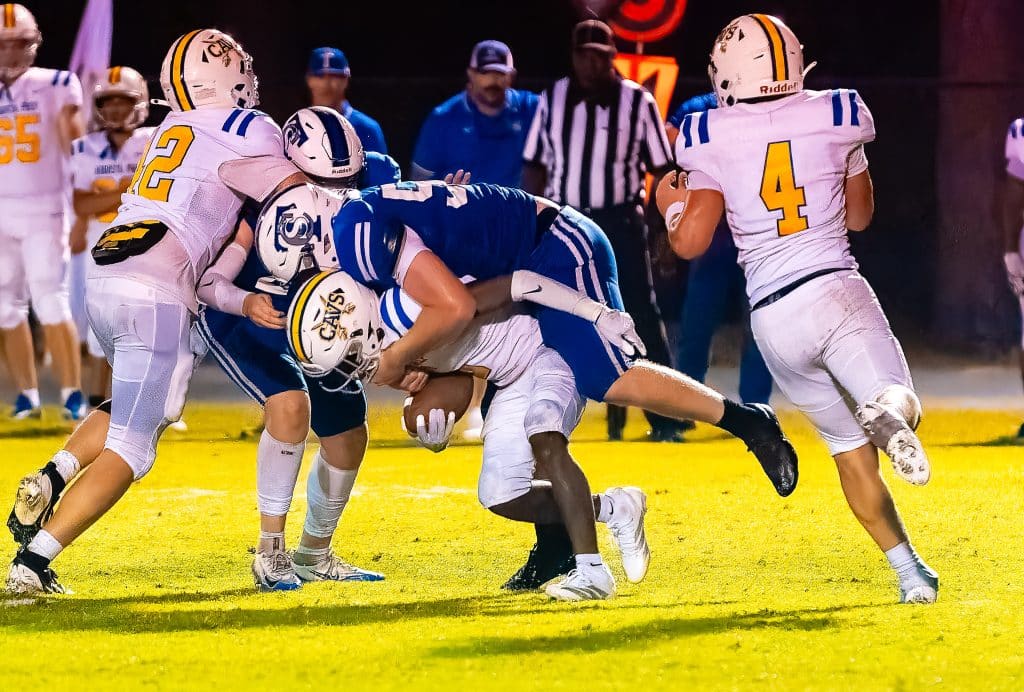
In addition to adding some intrigue as an immediate starter in the middle of their defensive line, Cody will give the Royals an overabundance of depth in the snapping role, though his talents this year will be in much greater demand on the receiving end of them in two other skills with which he’s impressed the national scouts as much or more.
“He’s a really good punter and a really good kicker as well,” Coach Lassiter said. “This year, we’ll probably use him on the kicking side, and next year, more on the long-snapper. It just depends on who we can develop. But we’re blessed to have that, and he’s a really good defensive lineman.”
A special talent…
There’s a lot more than meets the eye – if you’re even watching as the specialists trot out to line up for a kick or punt – to the craft of deep snapping, which is easily football’s most underappreciated line of work.
The speed, accuracy and grace with which the best can do it is exquisite.
“It’s an art, and it’s a skill,” said Dublin head coach Roger Holmes.
And a good bit too often, that tremendous aptitude goes largely unnoticed for the many flashier feats of athleticism displayed in the other two phases of a game, with the routine of special teams largely an afterthought for those in the stands.
It’s said that the name or number of the long snapper is never called to anyone’s attention unless something goes horribly wrong, though the infrequency that something does is a credit to these unsung key players, and how steadily they go about getting it done every night.
Few on the field carry the weight of the game on their shoulders so quietly, or have their job down to as much of a science.
“I think it’s awesome, just because a lot of people overlook the long-snapping part, but it’s such an important part of making field goals and punting,” Cody said. “It’s just a fourth down play, getting those points or being able to get the ball away.”
For both these young snappers, a lot of time and work goes in weekly, if not daily, to perfecting the discipline in and out of season.
Each have certain routines they follow when practicing on their own time.
For Zayden, reeling off snaps at home, a lot like shooting free throws on a hoop in the driveway, is just a matter of repetition.
“I have a target that I snap on a lot,” he said. “It has three holes, and I always set a number I want to get, and I’ve got to get it before I finish (each day).”
Cody focuses as much on his mind as his mechanics, using mnemonic devices to help establish a link between thought and action in the routine.
“What helped me the most was remembering things in my head, like I would remember like three words I’d say while I’m snapping, to help me focus on those things to replicate,” Cody said. “I do have a net, and I’ll snap to Wade a lot when he’s home.”
How it’s done…
There are as many ways to snap a football as there are to skin a cat.
The book on how to do it can teach you some general principles, but in the end, learning how is finding a method that feels natural to you.
Just as no two baseball swings or pitching deliveries are ever the same, so too are the myriad different quirks and variations in mechanics you’ll see from player to player.
“It’s a lot of little things with snapping,” Cody said. “It’s little movements, and kind of being able to replicate the same thing. That’s all it is. You learn your snap, because I think everyone snaps differently. Everyone learns from different people and everyone’s body’s different.”
Having ideal physical tools isn’t a requirement, but they help an awful lot with the physics associated with launching the ball from an inverted position to a certain spot a fixed distance away.
Long levers are important for generating that power, but also for the football you have to play at the position, as well.
“College coaches are going to look at your frame, what size you are, because long-snappers have to send it back there, but they also have to block,” Coach Lassiter said. “They have to get down the field and cover. You’ve got to be big enough to be able to handle the blocking side of it.”
In the high school ranks, you’ll see a pretty unique range of positions and player profiles represented in the post.
Offensive linemen are generally natural candidates, and some teams even go so far as calling on their regular center for the double duty of handling snaps of both the long and shorter variety, those from shotgun and under center are an entirely different animal.
But with any given team, you’re just as likely to see anyone else from a reserve linebacker to its starting quarterback performing the task. Some might be undersized misfits off the end of the bench; others will be the most impressively built guys you can pick off the field. Many are true specialists; more do the job on the side of bigger commitments in the other two phases.
What sets the elite ones apart?
At the end of the day, the best of the best can execute a clean one consistently, and also make it snappy.
“Your times are everything,” Coach Lassiter said. “How fast you can get the ball from your hand to the punter is what’s most important.”
However there are plenty of nuances that elite snappers have down just as well, like being able to manipulate the spin of the ball in different ways.
“In college, on PATs, they wanted two and a half rotations, or something like that,” said West Laurens head coach Kip Burdette. “I think on punt snaps, for a high school guy, we’re working on trajectory and all that stuff, make sure it hits the punter in the belt buckle.”
The higher you go, the more and more coaches and kickers take their snaps to order.
“Some folks are so skilled at it, they can get the laces where they want them,” said Trinity head coach Bruce Lane. “I’ve had guys that could do that, and Cody was pretty good at that… But I don’t know how they did it.”
Further inquiry on that point doesn’t clear up a lot of the mystery, since the ability is something that snappers kind of have to learn how to do on their own as practice makes perfect.
But there are some useful tricks like rotating the ball to a certain place beforehand so that it starts in the same position each time.
“Most of them go laces on the bottom,” Burdette said. “I guess it’s just like throwing the football, you want to pronate it.”
“On punts, I can’t do that yet, but field goals, either I have to move the ball to spin it a little bit so it comes to the right spot, or you get like Zayden, he goes eight yards out instead of seven, so it’s on the laces when he snaps through,” Cody said. “It’s just, I think, a lot of practice perfecting that.”
In high school, you often take what you can get. But in college and the pros, those details definitely matter enough to make a noticeable difference.
“For the punter, it’s not as big a deal, because he has time to adjust the ball, or now with some of the kicking they’re doing, they’re dropping it straight down and trying to hang it up there instead of the old coffin corners that we did,” Lane said. “A lot of that is on the holder being able to spin the ball, because just speaking form personal experience, you never want to kick laces. It becomes a real mental thing for them.”
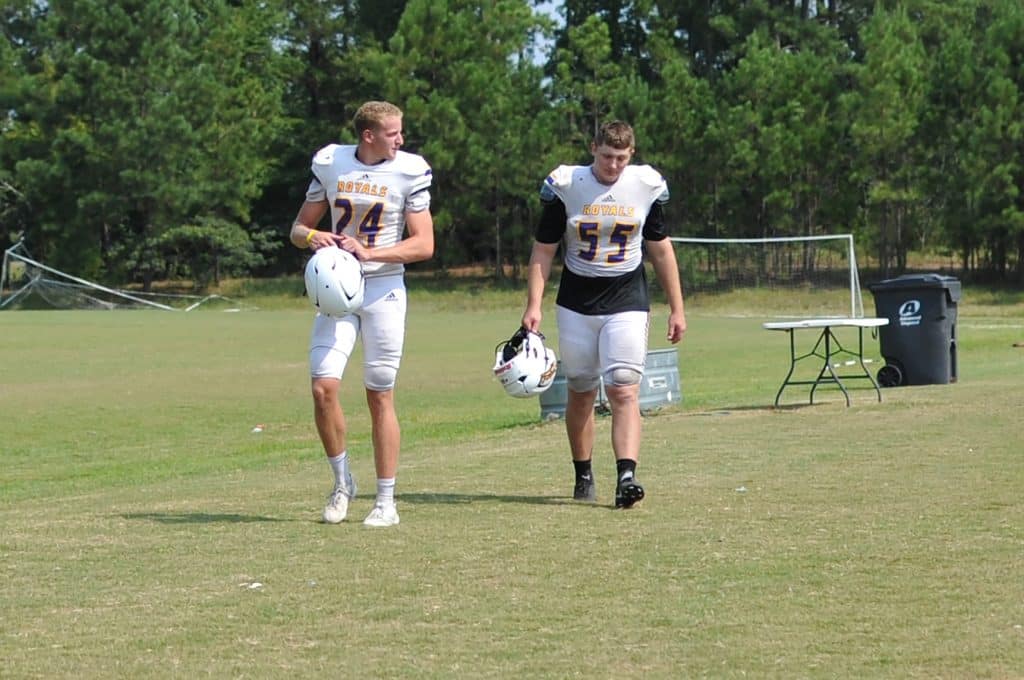
Family snap-shots…
Some aspect of the kicking game runs in the family tree of both players who have relatives that were accomplished special teamers in years past.
Long-snapping is a particular gift for the Lassiter clan, in which Zayden is the youngest, but also the tallest of Von and wife Kelli’s three sons.
“Zayden’s been blessed by God with a long frame,” his dad said. “He’s 6-3, 200 pounds, and he can run. He’s been really blessed with that. That’s kind of something that’s been really good for our family.”
Cody holds in common some above-average length, with an 80-inch wingspan that helps create plenty of leverage, plus the explosive kicking ability – in an added bonus – that’s right along the lines of his older brother’s.
But at 6-3.5, 275, he has more of a lineman’s build, and some easy potential to reach the next level as a defender if special teams doesn’t work out.
Cody began snapping as a freshman in high school, and did it for the Crusaders for the majority of his two seasons until being called upon to take over the punting and kicking jobs late last year when Wade went down with an injury.
For him, interest in learning to do it came simply out of tagging along with Wade as he worked out punting.
“My brother needed a long-snapper,” Cody said. “I worked with him for awhile, just learning how to snap. That’s how it got started.”
He picked up some finer points of the craft from the online tutorials and virtual coaching of a program called Special Teams U that his dad recommended.
“It comes down to perfecting the drills, and then your snapping will get better off of how well you can keep doing the same things off the drills,” Cody said.
For Zayden, the art of long-snapping was something handed down through a couple layers of family, starting with his dad.
“A good friend of mine taught me how when I was in high school,” Coach Lassiter said. “I’m the only one that really didn’t play in college doing it.”
Zach, his oldest, first picked it up as a freshman, when his dad was still the head coach at Houston County.
“He tore his ACL, and was kind of down in the dumps a little bit, and we got outside and I taught him how to long snap during that time,” Coach Lassiter said. “That’s kind of where it started, and you could tell immediately he was good.”
A couple years down the road, he’d return to take over the helm at his alma mater, with Zach as Bleckley’s starter at quarterback, and snapper, those first two seasons back, in 2017 and 18.
He’d earn an offer from Mercer to continue the latter at the next level, and did so for three years with the Bears before transferring to complete his career with WKU.
“He got better and kept working at it, and started every game in college at the long snapper position at both universities,” Coach Lassiter said. “He bred that into his brother a little bit.”
Zayden had also been a QB growing up, but learned the ropes from Zach there in the backyard, starting in about seventh grade.
“I kind of piggy-backed off of him,” he said.
The two – separated in age by a middle brother, Zane, who graduated BC a year or two ago – are about eight years apart. But the overlap in their careers, with Zach still playing while Zayden was in middle school, allowing the two to work with each other somewhat regularly.
The older, at one point, could give his younger brother some pointers.
“… and then I got better than him, so I kind of give him a little bit sometimes,” Zayden said with a laugh. “But he’s done with football now. He works in Macon, but he comes and helps me sometimes, just whenever he can.”
Odd jobs…
The pathway to an opportunity to snap at the two respective next levels couldn’t be more different.
In college, where rosters are larger and teams likely to carry more than one, there are generally higher odds of getting a chance, though only recently have scholarship limits expanded enough to allow schools to make a practice of offering football-related financial aid to prospects at the position.
For much of history, snapping was a coveted walk-on arrangement in most places, where roster spots were just as difficult to earn as any other.
But if you assume that the jobs in the pros are just as much reserved for the very best of the best, you’d actually be mistaken.
In the NFL and other leagues, it’s less about affording a decent snapper as it is justifying the use of one out of only 53 precious roster spots on a player who does that, and nothing else.
So like many special teams roles, besides the most specialized ones in kicking and punting, it’s usually something that fits into the role of certain utility players who have a good many things to offer.
As a player at any regular position, ability to snap can drastically increase your value, and chances of making the cut, when coaches are trying to decide between which of several guys they like about as much to keep on.
Holmes has two great stories about former players or teammates who made it big going either of the two routes, but were some of the last for which you’d expect long-snapping to be a ticket to big-time football glory.
Adam Miles, whom he coached at Tennessee’s Beech High School shortly before the move to Dublin in the early 2000s, was a baseball star who also played linebacker and guard for his defense… and snapped, though he never thought much of it as a useful skill beyond Friday nights.
But when some big-time dreams on the diamond didn’t pan out, that wound up being what kept his athletic career going.
The summer after graduation, Holmes took an hour or so one afternoon to shoot some video as Miles fired off a few snaps, then mailed the tape (yes, an old-school VHS) to about 25 schools.
Only one got back in touch. But that one was Phil Fulmer’s Tennessee, whose staff – impressed with his pop times averaging between 1.1-1.2 seconds that beat those of anyone they had on the roster – extended an offer to walk on.
“He was good at it,” Holmes said.
Miles went on to letter in four seasons with the Vols, debuting at snapper midway through his freshman year of 2002 in a home game against Miami. And he held down the job from then on.
A couple of Holmes’ former teammates back at Middle Tennessee turned out to be similar diamonds in the rough, though neither even picked up the trade until both had exhausted their college eligibility.
Each, after discovering the hidden talent, rode it to opportunities in the NFL, Bill Cherry over about two seasons as a backup offensive lineman with the Packers and Dave Little in eight with the Eagles, and three other teams, as a third-string tight end.
Like any gig, having the goods as a long-snapper is a prerequisite to get hired, though there’s something a little different about the line of work that seems to make landing a spot to play more fortuitous than most. On top of being good, you have to be a little lucky, know the right people, be in the right place at the right time and also nail the job interview.
Just as much as any other position, snapper is an investment that college programs don’t take lightly, with consideration of grades, character and fit given as much weight as a player’s ability.
“It’s not just snapping,” Zayden said. “You’ve gotta be off the field with coaches, and you’ve gotta be able to talk to them… You’ve got to show what you are as a man and go on the field and show what you are as a player too. It’s both things.”
(Sn)aptitude test…
Everyone has certain specific criteria for evaluating a snapper, based on what they value on special teams.
But is there a secret to identifying talent at the position? Or recognizing the type of aptitude in a player who wouldn’t otherwise discover it?
“I got told many years ago that good high school catchers make good long snappers, from a hall of fame coach,” said Holmes, who was actually a high school baseball head coach before he became a football one.
Calvin Short was the Tennessee high school legend who offered that nugget in a passing conversation, once upon a time. In the years since, the more Holmes has thought it over, the more it makes perfect sense how the compact mechanics of a quick release behind the plate would translate to what, on the surface, seems like the opposite type of motion.
Good backstops, Short noted, usually throw from around their ear. And come to think of it, a snapper, though inverted in his position, starts the process from right around the same place.
“With a catcher, if he’s winding up (on the throw down), everybody’s probably safe,” Holmes said.
It’s also why long-snappers tend to warm up by playing catch, but tossing the football overhead with two hands, like a soccer ball.
You probably can’t find a position on the field where perfection is at such a premium, and the most simple mistakes can become so catastrophic.
Anytime you hear “Oh, snap!” or a related interjection uttered at the start of a special teams down, it’s usually not a good thing.
The few yards of extra distance the ball has to cover widens the margin for mishap on punts, which are as critical as kickoffs in swinging field position, for or against.
“It throws the whole timing off, and then obviously, on a punt it can be an adventure if the ball sails over your head,” Lane said. “If it’s a low snap, next thing you know the punter’s down to one knee, and the ball’s dead there.”
Though field goal situations are a little less likely to spiral out of control, an untimely glitch can still lead to a missed layup, and cost you points.
“People don’t understand, especially in placekicking, that it’s three parts,” Lane said. “It’s kind of a three-pronged model in that the holder, the kicker and the snapper all have to be very consistent. It’s something we have worked on quite a bit, and we continue to work on every day, because you’re going to win one or two games, or lose one or two games a year based on special teams.”
On field goals, the job of the snapper is pretty simple: Get it back there cleanly, stand up and watch, and head back to the sideline. But on punts, he’s also pretty instrumental in coverage, and oftentimes, the first man on the scene to either make a tackle, bird dog the returner as he attempts a fair catch or down the ball after it hits.
“As soon as the ball’s snapped, you’ve gotta get your head up and run down the field,” Zayden said. “There’s going to be a defender right there in front of you, you’ve got to dodge him, and you want to work him to the outside of the field, so you’ve gotta come around him and if you can get the tackle, get the tackle, and if not you’re gonna have players behind getting him for you.”
In the bizarre situations you get on special teams, there’s always a realistic possibility that a miscue could spiral into a momentum- or scoreboard-swinging play. And that’s because, though you’ll rarely have your “best” 11 on the field, you can always guarantee that the other team’s one top athlete will be back returning.
“In all my years of coaching, there are two times I get nervous: When we punt and when we kick off,” Holmes said. “A bad snap or a poor punt protection can change a game quicker than anything.”
Those high stakes come with the territory for snappers at all levels who share a little in common with NFL kickers. In the case of both, one single breakdown can cost you your job, so you better have it right.
“You’ve just gotta stay consistent,” Zayden said. “If you do a bad snap in a game, you’re done. You’ve gotta keep doing what you do, and get some coaching when you need it and just go from there.”
A team with all the tools…
Aside from some work to stay sharp, long-snapping is likely something Cody will set aside until at least next year as he focuses on juggling a lot of stuff between starting at nose tackle, punting and kicking off.
The right to handle field goals and extra points were also an open competition he was involved in this summer, though going by indications of Bleckley’s early scrimmage with Hawkinsville, sophomore Dylan Lamb will be taking care of those for the foreseeable future.
The chance to get back over the ball may come in 2027, but it may not, if his other special teams talents prove too important to spare.
But the junior is definitely in an enviable position as a hot name on plenty of recruiting radar screens that will probably light up even more down the stretch of the Royals’ promising season.
“I’m just looking forward to going against some different competition and being able to show what I’ve got,” Cody said.
For Zayden, who’s excited about the future at Tech, this senior year will be about the drive shared with his teammates to try to go out on a high note, and maybe even on top.
What plays out over 10 games-plus remains to be seen, but from a top-notch quarterback leading the offense to a transfer addition to the D-line, Bleckley seems to have all the means to play some elite football.
“Our line could be pretty small sometimes, but they show up every time when we need it. Our receivers, they get better every single day, and they’re going to be some of the best in the country,” Zayden said. “There’s probably some weak spots that I’ve missed, but from where I sit, we’re going to be pretty good.”
Author

Related Articles
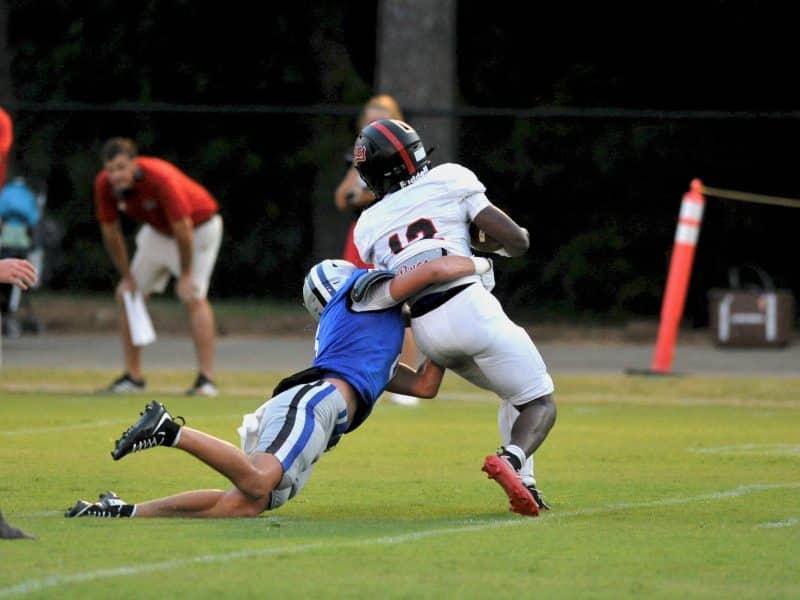
Young Trinity team shows bright spots, but can’t solve Briarwood speed in season opener
There was a lot to like about the Crusaders’ scrappy defense and physical ground attack in Friday’s debut. But they would need a little more speed to hang with a top-rated Briarwood squad that separated itself with big plays in the open field.
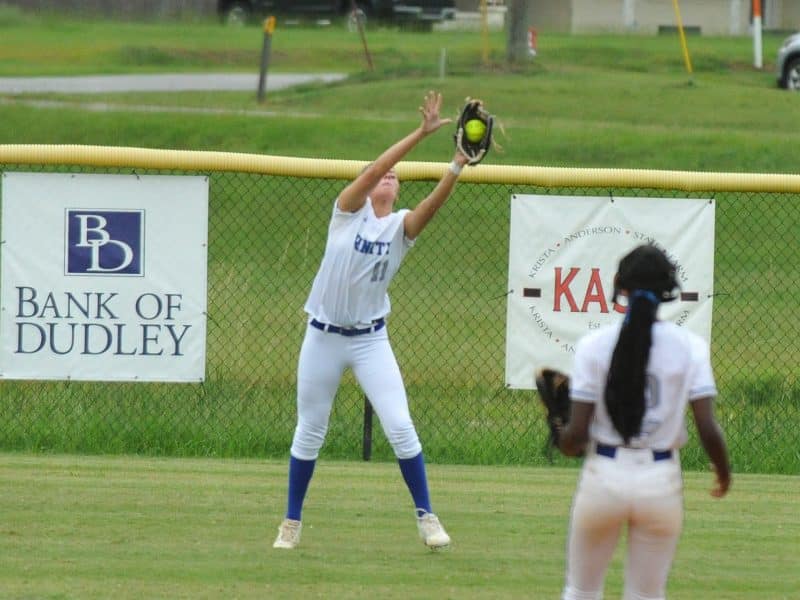
Pitching a puzzle, but young Trinity softball team has hitting, defense to compete
The Crusaders got some clutch hits, and key outs in the field, but couldn’t overcome walks in two big innings for Robert Toombs in their long-delayed season opener Thursday.
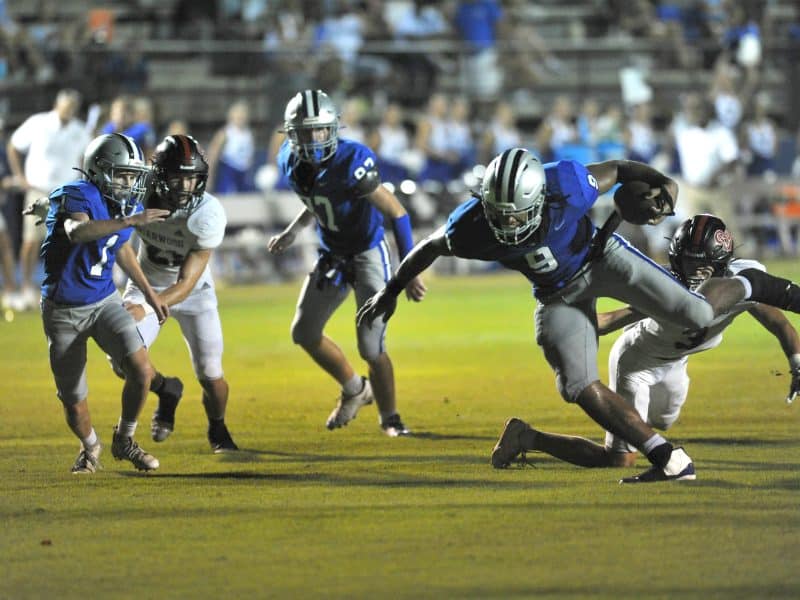
FRIDAY NIGHT SCOREBOARD: Trinity, Brentwood fall in openers
Opening night got of to a hopeful start, but turned long after about a quarter for the Crusaders and Eagles in their regular-season debuts Friday night.