
Dublin’s alternative school move draws criticism, calls to rescind vote
School wants to open new magnet school on alternative school campus.

Dublin resident Jerry Davis addresses members of the Dublin City Board of Education during the board’s meeting Monday night in the Dublin High auditorium. Davis said the Dublin school system is no longer the affluent district it once was, and he blamed programs such as the Irish Gifted Academy and the proposed magnet school for part district’s financial troubles. “This is the school system we have. That’s what we have to work with”/RODNEY MANLEY
Concerned residents joined the Dublin City Board of Education’s three black members Monday night in calling for the board to rescind its controversial vote to move the district’s alternative students from Moore Street to make way for a new magnet school.
The magnet school eventually would be a feeder school for Dublin High’s international baccalaureate program, but critics see it as a means of preserving the Irish Gifted Academy, a hot button even before the district’s most recent financial crisis. The IGA, which serves grades K-8, is widely perceived as a means of recruiting white students to the district, which is about 90 percent black.
The school board’s three black members say they were blindsided, having learned of the proposal at their April 27 meeting before it passed 4-3, despite their pleas to delay the vote.
Board member Kenny Walters said the board violated its own protocol of “no surprises,” as well its code of ethics requiring that board members respect each other.
“I know they violated that,” Walters said of the four who voted “yes.”
“How are you supposed vote on something you just heard about five minutes before? We say we love all the children. That was just not a good way of showing it.”
An in-house summary of the IB magnet school proposal, presented at the April meeting, confirmed a number of long-held suspicions about the gifted academy. Only a small percentage of the program’s students have tested as “gifted,” and the academy’s structure was described as so confusing that the cash-strapped district cannot say for sure how much it costs to operate.
Because the gifted academy is a program, and not a school, it is not fully funded by the state, and even the school board now admits that IGA siphons funds from other schools in the district.
However, board member James Lanier noted the magnet school would qualify for additional state funding for a principal and other positions that currently are out-of-pocket costs for the district, while not taking funding from other schools.
“It ends that process,” he said. “Each school will have to stand on its own.”
Proponents say the plan makes sense logistically, as well as financially. Moore Street School has an enrollment of about 70 students, while the gifted academy has 300 students and is housed on the high school campus.
Board member JoAnna Glover suggested placing gifted students in regular classrooms and leaving Moore Street as the alternative school.
“Why should we uproot these kids from where they are?” Glover asked.
Member Peggy Johnson said the board deserved more information on costs and savings from the proposed magnet school before a vote was called. She also took offense to some saying out-of-district students brought in by the Irish Gifted Academy “saved the school system” during its earlier financial troubles.
“How about the students who stayed? The students that remained saved the school system,” Johnson said.
Community members have organized their opposition into an effort resident Peter Lipski called “Dublin United.”
“What you did was wrong. … We’re uniting against the four of you that voted yes,” Lipski said to Lanier, chairwoman Amanda Smith and board members John Bell and Jeff Davis.
“The three that voted no, we’re your fourth vote out here,” Lipski said, turning toward the crowd of about three dozen people in the Dublin High auditorium. “We’re standing behind you. We’re not going anywhere.”
Former board member Regina McRae, who lost a bid for re-election last fall, was among the residents who asked that the Moore Street School decision be reconsidered. She requested that any “specific written recommendations” from the state on deficit reductions, along attached cost savings, be made public. The Moore Street move and magnet school were listed on the April 27 agenda as state recommendations.
“How can you ensure that the other schools will not suffer as a result of the district creating a new school? At what point do you focus on the serious concerns at other schools?” McRae asked.
“There is a feeling in the community that the board is simply managing the demise of the school system.”
Author

Related Articles

Fallen officer’s father waiting for justice
Dylan Harrison’s father awaits trial and justice for his son, who was shot and killed in the line of duty.

Sheriff fires deputy over domestic violence charge
Laurens County deputy fired following investigation into his domestic violence arrest.
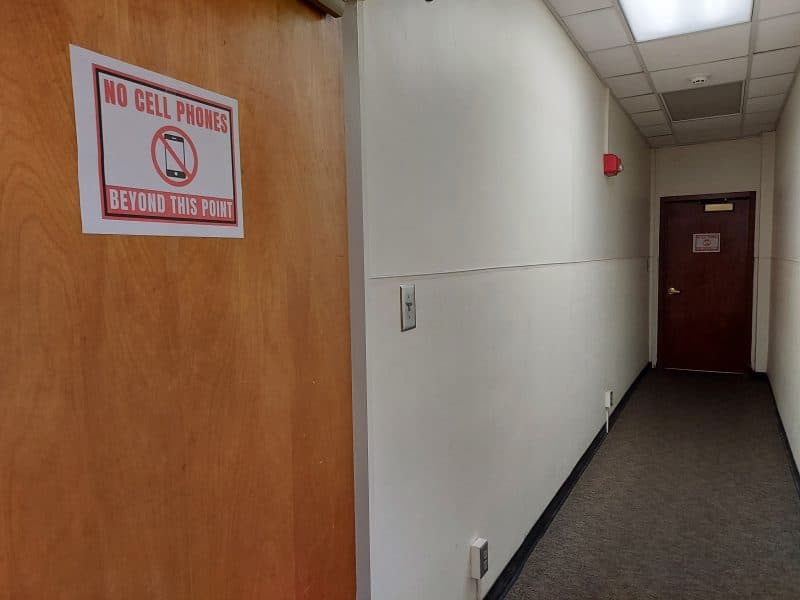
Public not allowed to take electronic devices into courtrooms
Electronic devices not allowed to be taken into Laurens County Courtrooms