
Inside Kip Burdette’s playbook for keeping family, football, marathon training in mix of balanced attack
While helping his players get in better football shape this spring and summer, the West Laurens head coach has been hard at work with some offseason training of his own.
Editor’s note: This is the first in a multi-part summer series highlighting the off-field work, hobbies and interests of local high school coaches.
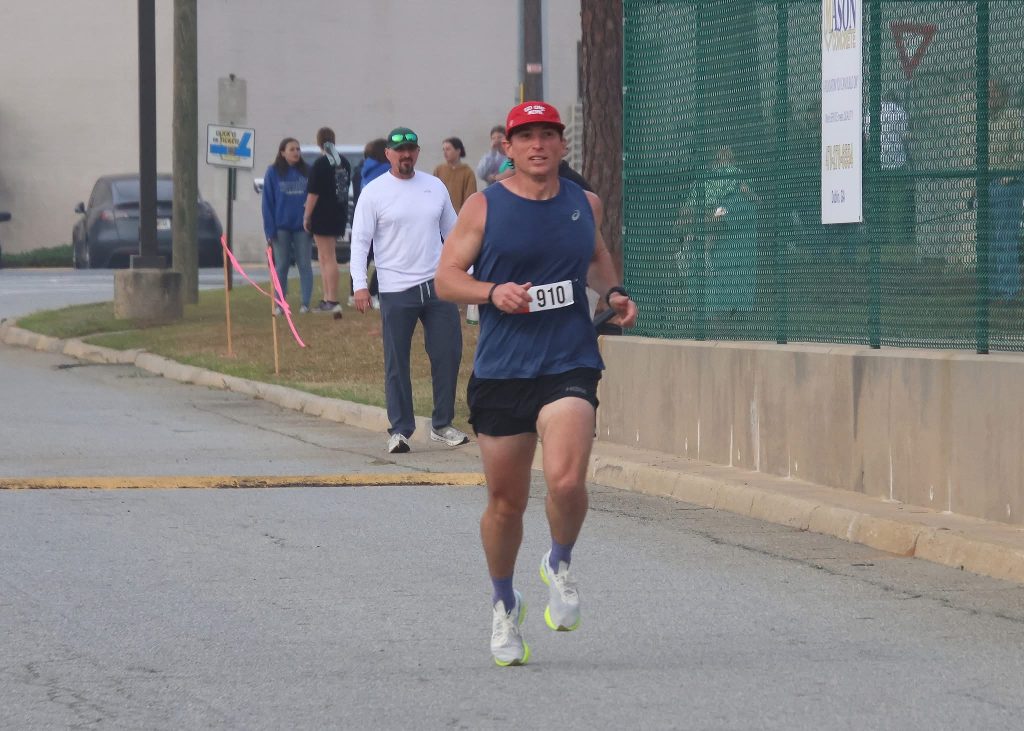
While helping his West Laurens players get in optimal football shape this spring and summer, Kip Burdette has been simultaneously hard at work chasing some ambitious fitness goals of his own.
But his offseason conditioning program is focused on developing strength, speed and endurance of a much different type than his team is looking to build up for Friday nights in the fall.
Instead, the Raiders’ fourth-year head coach has been training for a stretch run he completed with flying colors in his first-ever marathon race this past March, part of a larger goal of qualifying for and hopefully competing in the prestigious Boston Marathon next year.
Burdette’s eighth-place time of 3:02:51 in the Heroes of America marathon at Fort Benning (formerly Moore) in Columbus March 22 will put him in the running for a coveted spot in the 130th edition of the historic Beantown race, set for April 20, 2026.
“I had a goal of running 2:59,” he said. “I thought it might be a little of a stretch, but 3:02 for my first marathon, I’ll take it, especially.”
For the longtime athlete, running has proven a great outlet for satisfying a continual desire to test his personal limits, which this type of anything-but-casual distance running, combined with a demanding profession, will do quite nicely.
“I want something to keep me sharp and competitive,” Burdette said. “I’ve gotta put that energy somewhere. It keeps me honest, keeps me doing something.”
During the fall – and arguably the rest of the year, when the sport of football keeps a head coach only a little less busy than the grind from August through season’s end – he’s never at a loss for things that occupy time.
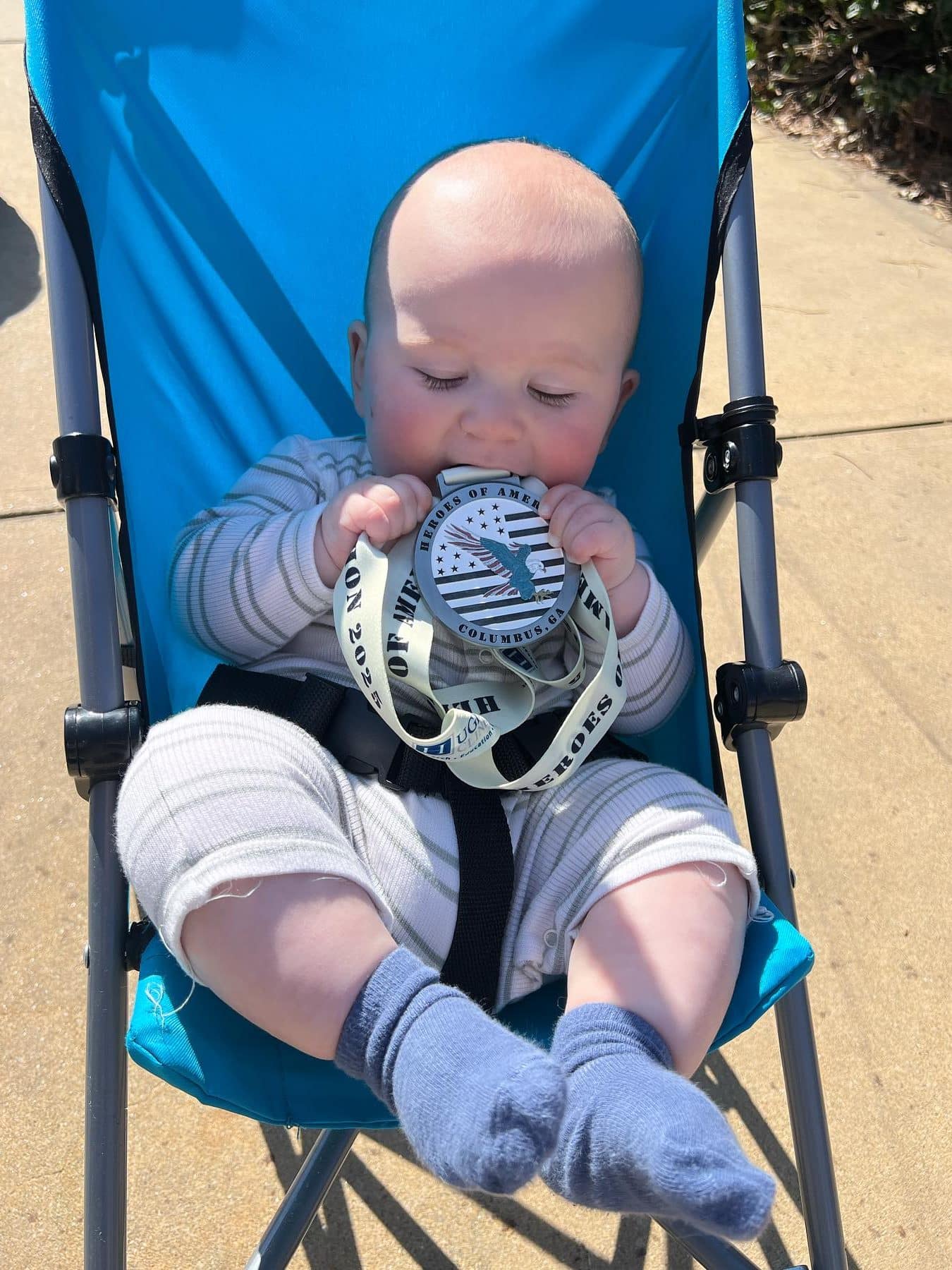
Marathoning would definitely be among the more involved hobbies one could pair with what’s easily the most tedious and pressurized job in high school athletics. Added family obligations – Coach Kip and wife Sara (who works as a nurse practitioner) are parents of two, 3-year-old daughter Cami and son Tripp, whom they welcomed last October – make the complex playbook for that balanced attack even tougher to stay on top of.
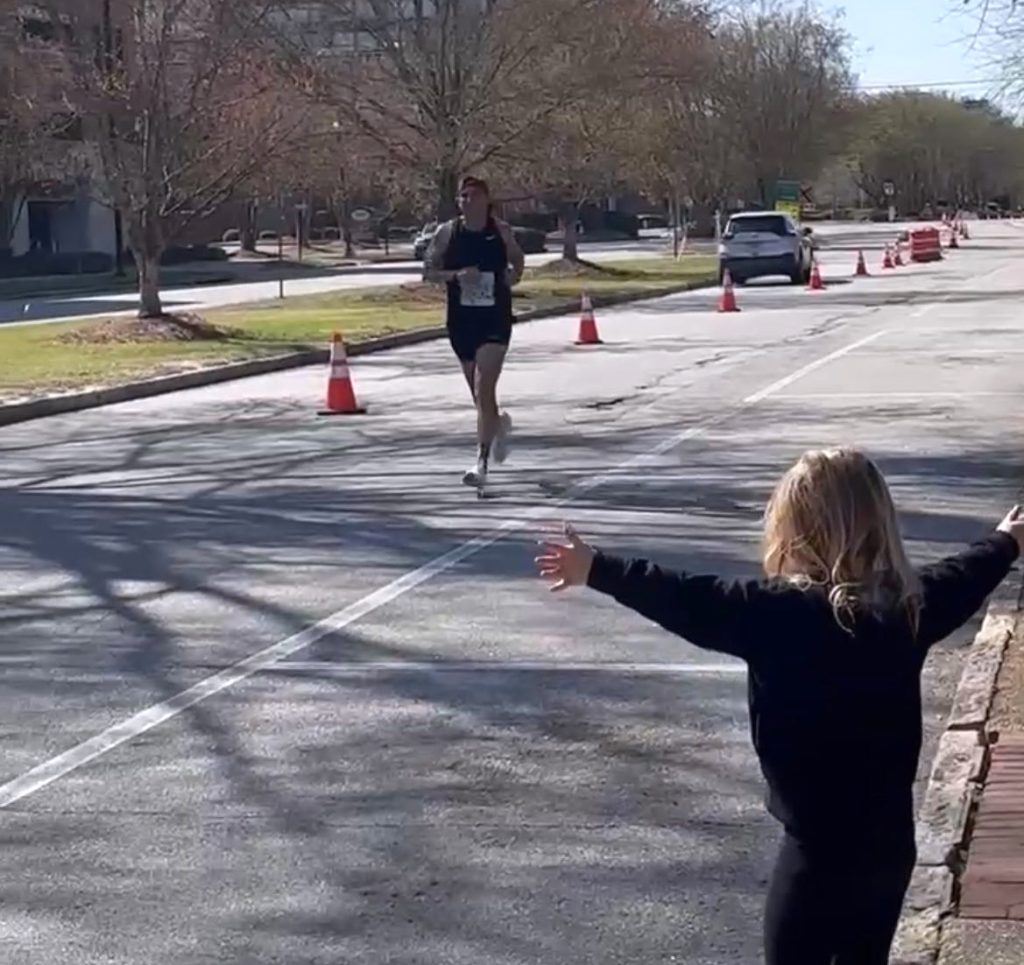
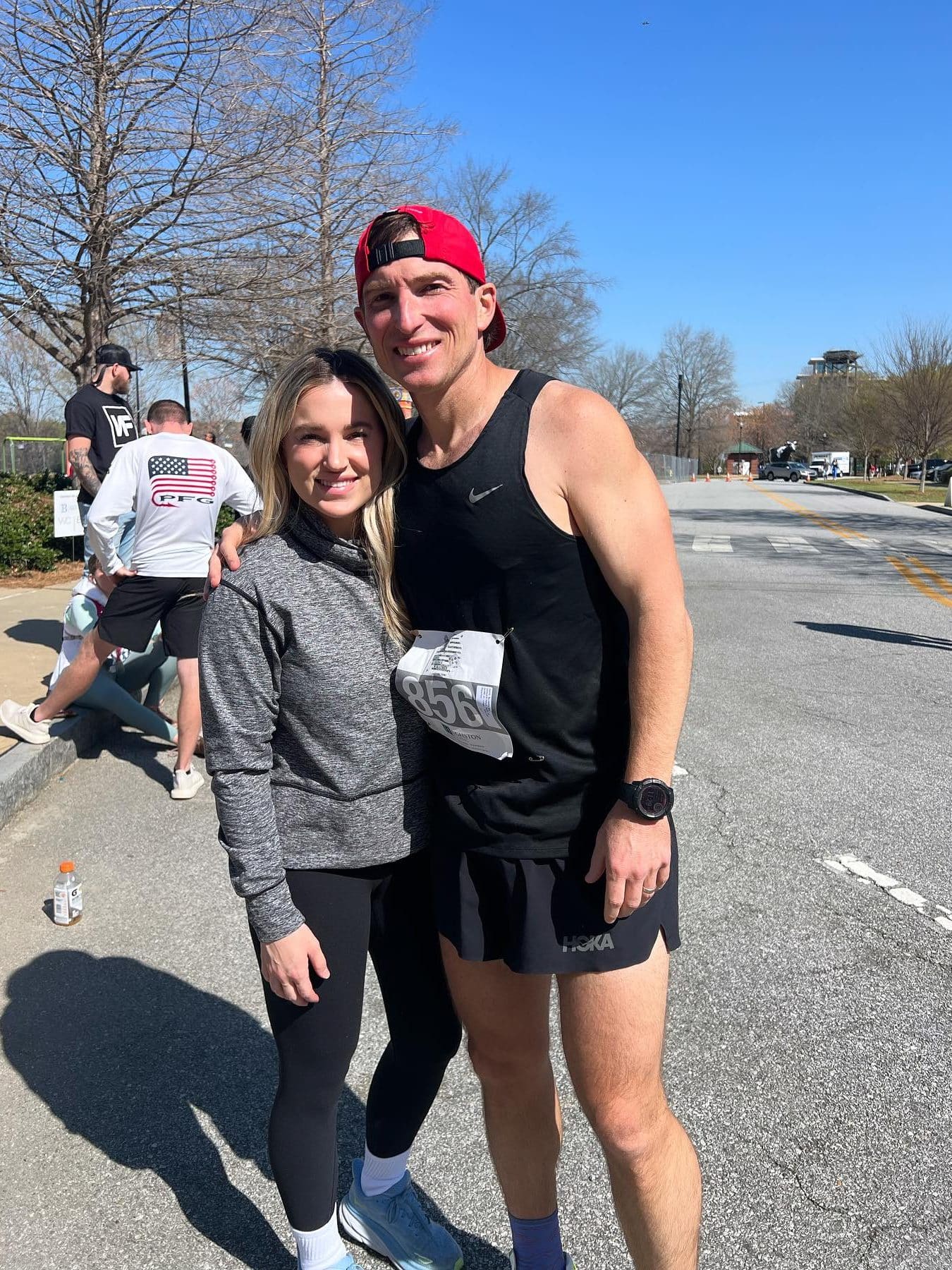
He’s quick to note that none of it would be possible without the backing of all three in his household, who were each there cheering proudly as he barreled down the final stretch toward the finish line back in March.
“My wife allowed me to do this,” Burdette said. “She’s a good sport, because some of the runs take an hour and a half to two hours. She lets me go and do that. It’s a lot of really early mornings, and when my wife leaves early for work, I get a babysitter to watch the kids while I run. It’s not ideal, but it works out.”
Fitting it all in often means training at odd hours, including a few challenging times of day during hotter portions of the summer when it’s not uncommon to catch him galloping along one of Dublin’s major thoroughfares in the 90-plus degree temperatures of lunchtime or the late afternoon.
From August through November, even those spare hours simply aren’t available due to the nearly round-the-clock time commitments involved with school, practice, staff meetings and the many other odd jobs that go in between each day of your typical game week. Saturdays and Sundays, when the staff will also log at least a handful of hours at the office breaking down film and drawing up gameplans for the coming week, don’t offer much in the way of additional free time.
Annually, those demands are his biggest obstacle to sustaining long-term progress.
“For me, it’s hard because I can’t really train year-round,” Burdette said. “Football season is a wash. It’s hard to do everything you need to do to stay fit.”
But with all things considered, he felt the first-time experience – from the preparation to the race itself – was an overwhelming success.
His final time in Columbus owed to a great start, at a gangbusters pace that helped him cover a lot of ground, though it didn’t hold up quite well enough over the final third to hit the best-case mark he was hoping for.
“My goal was to run in under three hours, that’s a feather in your cap,” Burdette said. “I wanted to break three, and I didn’t quite have it.”
But he still finished with plenty of time to spare in his aim of potentially qualifying for Boston – a marathon that carries a major distinction with runners, as the nation’s oldest such race (dating back 128 years) and also the most competitive to get into.
Though the event’s total participation is typically less than half that of its counterparts in New York City and Chicago, it sets easily the highest bar for entry. So a chance to run it is about as big as it gets for amateur athletes in the U.S.
“That’s kind of the goal of most hobby runners,” Burdette said. “That’s like the best of the average.”
Runners without a sponsor or charity exemption must meet a stringent qualifying standard – which varies by age group and gender – for the right to even put in.
Out of the pool of hopefuls in each classification, only a fraction with times beating a set cutoff based on the total of names in the hat by a September deadline are actually selected to register.
Though the race had to turn away record numbers of qualifiers (in the five digits, necessitating times of at least five minutes better than the minimum) in both 2024 and ’25, it’s since raised benchmarks to help narrow the field of applicants to something a good bit closer to the field limit of 30,000.
So Burdette, who beat the mark in a 40-44 bracket he’ll enter by the time of next year’s race by roughly three minutes, stands some pretty good odds of making the cut.
“I think I’ll have a shot, just based on the time I ran,” he said.
His quarterbacking skills took him to college at Valdosta State, but Burdette was also a standout track-and-fielder coming up at Mary Persons High School. And he’d go on to coach the sport in addition to football during his time as an assistant at other schools, while remaining an avid runner through the years.
Some serious training starting in his mid-to-late 20s turned the pastime from casual recreation into a more competitive endeavor as he tapped into some speed that made him a force in various offseason road races, including plenty of half marathons.
Some strong results in a few of those last spring and summer – including a first-place finish in the Vidalia Onion Run in April of 2024 – convinced him that running a full one was worth a shot.
“I had done like a dozen half marathons in my life, and I’ve done a couple of them under the 3-hour marathon pace, in an hour and a half or less, and I just said I wanted to try,” Burdette said. “That’s kind of a big deal to be able to run a sub 3-hour marathon, creeping into your 30s for a former football player.”
He targeted a race in the spring to ensure ample training time, since getting anything started before football was over would be out of the question. The Columbus event, in addition to being a Boston qualifier, fit perfectly into his timeframe.
Down the stretch of the season, his main goal was to “stay in some semblance of shape” by jogging a few miles and getting in workouts wherever possible. When the Raiders’ campaign wrapped up in mid-November, he was able to jump right into the training program.
Like most marathoners, his first step was simply building up the ability to run a steadily-increasing volume of weekly mileage, which started in the 20s and 30s, and ultimately progressed into the 50-60 range as the race got closer.
“You’re trying to get up as high as you can stand without getting hurt,” Burdette said.
After this easing in, his plan (at first self-guided, before he consulted a hired expert for a more personalized program over the back half of training) transitioned to more specialized day-to-day workouts focusing on two main types of training: Short-distance “tempo” intervals to develop speed, and longer-haul “threshold” runs pushing endurance over larger chunks of mileage. Both built up, at the end of each week, to a max-distance benchmark run whose progressively increasing length resembled the actual race.
To take it a step further, Burdette also ran a half marathon – clocking a blazing 1:28 in the rain at the Robins Air Force Base Museum of Aviation in January – right around the midpoint of the training, before using the 10K of the hometown Leprechaun Road Race in mid-March as a warmup about a week out from the big one.
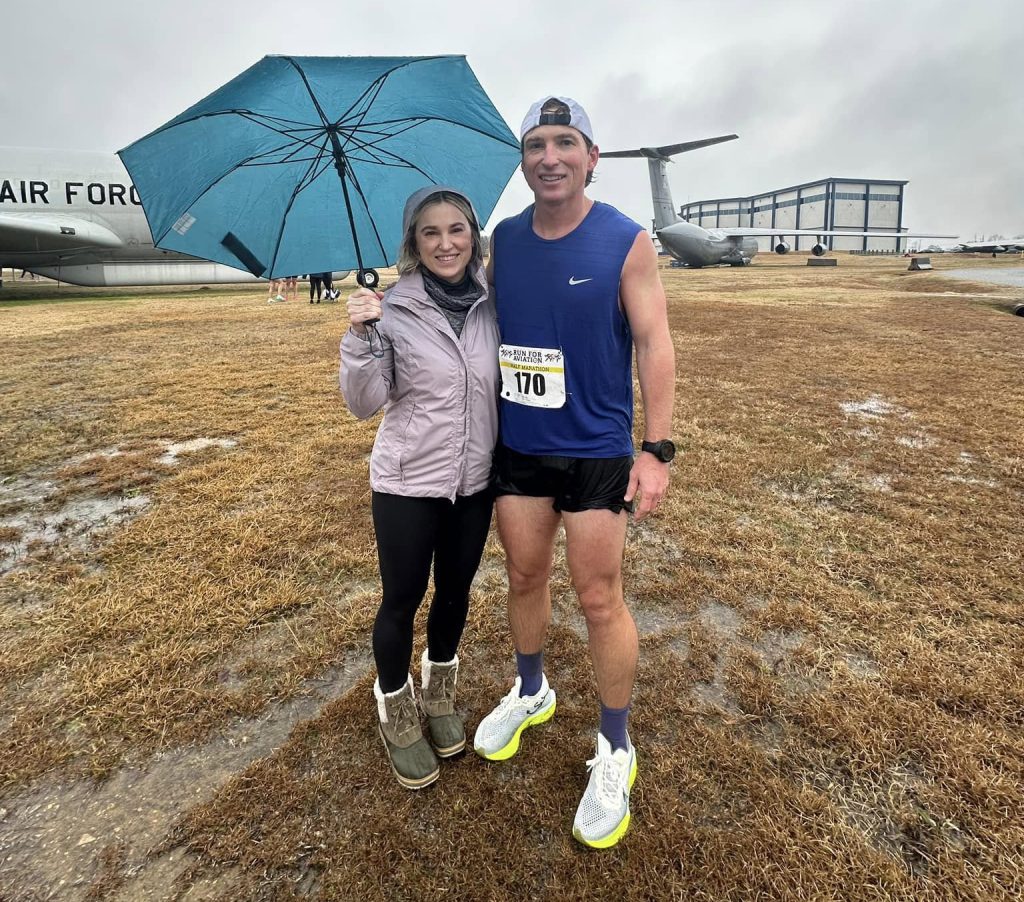
Certain runs, or at least portions of them, are intended to be challenging, “tough mileage.” But just as many are lighter sessions that never go higher than a “conversational” pace, and he’ll typically take that suggestion literally by joining in with a local group of similarly-minded distance runners and triathletes who enjoy lacing ’em up early in the morning several days a week.
Burdette also shoots to lift weights a minimum of twice a week.
“Strength is a huge deal nowadays,” he said. “It helps with longevity, the same way we put it for football players. If strength training is anabolic, running is catabolic. It tears you up a little bit. You’ve gotta build tissue, and put your body in positions where it needs to get stronger. You can’t double up too hard, but you’ve got to stay consistent with the strength.”
When it gets to be this time of year, training in the elements also presents a danger of potentially overextending that makes proper hydration, nutrition, stretching and some simple common sense a major priority.
“For somebody creeping up on 40, you open yourself up to injury if you try to do too much,” Burdette said. “You have to be smart about how you do it.”
While running a marathon is a physical proposition, finishing it has a mental aspect as well that most runners encounter upon running into a figurative “wall” on the back end of the race where various factors, both real and in your head, make it the hardest to keep going.
“They always say the last 10K of a marathon is the most miserable part. Around mile 20 is usually where it kicks in,” Burdette said. “It’s a physical thing. You’re kind of running out of fuel. I was cramping, hamstrings and quads… You try to structure your training in a way that prepares your body for that. You try to keep moving. You can’t stop, because if you stop, it’s pretty much over with.”
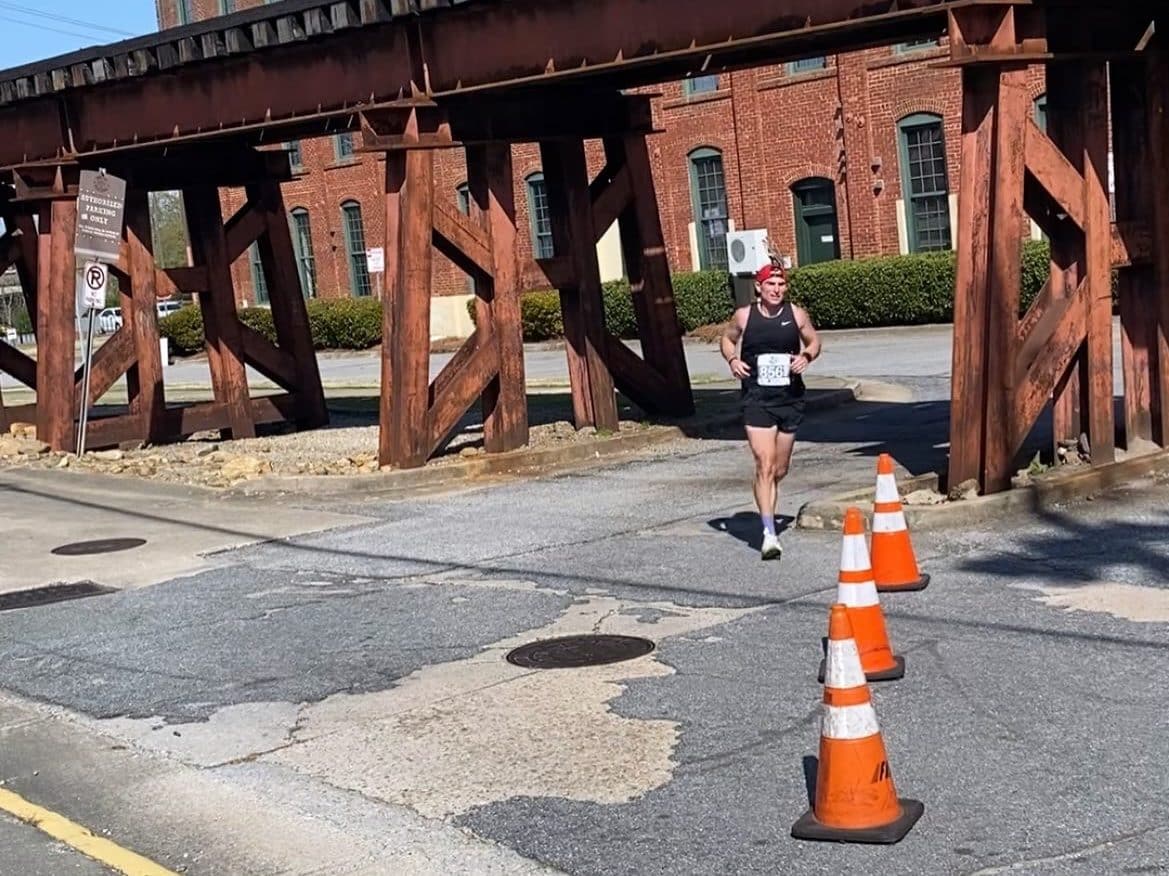
In running, a lot of success boils down to simply putting in the work, sticking to it and not cutting corners.
But he does have several interesting hacks… like a practice of rotating his shoes between runs.
“I never run in the same pair of shoes two days in a row. I have a house full of shoes,” Burdette said, adding that he’ll often recycle pairs that he’s moved on from, but not yet worn out, by taking them to the WLHS weight room for use by any players who happen to wear the same size.
So don’t be surprised, on a visit to one of his classes, to see an unusually high concentration of students wearing Hokas.
As for gadgets, he mainly relies on apps Strava and Final Surge, which sync with his smart watch, to track progress and keep him on top of training requirements, mid-run. Burdette, however, isn’t a big music listener while running. When he does dial something into a seldom-used set of earbuds, he says it’s usually a podcast or audiobook.
Moment-to-moment, and long-term, he’s never found staying focused to be much of a problem when there’s a clear goal to be pursued.
“When I get burned out is when I don’t have anything to prepare for,” Burdette said. “I’ve gotta have something to shoot for, to hang over my head a little bit. But running is cyclical. You can’t just run, run, run. There are different phases in that. You’ve gotta start over at some point, and switch up the goal of your training to kind of break up the monotony.
“You can’t just marathon train year-round. It’s just like football, you couldn’t play football for 12 months out of the year.”
Whether it’s the middle of the season, or a lighter time during the off-months, he finds that running can often be the best escape, albeit a brief one, from the intense hustle on other paths of life.
Getting out and picking up the pace for 30 minutes to an hour can sometimes be just what it takes to slow down and enjoy the most hectic times of the year.
“For me, it’s a stress relief to a point, too, getting that exercise,” Burdette said. “You’ve gotta cut your mileage a lot during football season, but it helps me clear my mind.”
Author

Related Articles
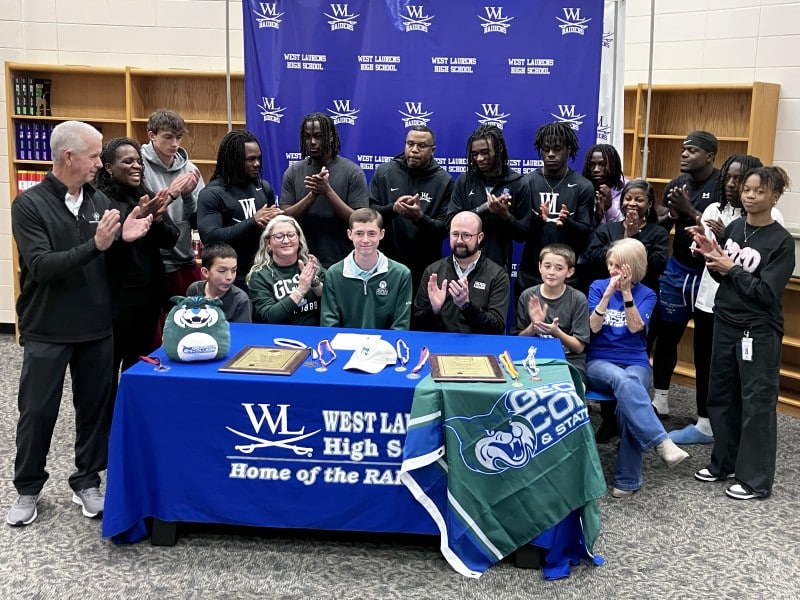
West Laurens’ Dailey signs to run cross country at Georgia College
The Raiders’ top runner, following a third-place overall finish at state to wrap up his senior cross country season in November, signed with the Bobcats early last month.
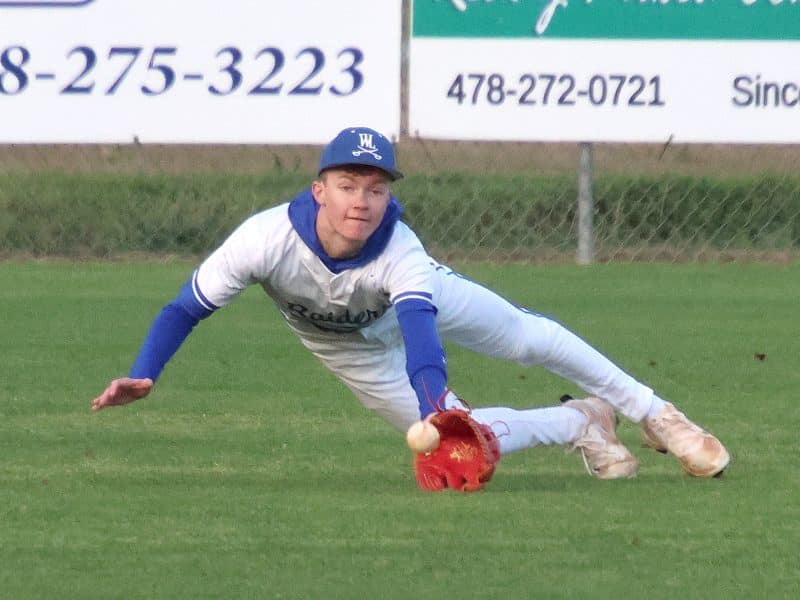
BASEBALL: Back-to-back gems for Bleckley’s Boatright, WACO’s May keep West Laurens flustered at plate
The Raiders, in the throes of a nasty hitting slump, had little luck against a couple of region 2-High A’s top hurlers who handed them their second and third losses in four games.
Winners crowned in 2026 St. Patrick’s Tennis Tournament
Close to 120 entrants enjoyed great weather and competition during the 46th edition of the long-running event last Saturday and Sunday.