
Mistrial declared in Whitaker murder trial
After almost 12 hours of deliberations, a Laurens County Judge declared a mistrial in the Ben Whitaker trial after the jury communicated that it was at a 11-1 deadlock.
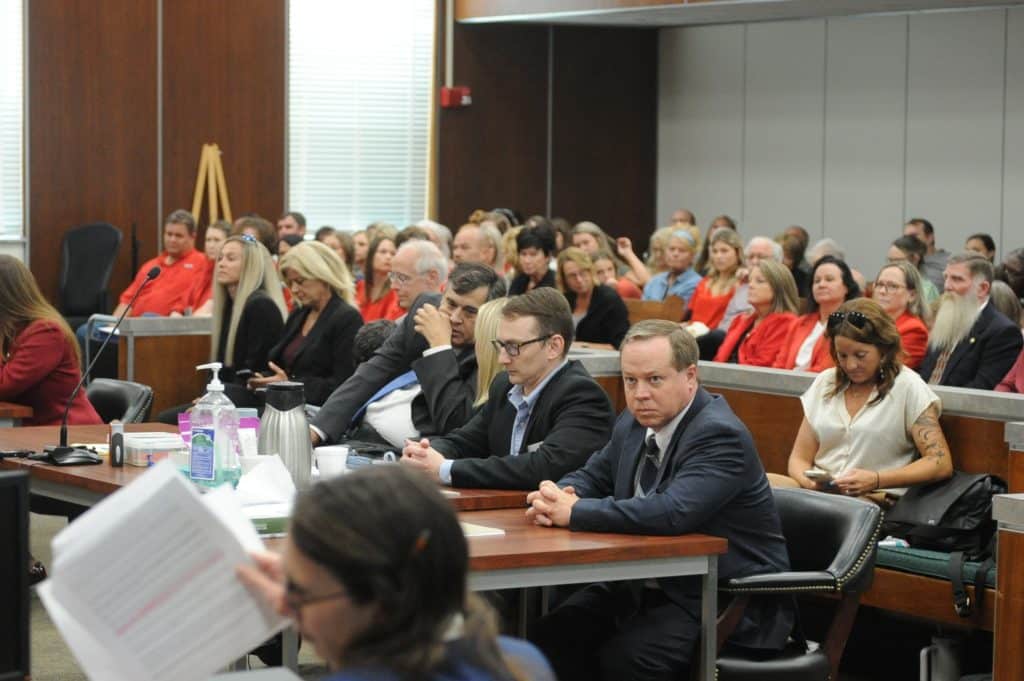
After almost 12 hours of deliberations, a Laurens County Judge declared a mistrial in the Ben Whitaker trial after the jury communicated that it was at a 11-1 deadlock.
Whitaker had been on trial for the June 2021 shooting death of his wife, Tiffani. Dublin District Attorney Harold McLendon plans to retry the case.
The trial began with opening statements on Aug. 27 and ended with closing statements on Monday. The jury began deliberating early Monday afternoon and sent more than six notes to Chief Judge Jon Helton throughout the time.
“After receiving note after note after note, the latest note says that they have one juror who is in disagreement with the other 11,” Helton told the audience after the jury was dismissed. “I don’t know which way that is. I don’t know if that is 11 guilty and one not guilty or 11 not guilty and one guilty. I didn’t know and didn’t ask. But it is 11-1. That has been the divide and it has been that way since (Monday). I’m getting note, after note after note. In fact, the juror says, ‘We could sit here until the end of the week and I’m not changing my mind.’ So, the case will have to be retried.”
Helton said the court reporter has 120 days to produce a transcript of the first trial.
“So you are looking at January for a retrial,” Helton said.
Defense argues medication was lethal combination…
Defense attorneys Mitch Warnock and Amanda Palmer took turns talking to the jury during their part of closing arguments Monday. Warnock reminded the jury that Whitaker was an Eagle Scout who was described by people as gentle and kind and how it did not make sense to them that the defendant would just shoot his new wife without any provocation.
“Nothing added up here,” Warnock said. “It was medicine that his body couldn’t and wouldn’t process.”
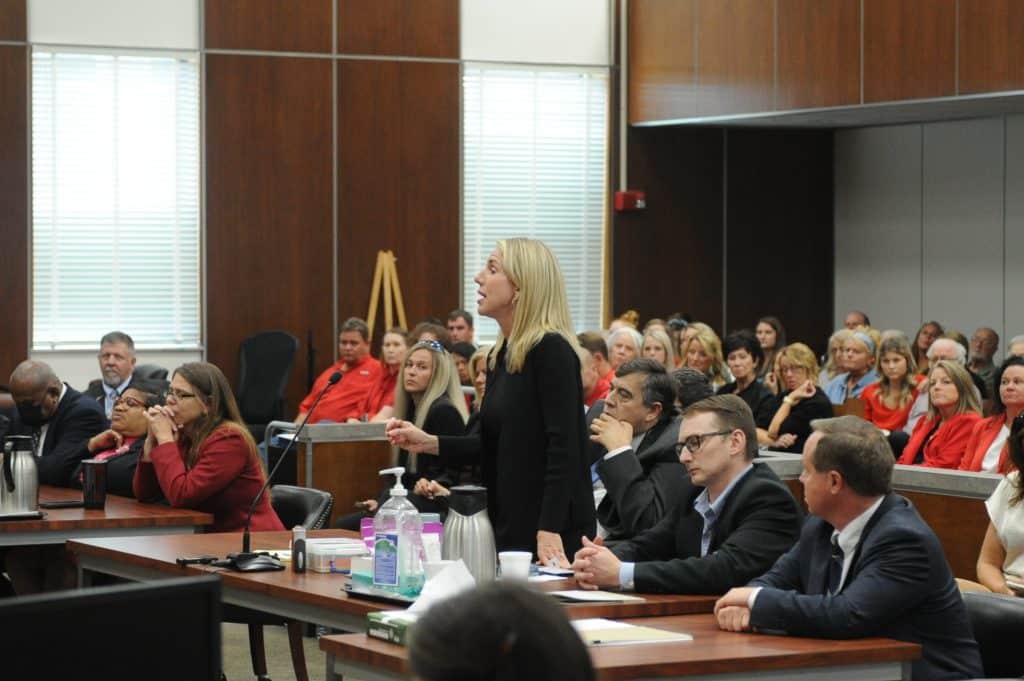
Palmer asked the jury to focus on the medicine that the defendant was taking on June 29.
“He can’t be found guilty if he was involuntarily intoxicated,” she said. “We have brought you evidence in this case.”
She pointed out that Whitaker and Tiffani were nothing but “loving and tender.”
“Tiffani showed a concern about the side effects (of Whitaker’s medication),” Palmer said. “There was no evidence, there weren’t any warnings. Our four experts all agree that it was a combination of medicine that brought this tragedy.”
Warnock went through a timeline of Whitaker’s symptoms and him being prescribed Lexapro and Buspar, with the attorney calling the combination “lethal.” He said prosecutors did not want to show the text messages between the Whitakers because it showed no issues between them. In fact, Warnock said the couple were in a stage that he called “puppy love.”
The attorney said Whitaker’s issues were “off the chart” between 2 and 3 p.m. after he started taking the new medications on June 29. He admitted Whitaker drank alcohol and felt better.
“He was hot, restless … and he was afraid but had nothing to be afraid of,” Warnock said. “(Whitaker) said he would have gone to the ER if he didn’t have Eli (Tiffani’s son from a previous marriage).”
When he talked to law enforcement on June 30, the medications’ effects were coming down and Whitaker was confused, his counsel said.
“He kept saying (the shooting) happened on Monday night,” Warnock said. “His demeanor in the interview … was that he was searching for answers. He couldn’t explain why he shot her.”
Palmer reminded the jury about their four doctor expert witnesses. Dr. Randall Tackett, a professor from the University of Georgia, said that serotonin syndrome could interfere where a person could not tell right from wrong.
She pointed out that Dr. Raymond Singer, from Santa Fe, New Mexico, said Lexapro was “five times” more likely to lead to violent outcomes. Dr. Gail Tasch, a psychologist from Wisconsin, called the types of medication Whitaker was on “dangerous,” and Dr. Selma Eikelenboom-Schieveld, a forensic scientist from New Mexico, agreed with the rest of the doctors that the combination of all of the medications caused the shooting on June 29.
“This case has put a spotlight on psychoactive drugs,” Warnock said. “If you agree, that is reasonable doubt.”
He ended his argument by saying they sympathize with Tiffani and her family. And he reminded the jury that they were not “the Facebook warriors” or people with an opinion.
“You know this case more than anyone on the streets,” Warnock said. “Ben Whitaker told Dr. Emile Rigby, (chief medical officer and director of division of hospital services at the Georgia Department of Behavioral Health and Developmental Disabilities) that losing Tiffani and Eli was the worst thing that could have happened (to him). No matter your verdict, Ben Whitaker has to live the rest of his life knowing he killed Tiffani. … The only thing that makes any sense is Ben couldn’t tell right from wrong.”
Prosecution disputes medication defense…
Holding the murder weapon in her hand, Assistant DA Cheryl Banks Hightower held it out and made the claim that if Whitaker had all of the symptoms he said he had on June 29, 2021, he would not have been able to shoot his wife.
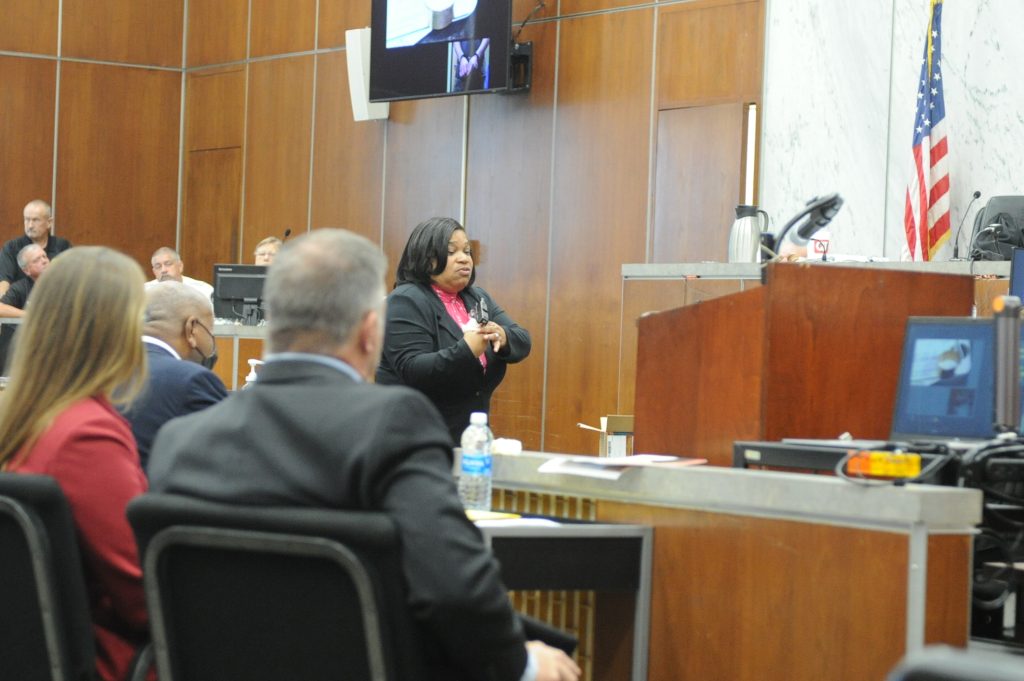
“He shot her, ‘Pow! Pow! Pow! Pow! Pow! Pow! Pow!” Hightower exclaimed. “If he had serotonin syndrome (along with the symptoms he said), you can’t (shoot the gun). No! He had meanness! … If you are nauseated, dizzy and about to jump out of your skin, you don’t walk down the hallway, pick out a gun and shoot her seven times.”
Chief Assistant DA Kelly Weathers began the DA’s closing statement by reminding the jury that Tiffani was only married for a short time to Whitaker.
“She will forever be the mother of Eli and the daughter of Julie Scarborough,” Weathers said. “At sometime on June 29, 2021 … the defendant ended her life.”
Weathers pointed out that Tiffani was running for the back door when she was killed.
“What terror she must have felt,” Weathers told the jury. “He packed and drove 20 minutes to a rural area where he knew no one would be. … He admitted he killed her. The murder weapon was in his truck. … He brings this defense to court and wants us to make a tremendous leap of logic. … The first words he says (in the police interview) are the only words you can put your trust in.”
Hightower told the jury that Whitaker was not a good husband. She said Tiffani pledged her life to him on May 1, 2021. According to Hightower, there was a motive.
“It was not just medicine,” she said. “It was the drinking. Ben took Tiffani’s life because he was tired of the nagging.”
Hightower pointed out the times Whitaker lied about his drinking, which included times during his first marriage.
“His first wife said he was one person while dating and it was over after getting married,” Hightower said.
Hightower talked about the lack of intimacy Whitaker had with Tiffani, information shared by the victim to a co-worker. She went over the events of June 29 and how Tiffani had to wake up Whitaker, who was watching after her son, when she got home that day. Hightower said she believes after Eli left with his grandmother, Whitaker and Tiffani got into an argument.
“And I submit to you that (Tiffani) let him have it,” Hightower said. “That is what he couldn’t take.”
When Whitaker was found in Wilkinson County, police discovered Whitaker’s wedding ring inside the truck.
“If you had serotonin syndrome, why would detective Amber Beasley find his wedding ring thrown in his truck? Did serotonin syndrome (and other symptoms) make his take off his ring? … He discarded the ring like a piece of trash,” Hightower said.
Looking at the text messages, Hightower pointed out that Tiffani started those texts.
“I’m not going to tell you he didn’t love her,” Hightower said. “Love would have stopped him from shooting at her seven times – five times he connected. Love doesn’t do that. Love would have had him attempt to save his wife. He didn’t get down and say, ‘What the Hell did I do?'”
Hightower said Whitaker locked the door and drove away. Talking about that drive, Hightower said Whitaker – with all of his conditions –was able to make it to his family’s property in Wilkinson County in the dark.
“He had an axe in his truck,” Hightower said. “He took it out and chopped down a tree. If you are out of your mind, how do you know to do that?”
She went over the expert testimony put up by the defense. But Hightower pointed out that even Tackett admitted that alcohol would increase serotonin syndrome in a person. She reminded the jury about Whitaker’s professor who testified the defendant took two pharmacology classes where he learned that patients should not drink alcohol with any medication.
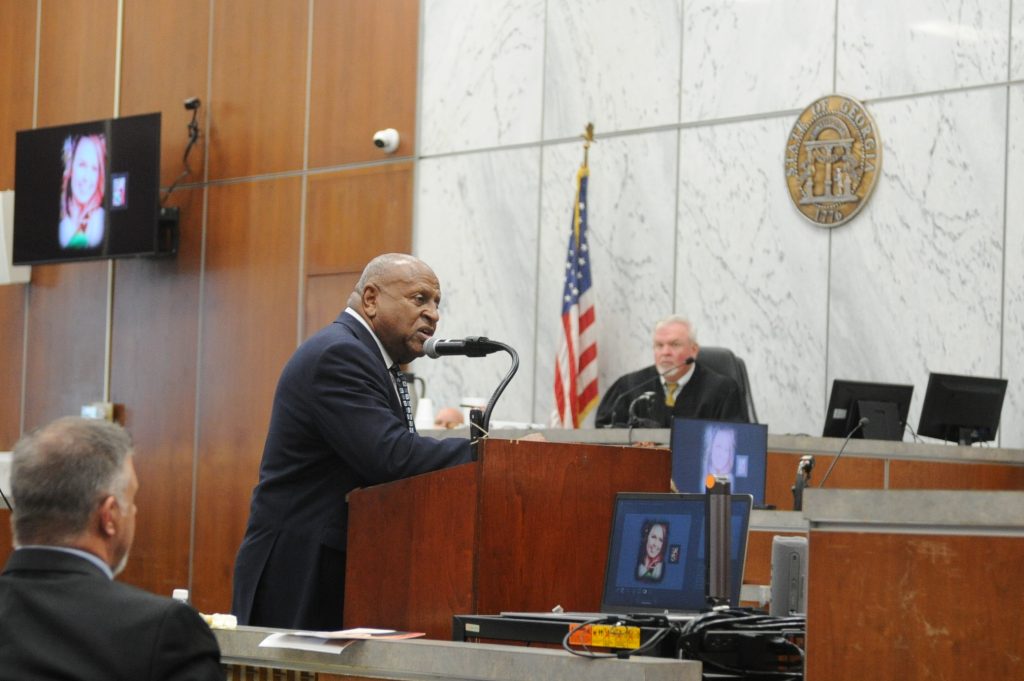
McLendon told the jury that alcohol was crucial to the events that happened on June 29.
“Alcohol immediately caused serotonin syndrome to go to the brain,” he said. “Serotonin syndrome comes from him drinking alcohol. (Tiffani) loved this man. Tiffani was relentless to help her husband.”
As for his symptoms on June 29, Whitaker is the only one who talks about them but it was not in text messages to Tiffani. His described symptoms were talked about later, after the shooting, to doctors.
“If he has serotonin syndrome, he cannot aim a gun and he cannot get into a truck and drive,” McLendon said. “He had a clear memory of what happened. Ben Whitaker said I shot my wife because she was nagging about my drinking. Ben Whitaker is not ignorant of (the medicine). He knew what was going on.”
Author

Related Articles

New Dublin City Schools spending plan cuts $9 million from last year’s budget
Struggling district expects to end FY27 with a surplus, but will still owe $5 million to state health plan.

Georgia Trust for Local News partners with local supporters to acquire two historic newspapers
Deal to purchase Macon Telegraph, Columbus Ledger-Enquirer will revitalize local journalism in Middle, West and South Georgia.

Old Mohawk property near East Dublin promoted as potential data center site
Former carpet mill listed in federal grant application for funds to test properties for hazardous waste and materials.