
Harper: Tariffs are a symptom, not root cause of high prices
The next few weeks are about Pennsylvania. Sure, Georgia is a swing state. Pennsylvania is THE swing state.
The next few weeks are about Pennsylvania. Sure, Georgia is a swing state. Pennsylvania is THE swing state.
It’s with this backdrop we’re going to continue a deep dive into Presidential policy, rather than the vacuous campaign rhetoric and platitudes that have dominated the 2024 election cycle. What is actually happening is a lot more important than what candidates and their sycophantic followers are saying.
In a recent piece we took a look at the policy of tariffs, as it seems to be one of the areas the candidates at least somewhat agree on. The tariffs placed on most imported goods from China remain in place, with the poster child of tariffs being America’s steel industry. There is no state that symbolizes America’s steel industry more than Pennsylvania.
Shortly after finishing that piece I noticed an article in Politico that involves a relatively new power in American steel, Cleveland Cliffs. I know of this company as I’ve dabbled in its stock a few times and hold positions now.
Their CEO, Lorenco Goncalves, is a bit of a firebrand. He became famous (or at least infamous) in investing circles several years ago for berating and somewhat threatening an analyst on an earnings call. He’s also pieced together one of the largest integrated steel producers in this country.
He’s done it with union support. With that support he has thus far delayed if not totally blocked the acquisition of U.S. Steel – a company he tried to purchase – by Japan’s Nippon Steel. Despite Japan being one of our closest military allies and trading partners, the scrutiny over the takeover is allegedly on the basis of national security. Most speculate that neither the Biden Administration nor President Trump want to upset U.S. Steel’s union workforce, who are mostly opposed to Nippon’s history of cost-cutting labor reductions.
Thus, with Cleveland Cliffs, you have a company whom both Vice President Harris and former President Trump are courting. He name checks them and they him and his company regularly. He has influence. Which brings us back to the Politico article.
The focus was not on electoral politics, but on climate change and the Inflation Reduction Act and Bipartisan Infrastructure Act. Through one of those initiatives, Cleveland Cliffs is set to receive a grant of a half-billion dollars to make “green steel.” Specifically, they’re scheduled to get $500 million to replace a coal-fired furnace to one that would use clean burning hydrogen. Cliffs is supposed to put up the remaining $1.1 billion needed to complete the conversion. Now, they’re balking.
It seems that even after this subsidy of a private corporation using tax dollars, the green steel will cost 40% more than conventionally produced steel. And remember that their standard steel is already of higher cost than that produced in China which is why we have those tariffs to begin with.
Goncalves is quoted in the article as saying his customers – think large automobile companies – are uninterested in paying 40% more just because the steel is green. They too face competitive pricing pressures in the marketplace. He notes he’ll have to secure customers at the higher prices or stick with coal burning furnaces. It’s a decision he’ll have to make “soon”, per the article.
Let’s be clear. This is a man who has an excellent record as using leverage as a negotiator. He’s playing hardball on an acquisition he wanted that now may mean a more efficient and stronger competitor. He wants something, and the Biden-Harris Administration wants votes. Perhaps he wants more of his upfront costs covered in exchange for the Nippon deal going through? There’s a lot on the table right now, and that must be acknowledged.
For the rest of us, we need to look at the facts presented as a lesson in regulation, policy, trade and macroeconomics. Actions, as they say, have consequences.
We all want a cleaner environment. The question is, what are we willing to pay for it? Also, how are we paying for it?
It’s cheaper to just burn coal. The cost not doing that, with direct respect to U.S. produced steel, is about 40%. That’s a significant amount that can’t just be absorbed. That cost will be passed on.
Foreign countries not only don’t have our strict environmental laws, but have other subsidies too. Many provinces in China provide the energy used in manufacturing for free. They also don’t have pesky labor or environmental regulations to deal with. Their steel is a lot cheaper.
The problem here is that steel isn’t a finished good. It is an input. And there are many forms of inputs that feed the supply chain before we buy products as consumers. We can slap tariffs on these inputs like we do with steel, but too often that just means that other countries ship us their finished goods – like cars. And our inputs are too expensive for us to sell them as part of their raw material mixes.
We’ve started having a very primitive, surface level debate about the root causes of high prices. If it were a serious discussion, we would be looking at our well intentioned policies and regulations – and the deficit spending used to finance them – and address them with equal focus as among the reasons our prices are so high.
Author

Related Articles

When the storms come, let go and let God
Storms of life are always on the horizon.
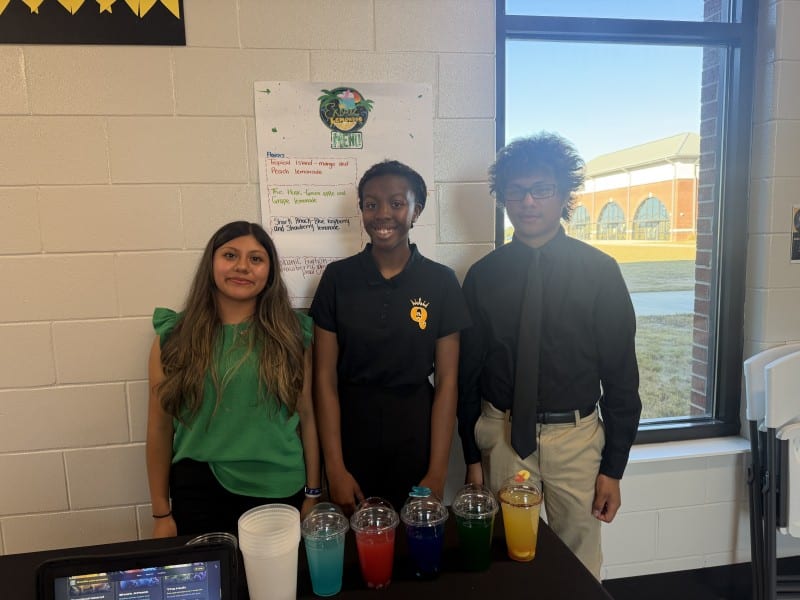
Editor’s Note: Business Class
Thursday, October 22 was Marketplace Times Day at East Laurens High School and I got to be one of the local “professionals” (Some of the people I have worked with in the newspaper business might think otherwise) who were judges of the business plans. And I enjoyed every minute of it.

Do not have to leave town for entertainment
There is plenty of entertainment for live theater right here in Dublin, Laurens County.