
Bleckley school district nutrition program keeps meals healthy but fun
For some students, their school lunch might be the best meal they get all day.
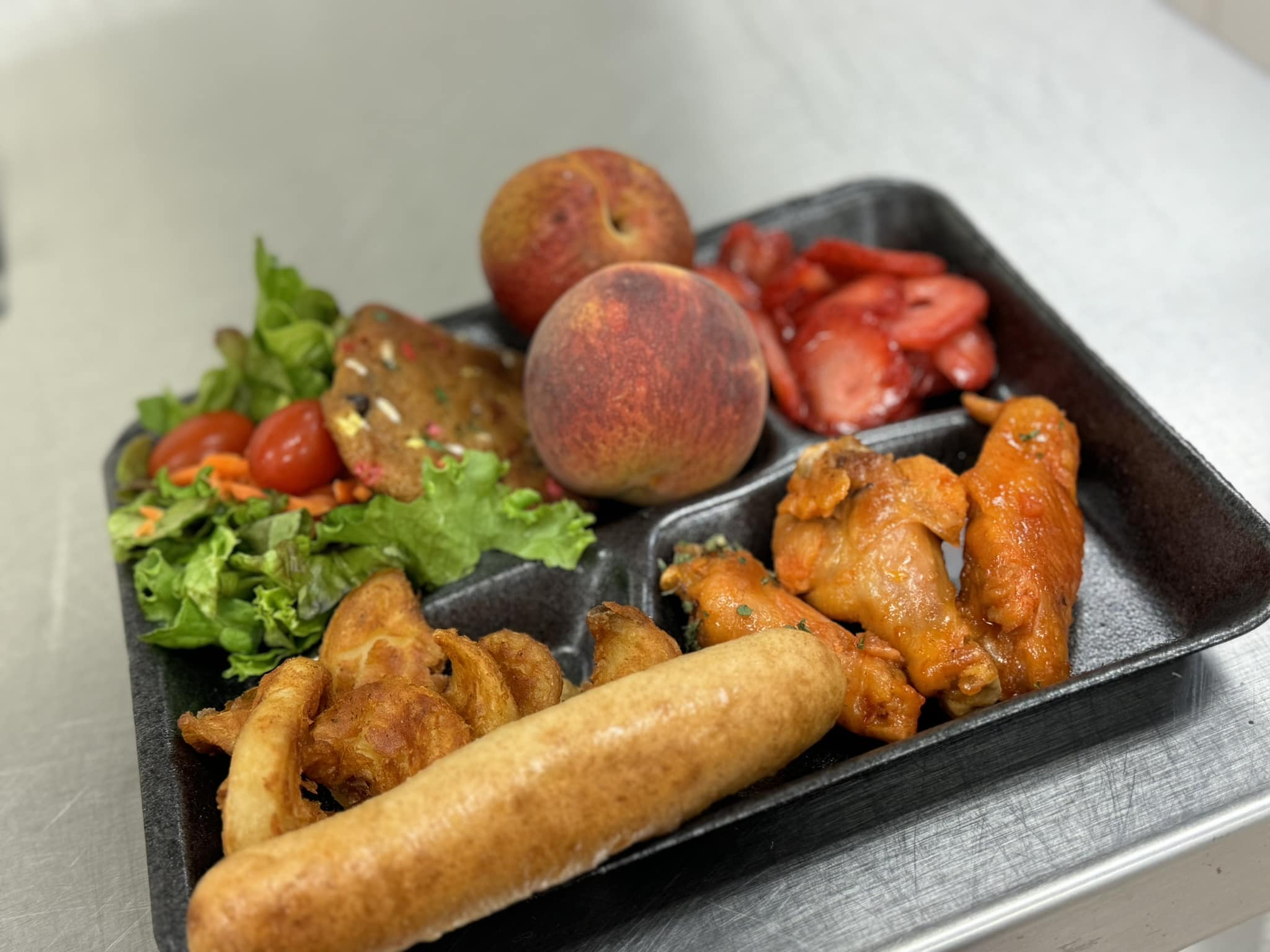
Convincing children to eat nutritious meals can be a struggle, but the Bleckley school district takes on that challenge with enthusiasm. Take a look at the Bleckley County School Nutrition Facebook, and you’ll see trays stocked with colorful produce and kid-adored foods like pizza and chicken fingers — and students smiling with their lunches in hand.
At the helm of this effort is the nutrition director, Kelli Green, who said it’s her mission to make meals that Bleckley’s students want to eat.
She recalls a school meal she had back in the 1970s; it was a piece of ham with a scoop of mashed potatoes on top and melted cheese over it.
“It was called a flying saucer, and I loved UFOs when I was a kid,” she said. “Here I am, older now, and I can still remember the excitement over having a flying saucer, and I didn’t even like ham and mashed potatoes. We try to do some things that hopefully kids are going to remember.”
The nutrition department responds to trends they see in what students like to eat. In the high school, they’ve served grab n’ go charcuterie boards. The elementary school students live and die for chicken and waffles. Green said their methods are “kid-driven” while still being healthy and nutritious.
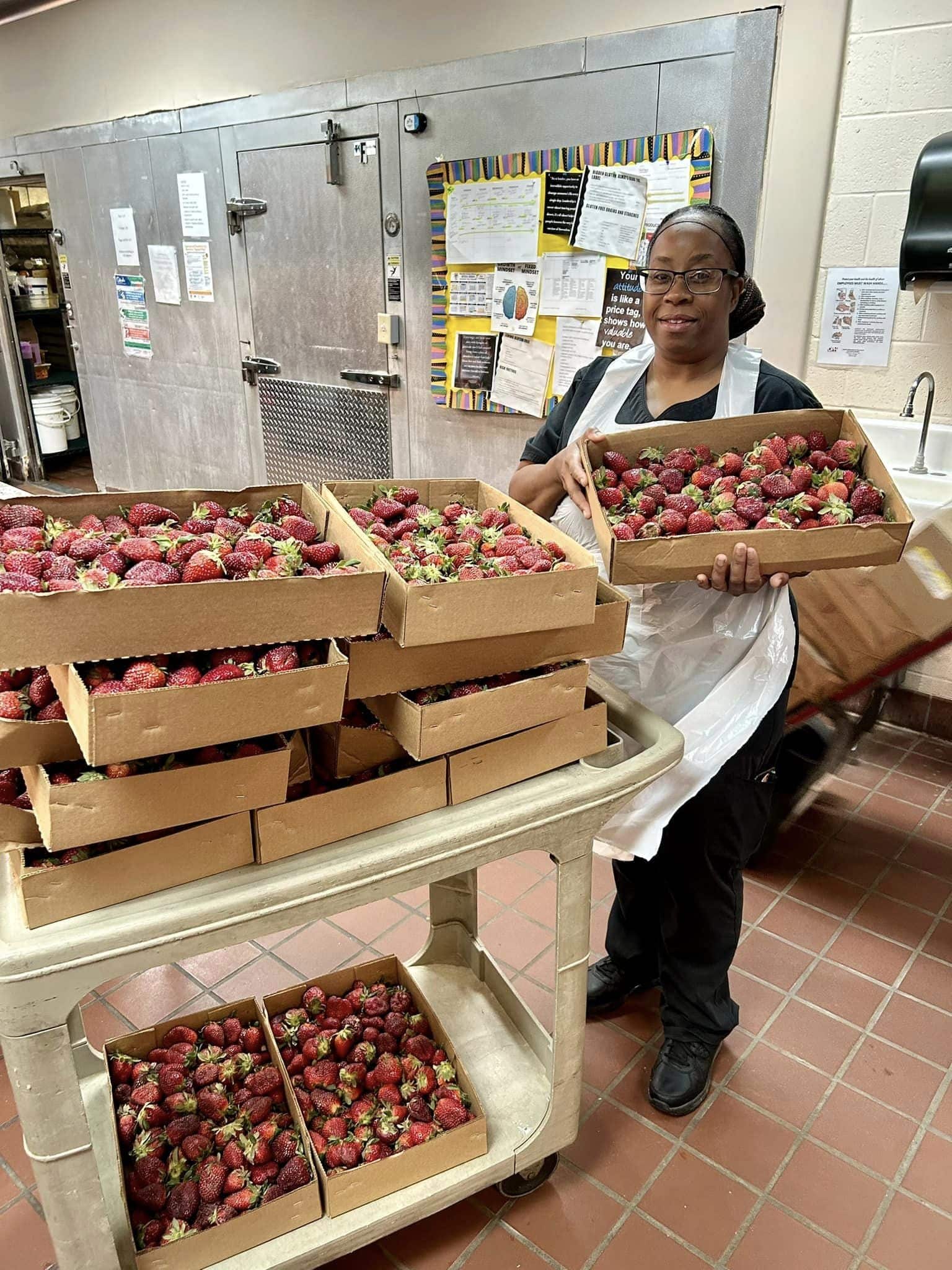
“Our ladies like to talk to our kids,” she said of the cafeteria workers. “We do taste tests and different things to get them to try something new or give them a new experience.”
For some students, their school lunch might be the best meal they get all day.
According to the Georgia Department of Education, 61% of students across all Bleckley County public schools — primary, elementary, middle, high and the success academy — qualify for free or reduced lunches due to factors like total household income. That percentage is around the average for all Georgia school districts.
A family of four, for example, would need to make less than about $58,000 per year to qualify for reduced lunches, which can’t be more than $0.40 for lunch and $0.30 for breakfast. To receive free lunches, a family of four would need to make less than about $41,000 per year.
This year, Bleckley County schools qualified for the United States Department of Agriculture (USDA) Community Eligibility Provision, which provides schools funding to give their students free meals based on the proportion of students who qualify for federal programs like SNAP.
Many school districts in surrounding counties, including Twiggs, Wilkinson and Bibb, also qualify for the program, enabling them to ensure their students receive complete meals each day.
No forms or sign ups are required, so students can simply walk up to the counter in the cafeteria when they want a meal. Faculty and staff are also able to get free meals.
“You can’t expect a kid to learn if they’re hungry,” Green said. “So hopefully, because we are able to feed students at no cost to the parents, they are eating lunch, and nobody’s worried about them paying lunch money.”
Since the free lunch and breakfasts were offered, Green said more students have been eating food from the cafeteria, including high schoolers, who are able to leave campus during their free periods. For the students who do want to leave campus or have dual-enrollment courses at local colleges, they offer grab n’ go meals that are pre-prepared.
Much of the produce, thanks to a grant from the state, comes from farms in Georgia.
“We will do blueberries that come from a farm out of Wilcox County,” she said. “We’ll do collards that are coming out of Dooly County. Our lettuce that we have for our salads every day comes from R&G (Farm) over in Lawrence County… The kids are getting a lot of fresh food and what’s in season.”
At the core of this effort, though, is giving students agency in what they choose to eat. Of course, some kids will choose to eat fried chicken any time they can — and if that’s what they want, that’s fine — but the cafeteria staff knows they’re giving the study body as many choices as possible.
“At the high school and middle school, we let them serve their own salads,” Green said. “Half their tray is a salad or half their tray is collard greens, and man, that is awesome, to see a kid eating ‘real food,’ what we as adults consider real food.”
Author

Related Articles
Businesses, organizations help DFD purchase life-saving LUCAS machine
Local businesses and organizations helped the Dublin Fire Department with the money needed to purchase a LUCAS device.

Laurens County group leads effort to keep people out of prison
The Compassionate Advocate, Inc. held its second Restoring the Broken Workshop hoping to to keep young people from going to prison.

Daughters, Sons of the American Revolution celebrate Constitution Day with bells ringing, cannons blasting
Group spice up annual Bells Across America program to celebrate country’s 250th year.