
‘Do you accept the charges?’: Father’s Day and collect calls
A long time ago (not really that long, but it certainly feels that way) making a phone call was a little more complicated than it is now.
A long time ago (not really that long, but it certainly feels that way) making a phone call was a little more complicated than it is now.
Most of us remember having telephones attached to the wall via a thin cord. Those of us a little older may remember rotary style phones permanently affixed to the wall. One such phone hung in the hallway of my late grandmother’s house, and I always relished conducting tele-communications from her home, especially if I got to dial a number with a zero in it.
Long distance calls were always tricky back then. If you didn’t have a telephone plan that accommodated long distance calls (typically billed by the minute) you’d better not call anyone outside your own area code. That is, unless you wanted to pass the charges on to someone else via a collect call.
The service was a mainstay for many communication companies for decades. Simply tell the operator whom you wanted to call, the operator would make contact, ask the receiver to accept charges and if the answer was “yes,” you were put through. There were callers who abused the system, shouting a rapid message over the operator, then hanging up. And, of course, the receiver could always deny the charges and the call was dropped.
I once received a collect call from a prison in Atlanta. I declined to pay. I sometimes wonder who it was. Was it a wrong number? It could explain that friend that disappeared after college …
In 1967, communication giant AT&T launched its automated collect calling system to ease the burden of overworked operators. During this time period, the company developed a monopoly in telecommunications, driving up rates for consumers. Businesses began footing hefty bills for toll-free 1-800 numbers.
The government broke up Ma Bell in 1984, driving prices down and opening the market for competition. In 1993, rival long-distance call company MCI launched its collect call service 1-800-COLLECT. Before long though, would come the modern age of communication – mobile phones and widespread internet.
Now we can easily call people across the country on our phones or chat with anyone the world over via a wi-fi connection. By 2016, collect calls were virtually non-existent. Many phone providers no longer even offer the service, though you can still dial 1-800-COLLECT, however MCI, Inc. has seen better days. The company filed bankruptcy in 2002 after a notorious accounting scandal.
It is widely known that the most phone calls are made on Mother’s Day. Father’s Day, however, is the day when most collect calls are made. Leave it to dear old dad to always foot the bill.
I’ve never had to rely on a collect call to talk to my father. I’ve always lived within driving distance and I’m thankful for that. I’m especially grateful to live in the age of easy communication, knowing wherever my children end up, their voice is only a few clicks away at no extra cost.
I’m liable not to accept that collect call anyway.
You can reach Kyle Dominy at k.l.dominy@gmail.com or write to 115 South Jefferson Street Dublin, Ga. 31021
Author

Related Articles

Returning to the spotlight on a different stage
Reporter happy to be returning to a theater production, though it will be a different kind of stage.
Supporting Dublin’s local businesses
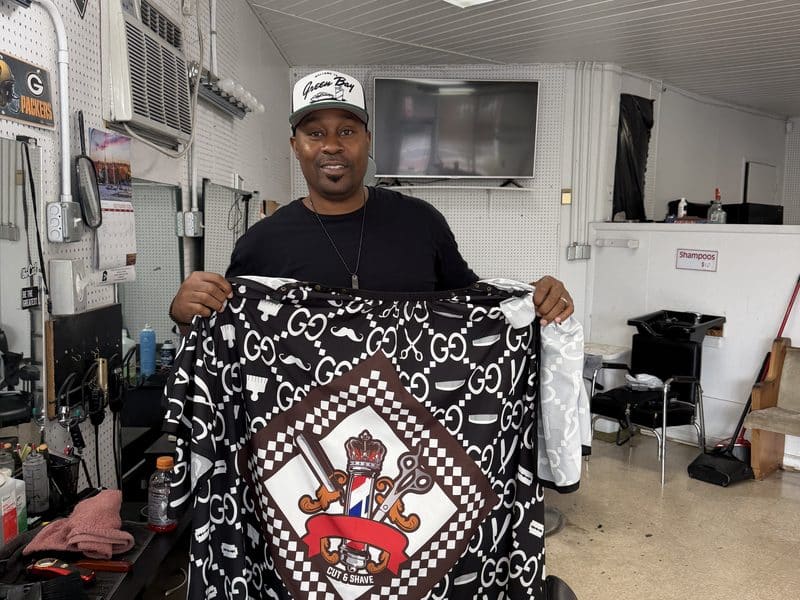
Editor and Publisher Donnell Suggs made his way to some more places in downtown Dublin, including a stop at the Five Points Barber Shop.

New Southern Dad: A right-handed guitar becomes a good investment
For some time I’ve had a bass guitar, right-handed of course, purchased on the cheap from a discount music store when I was a teenager.