
Sanders treasures relationships, teachable moments from time at Trinity/JMA as sun sets on coaching career
The Crusaders’ longtime baseball and softball coach is calling it a career after this fall’s final softball season closed out an abundant 45-year run at two midstate schools.
As nicknames for high school coaches go, you won’t find many more unique than “Dark Thirty,” which has followed Trinity’s Gary Sanders for a good bit of his time with the school’s baseball and softball programs.
The expression, a spin on popular military jargon for the timing of operations taking place at ungodly hours in the pitch-black darkness, has been used by players through the years as both a catchphrase and term of endearment poking some fun at the tendency of his practices to drag on late into the evening… sometimes all the way to dusk, which was as far as you could go before the Crusaders’ baseball field first got lights about five years ago.
“It was because back then, we might’ve literally practiced to dark, till we got it right,” Sanders said. “It was kind of a running joke, and I’d be walking across the campus, and I’d hear someone say ‘Dark Thirty!’ But we went ’til we got it done.”
How early the saying originated, as well as who might have coined it, are difficult to pinpoint, but it’s stuck for multiple generations of his athletes who knew that practice experience all too well.
“It was true,” former player Jake Walker said. “We were walking out in the dark until the time changed halfway through the season.”
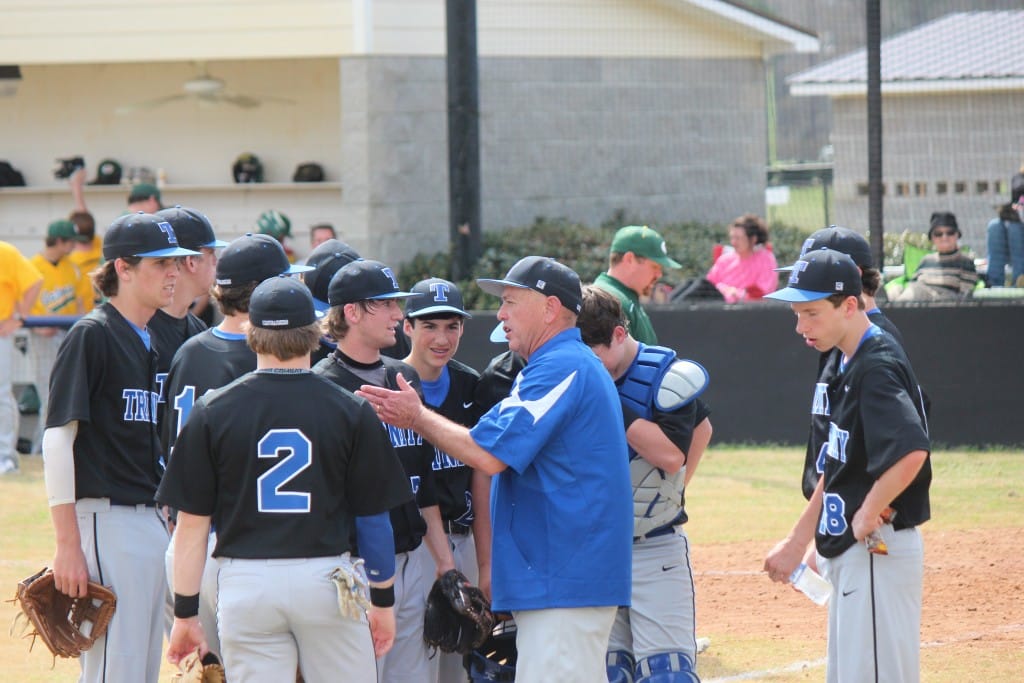
These days, since he’s transitioned from baseball to softball and a fall season with much more generous daylight hours, it’s become kind of a misnomer for workouts that overwhelmingly finish up in a reasonable amount of time. That is, as long as everyone stays focused and on task.
Batting practice, which by nature takes up the biggest chunk of their daily time, is the exception. But through the years, Sanders – like a lot of coaches this day and age – has adapted his routines to favor quick, faster-paced activities that keep players moving and engaged, over more deliberate old-school customs that were heavy on repetition, explanation and downtime.
Two of his favorite drills, both handed down by coaches he came up working under back at John Milledge Academy, are about as lively as it gets.
“You try to pick up what you think works for different coaches, just pick their brains and come up with some drills to make a little competition and have a little fun, but you have to work to get better,” Sanders said. “You try to do things where you can pick up the pace and keep it moving,”
The first – called “9-1-1,” to represent the nine defensive players, and two (or more) baseballs in use – is a modified infield-outfield defensive exercise that keeps everyone’s attention occupied with a constant barrage of grounders, flies and line drives coming from separate sides of the plate.
“It’s good if you’ve got at least two at each position and two fungoes,” Sanders said. “You hit one fungo to right, and the next guy to left. There are a lot of fly balls in a short period of time. Sometimes you’ve got enough kids you can do three fungoes at the same time. And when you go to the infield it’s ground balls, and you can have four balls being hit at a time.”
Another, which happened to be taking place at the time of this conversation while the Crusaders conducted their final practice before closing the regular season at Thomas Jefferson earlier this month, is known as “Catch 21.” It uses only one bat and ball, but requires those same defensive players to make 21 consecutive catches, representing the number of outs in a regulation game.
“Sometimes it takes a few minutes, sometimes it takes a while,” Sanders said.
His methods may have changed over the years, but Sanders has carried the same reputation as a stickler for details all the way from the beginning, even though like most, he’s a little more easygoing now than he used to be.
“To be honest, I have probably mellowed in 45 years of doing this,” he said. “You make adjustments, but you never change your morals or your standards. But you’ve still got to hold those, and we’ve got to hold kids accountable. Like we tell ’em, practice is supposed to end at 5:15. If y’all get it done, we will. If not, we’re on your time, not our time. We allow them so much, if you hustle, you get it done, we will.”
Those particular ways have translated to success at just about every step of his four and a half decades coaching a combination of softball, baseball and football at Trinity (since the early 2010s) and longer before at JMA. Between the two stops, he was a part of 20 region championships, one state title and several more semifinal runs.
This past season, his sixth as Trinity’s head softball coach, concluded that long and memorable run for Sanders, who is calling it a career.
“It’s just time,” he said. “I’m going to miss the relationships with the kids. That’s going to be the big thing. The whole time, it’s always been about the kids. I’ve been blessed to coach an awful lot of good ones, and a lot of them have worked hard.”
For the coaching lifer, neither the decision – nor the process of bidding the profession, his team and staff farewell over the past month – were easy.
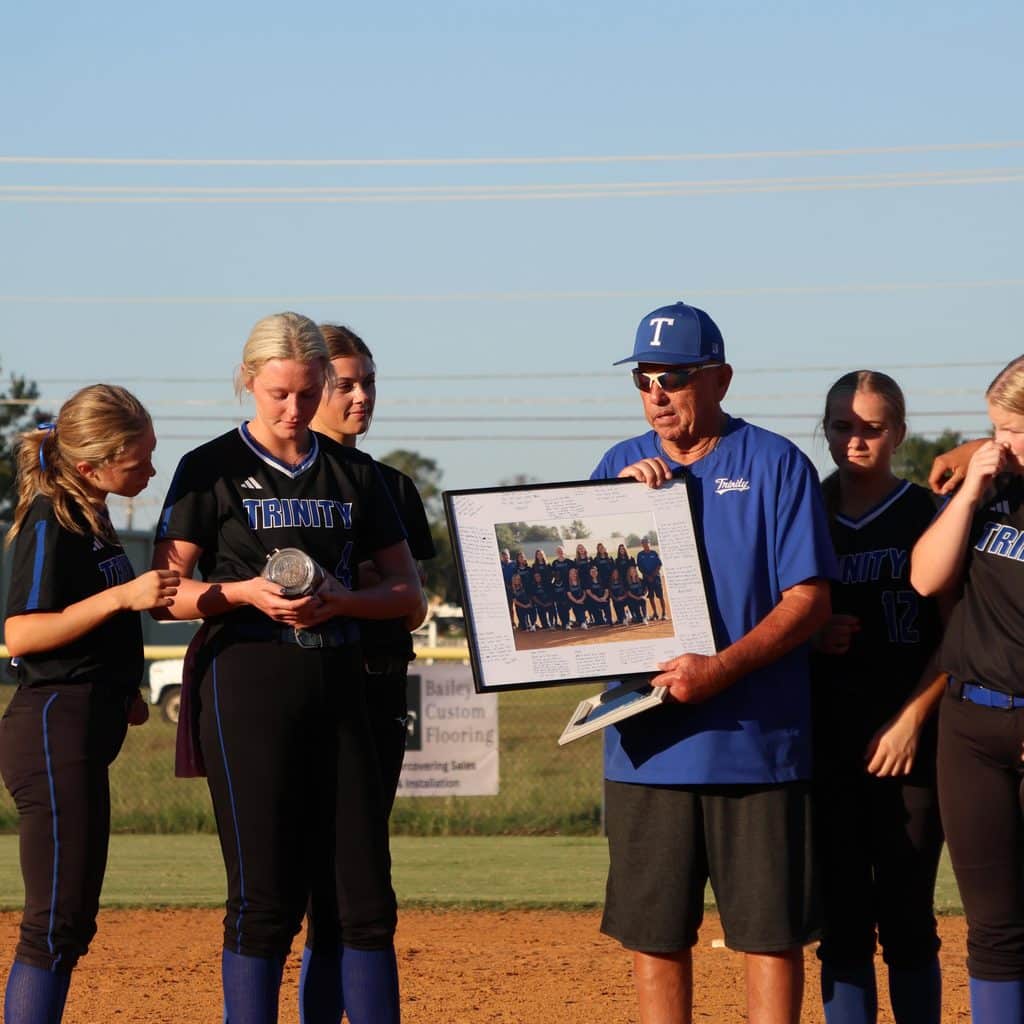
Emotions were bittersweet as he coached his last home game at Barry Walker Field on Sept. 29, which the school began with a special recognition honoring his years of service, and two more on the road to round out the schedule Oct. 6 and 8.
“It’s going to be hard,” Sanders said. “You sit there, you’ve been on the sideline and the dugout for that long. Coming back next year, I’m going to sit out there and watch them and support them, and it’s going to be hard.”
Most lines of work have a way of letting you know when it’s time to move on, and for Sanders, a natural decline in his ability to take the active hand he always did in those operative portions of practice – roles he’s handed over to assistant coaches Jeff Alligood, Shannon Canady and Tiffany Smith – have slowly made that clear.
“I’ve kind of always said when I can’t throw and hit like I used to, when I couldn’t do the things I used to could do, it’d be time to let the young guys have it,” he said.
A great run…
Sanders’ time at Milledge, starting in the 1980s, included his only state title as the Trojans’ head baseball coach in 1993. There, he’d also work as defensive assistant and coordinator under a number of football coaches including both a former (Ken Johnson) and future (Bruce Lane) head coach at Trinity, and mentor JMA’s current head man and AD J.T. Wall, among many others.
His move to Dublin came circa 2012, originally as a member of Buddy Woodard’s football staff and a baseball assistant to Chuck Grooms, whom he’d succeed as head coach a year or two later.
His tenure included several state playoff runs, but notably a runner-up finish to Piedmont Academy in 2014 and an appearance in the 2018 semifinals at Trinity-Sharpsburg.
Sanders, who ultimately stepped back from football, would lead the baseball program until the arrival of current head coach Josh Ward about 2021, then step over that same season to fill a void in the softball dugout created after the departure of Krista Meadows.
His six seasons there included a handful of region crowns, and multiple state tournament appearances.
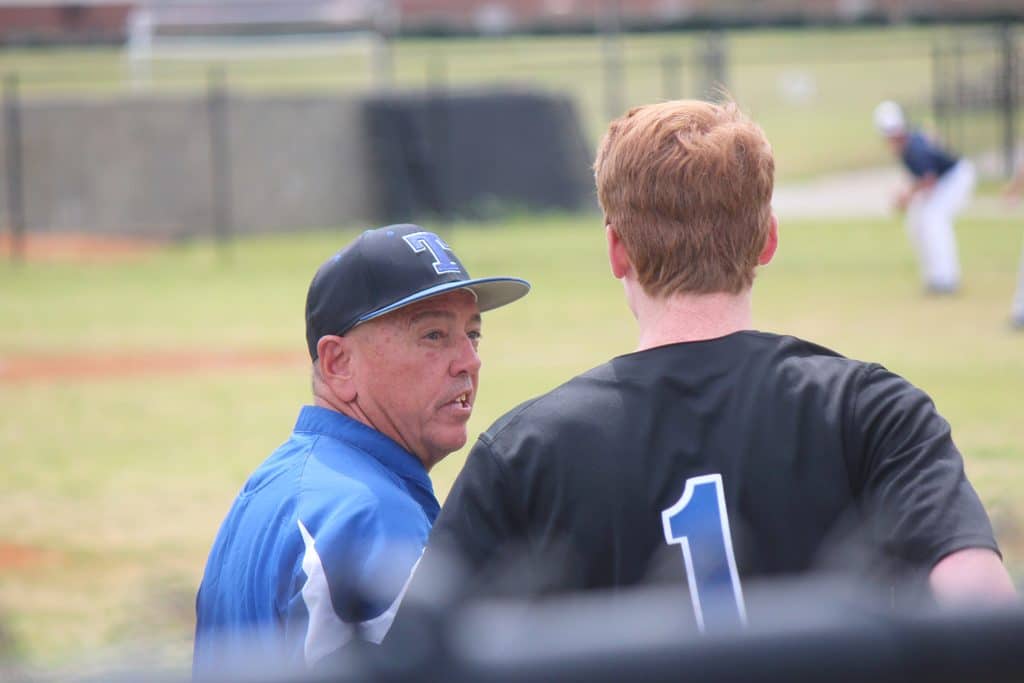
Over the full journey, obvious landmarks were the seasons that finished at or close to the top of the mountain, with the thrill of the Trojans’ walk-off to clinch the ’93 title and the sting of Trinity’s heartbreaking losses to Piedmont in that ’14 finals series equally as unforgettable.
“I remember losses more than wins, believe it or not,” Sanders said. “The state championship, I remember that, but games when you’re the underdog and you come back and beat somebody or have that chance to beat them. To me, I remember those more than anything else.”
But relationships with players that he’s built up through the years carry way more value than any win, loss, championship or accomplishment. And it’s those that he’ll miss most about the job.
“One of my highlights is when you get a player come back to you years later and say, ‘Coach, I appreciate all you’ve done for me, all you’ve taught me,'” Sanders said. “That, to me, is more important than anything else. That they’ve turned out to be an outstanding young person and learned a lot in there.”
‘Always there for us’…
Players consider Sanders – who, by day, teaches social studies, history and government at the middle and high school grades – one of the most positive and encouraging voices they hear from on campus.
“He always reminded us how much he believed in us, and how much he cared about us, and those types of things,” said sophomore Liza Gay. “He was always there for us.”
On the field, Sanders was as demanding as they come in his expectations and attention to detail, but always had a gentle touch, especially when it came to easing younger players into the high-pressure atmosphere of the high school level.
“You’re nervous, going to play varsity,” Gay said. “But he made it feel like a family, very welcoming. Then at some point he kind of became a father-, grandfather-figure in my life, one of those people I speak to when I see him at school. He’s there for you, he’s encouraging you. Like family at this point.”
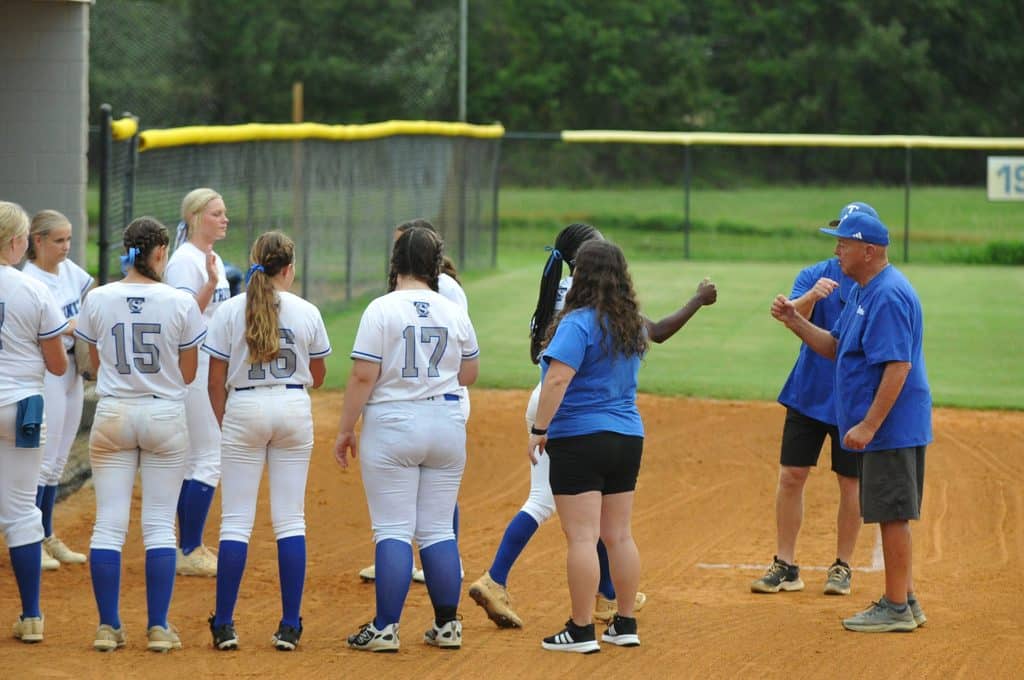
Outfielder Reese Cobb, now a sophomore, has played for Sanders since her eighth grade year.
But she remembers vividly a moment ahead of this past season, when she was preparing to pitch for the first time at the high school level, helping meet a need in the circle where the Crusaders were without any experienced arms.
Sanders had the perfect words to quell some understandable self-doubts.
“He came out there by himself, and said, ‘Whatever you do, do it for the glory of God,” Cobb said. “You’re not here to impress anybody but him, so do your best always, and don’t look for the approval of others.'”
Gay remembers one of the most beneficial confidence boosts early in her career coming in the form of an unexpected pinch hit at-bat during the team’s run at the state tournament in Columbus her eighth grade season.
“My freshman year, he gave me the opportunity to hit in the playoff game in Columbus, and I got a big hit,” she said. “That was one of the things that stuck out, him showing me he believed in me. Even at a young age, when other people didn’t believe I should be in that spot, he did.”
Though he is definitely one to raise his voice to deliver specific messages during games or practices when called for, he was never much of a speech-maker, or rah-rah guy, except in the rare instance where he unexpectedly broke character.
“He’s very quiet when he talks to us,” Cobb said. “But at this pep rally, our principal asked us to be loud, and nobody would say anything on the team. So he got on the microphone and got as loud as he could.”
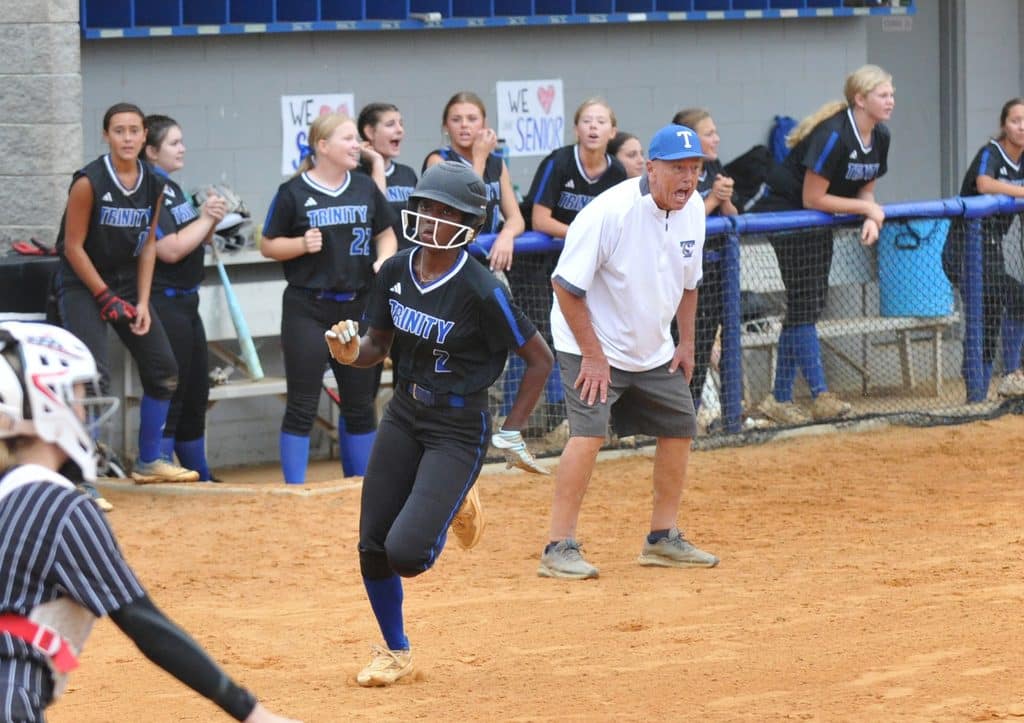
Constant words of wisdom made him a trusted mentor for players both at practice and school, where he had his own unique way of expressing care and friendship.
“He gave us a paper full of quotes that he loved, and sports quotes,” Gay said. “He was like, I want everybody to pick two. We all picked two and put them in our locker. It’s just those things he reminds us to do to remind us why we play, who we play for, the enjoyment we find in the game, those kinds of things.”
“He just does what’s best for us all the time,” Cobb said. “He has his own ways of lifting us up, and I love it. He’s always been very kind to us, even off the field because we have him as a teacher. He’s been a very good teacher to us.”
Softball swan song…
Sanders’ last go-round this fall coincided with a difficult rebuilding cycle for the Crusaders, whose returning roster was overwhelmingly inexperienced across the board, but particularly at a few critical positions.
“It’s definitely been tough,” Gay said. “It’s one of those years, you have a lot of young people, people that have never played, people that have played one year, people that have never played in varsity.”
Their lone senior, Sara Beth Gay, hadn’t played softball since eighth grade. Chloe Rozier was the lone multi-year starter out of three juniors who took on a lot of that leadership role.
There were no eighth graders on varsity, but the team had a lot of talent concentrated to the freshman class that had excelled on the middle school diamond just steps away in the complex, and some sophomores who were also getting used to playing the game at a higher level. For each, it was still a big adjustment.
“It’s still a softball field,” Sanders said. “The bases, it’s all the same. The speed of the game is the only difference.”
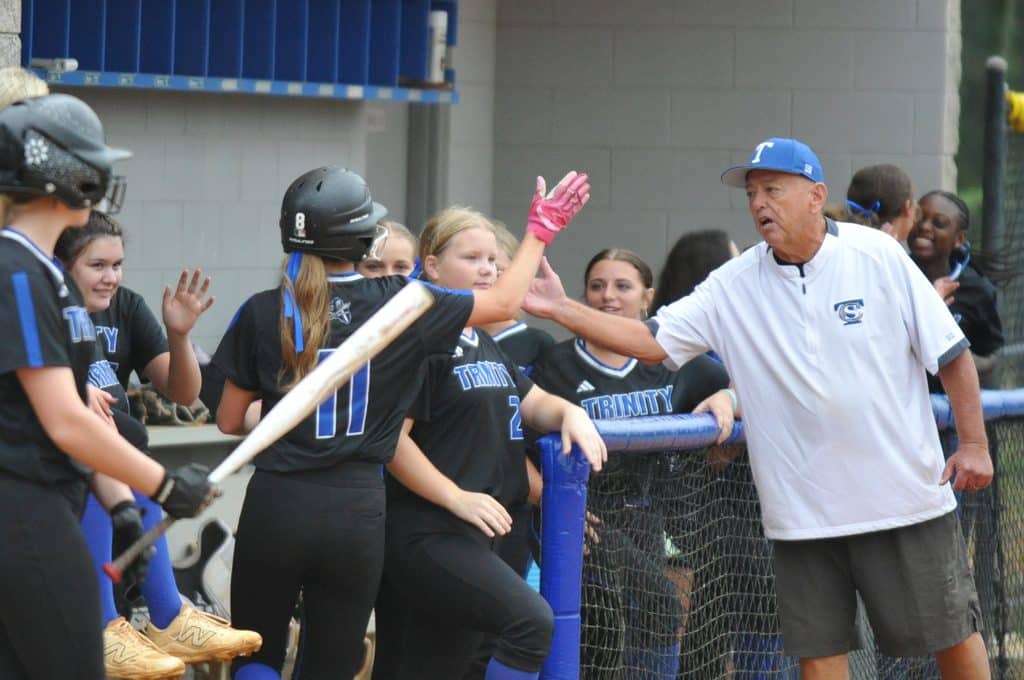
The Crusaders remained tight, and focused all year despite finishing 0-17, and missing the playoffs for the first time in several seasons.
“Not making it this year, I’m sure it’s a little disappointing for them,” Sanders said. “But our eyes are still focused on Jesus, where they need to be. Win or lose, tough times or good times, that’s where all the focus needs to be. And this group has been great about that.”
While their lineup was able to create ample offense, the circle – a thin spot going back to last year – was an area where they continued to struggle.
In all reality, Trinity hasn’t had a true hurler since the graduation of Allie Baggett two seasons ago, though an injured Maddie-Grace Alligood, in 2025, had enough experience to get them by at the position.
The lack of a viable succession plan exposed the weakness significantly this fall, as a handful of different players tried their hand at the craft.
All – much like the players at new spots in different places defensively – became more comfortable as the season went on, but opponents would end up taking advantage of an abundance of hits and walks to outscore the Crusaders 227-67.
“There were times we’d have three to four good innings, and something would happen and we’d have a bad inning. We just had to stay away from that,” Sanders said. “This group, they’ve worked hard. They’ve done what we’ve asked. They’re just real young, real inexperienced.”
The Crusaders’ “attitude and effort” remained positive all year long, and the strides made from the first game to the last were significant for many players.
“All of them, individuals at their positions, improved,” Sanders said. “Some learned new positions. We asked people to move to positions they’d never played, for the team. The attitude was all good. It was whatever the team needed me to do.”
He believes the current group of players, as they continue to grow and develop, has bright future, with that elusive self-assurance the missing piece this team was working diligently to fit into place down the stretch of 2026.
“It’s a tough game to play if you haven’t played it long. But it’s a great group of kids, and young ladies,” he said. “We really try to instill confidence and belief in themselves. If you’re young and haven’t done it a lot, sometimes that lack of confidence can make a difference. We want them to believe and be confident in everything they do.”
Looking back, and ahead…
Trinity’s pipeline of both baseball and softball talent – not only players who are strong athletes, but quality young men and women – has been a strong one throughout Sanders’ time in Dublin.
“We’ve been fortunate, blessed. Trinity has always put some out,” he said. “We’ve got some good ones now, but most of them are younger. They’re still growing.”
Great coaching staffs, in both baseball and softball, have been just as much a constant… and an underrated piece to which he attributes a lot of his success.
“I’ve been blessed with the help I’ve had,” Sanders said. “That’s the big thing. The head coach is overrated. They (the players) win the games. I lose the games. It might be a slight exaggeration, but it’s the truth.”
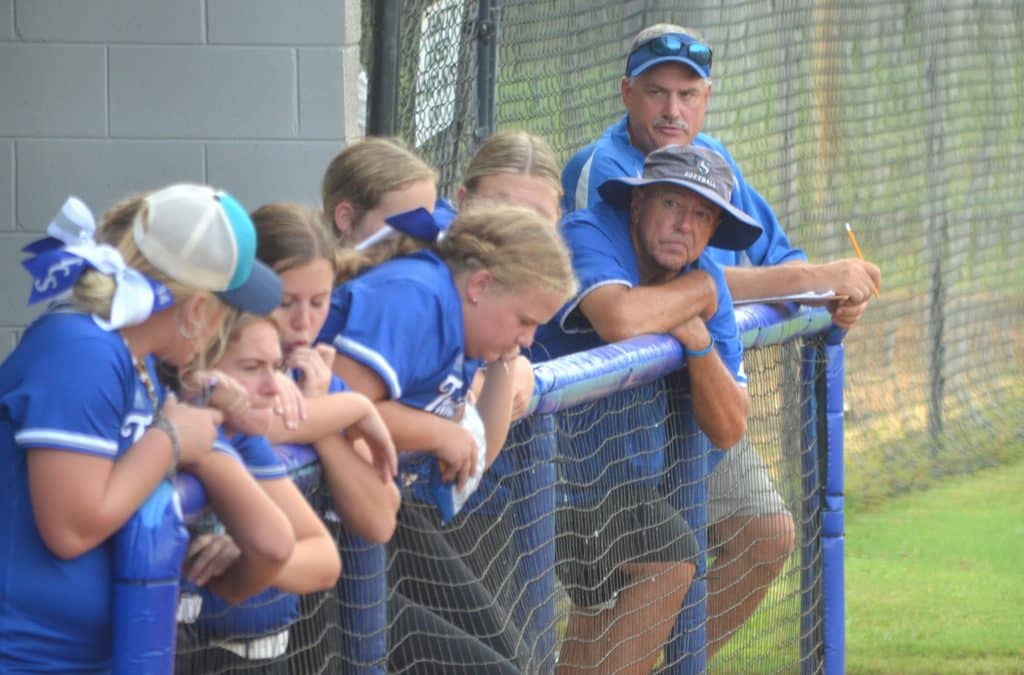
Although he’s hanging up his coaching cap, he’s not yet ready to put away the teaching one, and plans to stay on at Trinity as part of the school faculty for at least a little while longer.
“I would like to still teach some,” Sanders said. “We haven’t talked, discussed that, but I don’t know if I could just cold turkey, get out of it. When this is over, I’ll sit back and pray about it and whatever the Lord is leading me to, that’s what I’ll do.”
Though retirement tends to be a tough transition for anyone used to doing a certain thing year-round for much of their working life, there are some perks he’s looking forward to.
“My wife and I, it’s going to be nice to have a summer off, that if we want to do something we can,” Sanders added. “I’ve always wondered what it’d be like to go home at 3:30 every day, have some time to get some stuff done around the house, whatever you need to do.”
Over his career, there have been some great seasons and some tougher ones. But with every year that’s gone by, he’s learned to judge them not by a count of wins or losses, but in effort.
It’s what he demands of his players, and has demanded of himself. And when you’ve given it all you have, you don’t have to be ahead on the scoreboard to go out a winner.
“You go out and play the game, play it to the best of your ability,” he said. “You’re going to win some, and you’re going to lose some. But as long as you’ve done the best you can do. Then that’s all you can do. And hey, I’m going to give God the glory.
“He’s blessed me to allow me to do this for 45 years. Something, when I first got into it, I didn’t know if I was doing it for a career or not, but it lasted a long time. He has blessed me and put me in spots. He’s got me here for a reason, and hopefully I can be a positive influence on these young ladies or any team I coach.”
Author

Related Articles
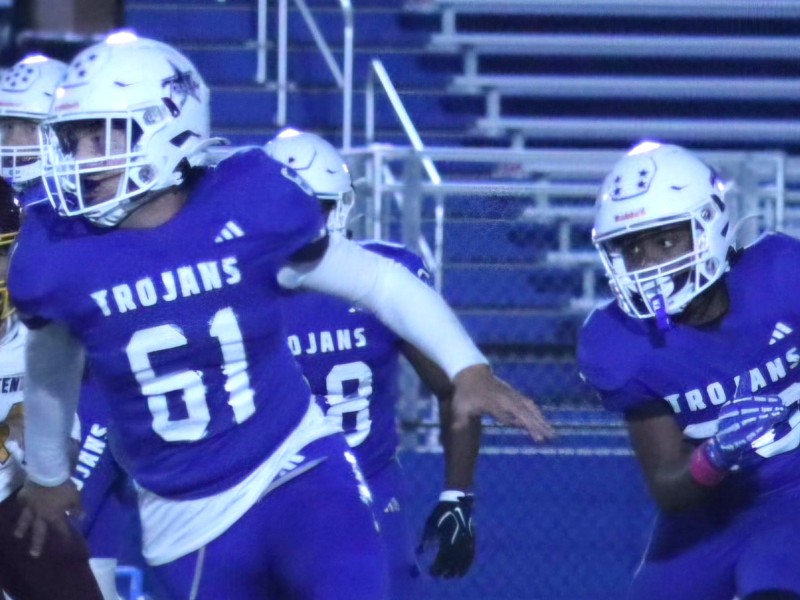
No. 1 Johnson County hammers Hancock Central to continue unbeaten run
The Trojans scored 55 points in just 17 offensive plays, and were dominant again on defense as they overwhelmed the Bulldogs to improve to 8-0.
Interceptions, Bostic’s hat trick in fourth give Dublin last word over Dodge in 100-point thriller
The Irish scored the last 14 of the teams’ 100 combined points to pick up their seventh win of the season and move within a game of clinching the region 2-AA title.

Five INTs, blocked punt TD help West Laurens pick off Liberty County to preserve hopes in region
The Raiders’ rout continued a season-long theme of strong defense, and the more recent trend of interceptions, which have come in bunches over three of their last four games.