
Laurens County Commission passes tax increase
Officials say tax hike needed to cover inflation, public safety costs.
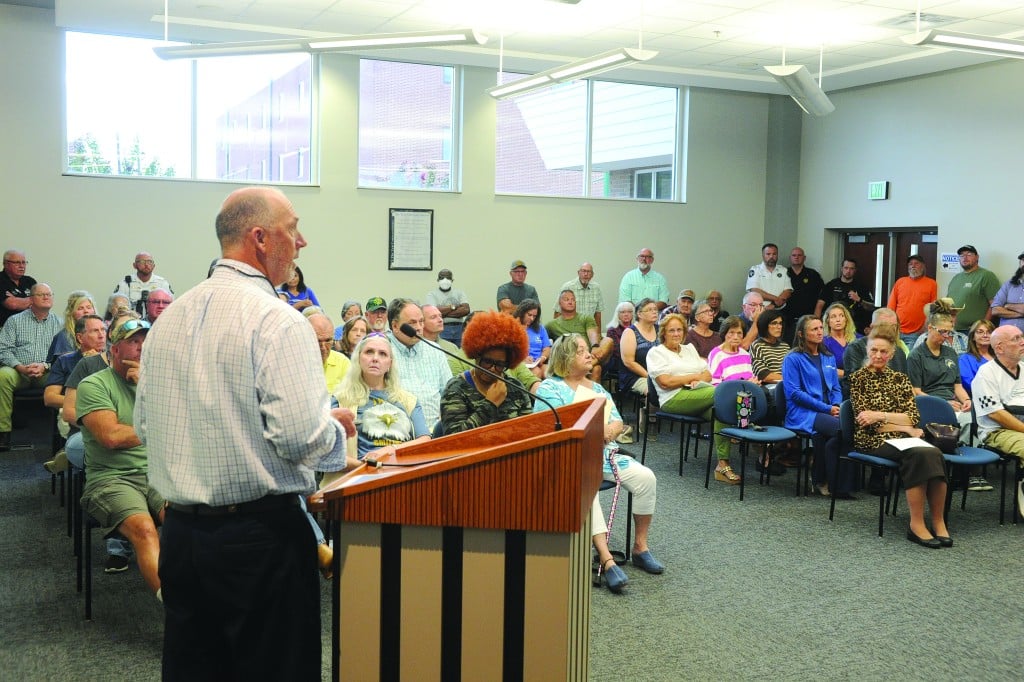
County Administrator Bryan Rogers gives a presentation on the county’s budget Tuesday during the third and final public hearing on the tax increase/RODNEY MANLEY
The Laurens County Commission approved a 31 percent property tax increase Tuesday, its first tax hike in more than 10 years.
Unswayed by the objections of a standing-room-only crowd, the commission voted to raise its millage rate to 7 mills, up from up from 5.49 mills. The tax increase will apply only to property taxes levied by the county commission and not those from county school board. The millage rate hike is expected to generate about $3.5 million in additional taxes.
County officials contend the tax hike is overdue, and the money is needed to cover inflation and rising public safety costs. But to avoid an increase, the commission dipped into its healthy reserve fund to cover rising costs, spending more than $4 million in reserves during the past three fiscal years to cover expenditures.
“That’s not a sustainable business
policy. You can’t continue to do that,” County Administrator Bryan Rogers told the crowd. “We run through about $3 million in operating expenditures in a month.”
What it means for your taxes
The commission’s proposed rate hike will cost the owner of a home with a taxable value of $200,000 an additional $120 a year. The county school board, which levies its own tax, approved a 2.8 percent hike. However, because it taxes at a rate (14 mills) that’s more than twice that of the county, that small increase would raise school taxes on the same home by about $31.
Combined, that means those county homeowners would pay about $150 more in new taxes each year.
Several residents said they already are struggling to make ends meet and cannot afford the tax increase. However, one resident, Rufus Hill, noted the commission’s increase is only $10 a month.
“That’s just a drop in the bucket,” Hill said.
The county has a policy of keeping about six months of operating expenses in reserve, about $18 million, which is about where the fund currently stands.
“I don’t want to raise taxes,” Commissioner Kevin Tanner said, “but I don’t want to cut services either.”
Public safety is expensive
Rogers told the crowd that the county is averaging about $1 million a year in inflationary costs. He highlighted several of the major increases, including $1 million for health insurance, $849,000 for the sheriff’s department and about $241,000 each for EMS and 911.
With 825 square miles to cover, providing public safety services is challenging, especially with diesel prices at an all-time high and gasoline above $4 per gallon.
“We’re taking it on the chin right now with fuel costs,” Rogers said.
Rogers also outlined efforts over the past 10 years to increase police presence in rural areas, quicken emergency response times and better access to emergency medical care. The county has added a fifth round-the-clock staffed ambulance, with another staffed truck on standby. It also created 15 fire/medic positions who can get to the scene and provide care until an ambulance arrives.
“We now have six departments in the county staffed 24/7 with these cross-trained employees,” Rogers said.
The sheriff’s department budget is by far the largest in the county. Rogers explained some of the increased costs there have been raising deputy and jailer pay to be competitive with other agencies.
Aside from salaries, one of the largest expenses has been inmate medical care. In 2023, inmate medical costs totaled almost $400,000. For fiscal year 2026, the county paid almost $1 million for inmate healthcare.
“If they have a heart attack when they are in there, we have to pay for it. If they have a kidney transplant, we have to pay for it.,” Rogers said. “As a manager, I’m seeing a whole lot more money going out as there is coming in.”
FLOST could cut taxes
The tax increase comes just more than a month before county voters will decide a referendum on a new Floating Option Sales Tax that could offset the proposed tax increase.
The additional penny sales tax would lower property tax rates across the county and its seven municipalities. Revenue from the tax would go directly, dollar-for-dollar, toward lowering area property taxes for homeowners, businesses and farms.
If the FLOST passes, it could take effect in January, and county officials expect the money collected over the final six months of fiscal year 2027, which ends in July, to essentially offset the tax increase.
With the first six months of collections, the millage could be lowered by 1.7 mills, county officials say. A full year of the tax revenue could cut the current rate, reducing it 3.5 mills.
“It comes off of your property tax bills. It’s not that we’re trying to double-dip,” Mathis said at the hearing.
Commissioner Brenda Chain said the commission cannot keep dipping into its emergency fund.
“If we keep taking money out, we’re going to bankrupt Laurens County, and I’m not going to do that,” Chain said.
“Y’all gonna bankrupt us, too!,” someone shouted from the back of the room.
At 7 mills, the tax rate in Laurens County will remain the lowest within 150 miles. Despite criticism for it, Rogers said it’s fair and appropriate to compare the county’s tax rate and provided services with those in neighboring counties.
“You’ve got to look at your peers. We are proud of where our millage rate is at and the level of service we’re providing.”
The commissioners adjourned the hour-long public hearing before reconvening for a meeting to approve the tax increase. By then, all four commissioners in attendance – Trae Kemp was absent – had made their positions clear.
“Well, I’m voting my commissioner out!” one woman shouted while leaving.
Author

Related Articles
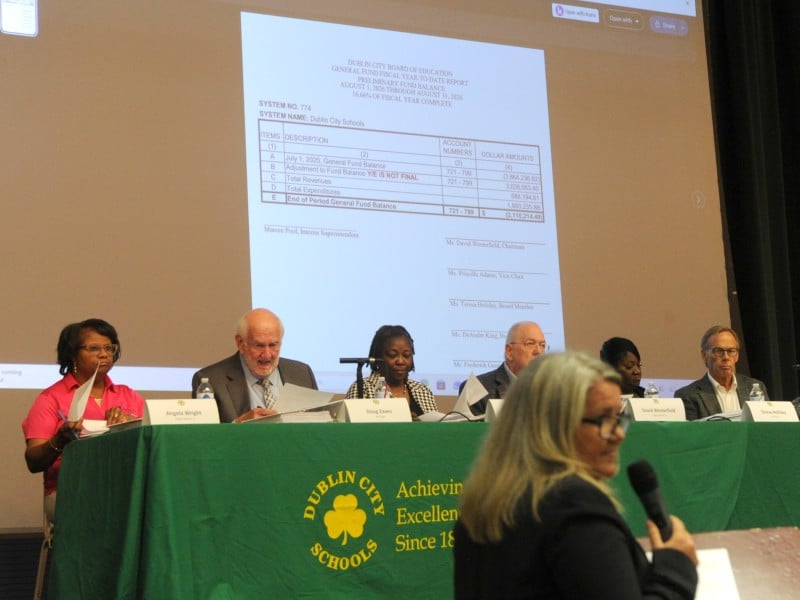
Dublin schools to ask state for more help with cash crunch
District ends August with a $2.1 million deficit, could need advances on state funding to meet payroll in October.
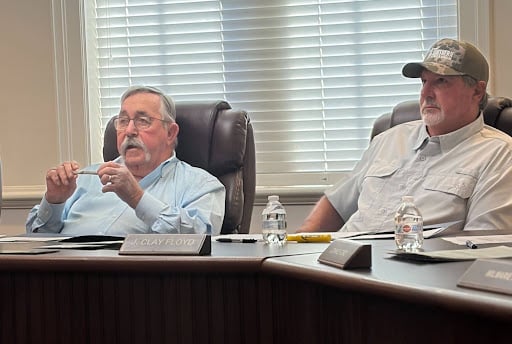
Twiggs County Commissioners approve “slow down” sign on road where a Danville man was killed this summer
The Twiggs County Board of Commissioners approved the installation of a “slow down” sign at the site of a hit-and-run that killed a Danville man back in July.
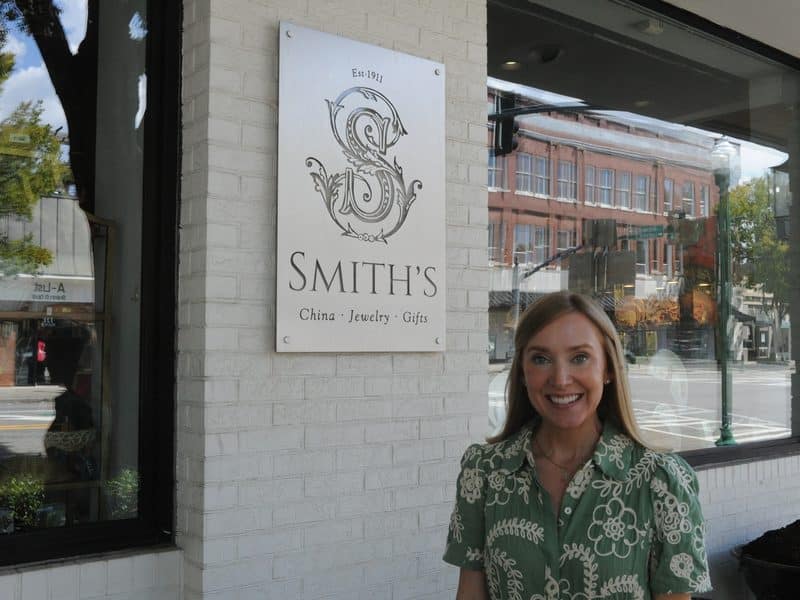
Smith’s jewelry celebrating 115 years in downtown Dublin
A jewelry store that opened in 1911 will be celebrating its 115th year in downtown Dublin this Thursday.