
New Southern Dad: Two short dad stories
For a lot of folks Sunday is a day of rest. Whether taking a long nap after church or vegging out on the sofa watching football, most people spend the day relaxing.
For a lot of folks Sunday is a day of rest. Whether taking a long nap after church or vegging out on the sofa watching football, most people spend the day relaxing.
This, of course, doesn’t apply to retail workers whose schedule can creep into any day of the week, even nights; or the retired, depending on their health and mobility, who may be homebound. For example, my nonagenarian grandfather is probably taking a nap right now.
I have it on great authority that some of the rudest customers come to town on Sunday afternoons. You are just as likely to get a cussing from someone with Reverend in front of their name as from anyone else. Everyone has their bad days, but you can really get to know people standing in line at restaurants and grocery stores.
But Sundays can bring on other, more unpleasant emotions. Called the Sunday scaries, the slow paced afternoon of the Sabbath day can evoke feelings of anxiety and dread. Neck deep in the school year, the Sunday scaries are a real thing in my house.
Sunday afternoons are often met with an impending sense of doom, mainly from my son, as a new week creeps closer and closer. For some reason he thinks he must cram a lifetime’s worth of relaxation and thrill seeking in one and half days and having to return to the classroom resets everything.
We’re working on some coping mechanisms, because, as I’ve told him, it only gets worse as you get older. Many days I’d rather go back to school, as bad as I hated it, than go to work.
***
In Colson Whitehead’s famed crime novel “Harlem Shuffle,” the main character is pulled between two worlds.
The protagonist is trying to be a legit businessman, running a furniture store in the historic New York neighborhood. However, making ends meet on the up and up isn’t easy, and past
connections and serendipitous encounters take him down shady paths.
These less than upright endeavors, as a lot of criminal activity does, occur after nightfall. To juggle his priorities, the character, Ray Carney, takes up the practice of dorveille, or second sleep. The idea comes from pre-electricity days, when people went to bed at dark. After a few hours of rest they got up and took care of tasks like record keeping, accounting and the like before going back to bed to rise with the sun and go back to work.
To keep his family in the dark, Carney “settles his accounts” in the dark, rising the midnight hour to orchestrate his schemes. The second sleep becomes a major theme of the book. You should read it sometimes.
I was reminded of the passages recently when I was awakened by a rattling pipe. The noise only sounded at night, and it took me a couple of days to pinpoint the source. It was a leaky toilet valve.
I haven’t fixed it yet, but I plan on doing it in the daytime.
Author

Related Articles
Returning to the spotlight on a different stage
Reporter happy to be returning to a theater production, though it will be a different kind of stage.
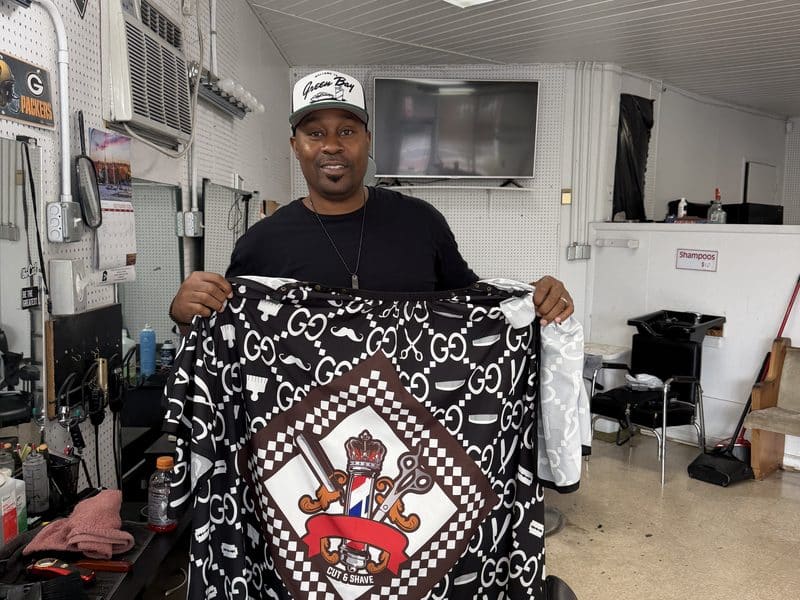
Supporting Dublin’s local businesses
Editor and Publisher Donnell Suggs made his way to some more places in downtown Dublin, including a stop at the Five Points Barber Shop.
New Southern Dad: A right-handed guitar becomes a good investment
For some time I’ve had a bass guitar, right-handed of course, purchased on the cheap from a discount music store when I was a teenager.