
Skill and amazement demonstrated at the video arcade
As long as humans have traversed the globe, one of the best ways to transport materials and finished goods has been via the ocean on ships. Whether on sailboats of old or the massive modern cargo vessels coming into port now, the seven seas are a major thoroughfare.
As long as humans have traversed the globe, one of the best ways to transport materials and finished goods has been via the ocean on ships. Whether on sailboats of old or the massive modern cargo vessels coming into port now, the seven seas are a major thoroughfare.
Getting from point A to point B could, however, be a long trip. To get to the Pacific Ocean from the Atlantic, boats had to travel around Cape Horn, the most southern point of South America. The sea is a cruel mistress, particularly so around the cape. Many ships were lost in the rough waters, strong winds and drifting icebergs.
A quicker, safer route had to be found, and it was long believed that the Central American country of Panama was the key to connecting the two oceans. In 1881, the French attempted to construct a canal through the Isthmus of Panama. The effort was led by diplomat Ferdinand de Lesseps, who was responsible for Egypt’s Suez Canal linking the Mediterranean and Red seas.
Lesseps visited the country during the short dry season. As work began digging out the earth using new steam shovels, the precursor to modern excavators, crews were struck with heavy rains, slowing work to a crawl. The surrounding jungle was also a threat to workers not used to dealing with venomous snakes, large spiders and wild creatures, but the biggest problem was the tropical illnesses, such as yellow fever, that claimed many lives.
By 1889 the project was bankrupt and abandoned. After a couple of decades and a dozen or so geopolitical events, the U.S. government took control of the area and completed the canal, officially opening the route in 1914. The Panama Canal was released to the Republic of Panama in 1999, and the shipping route remains one of the busiest in the world and one of the chief sources of revenue for the Latin American country.
The construction of the Panama Canal did more than alter world commerce, it also changed the way people play. The steam shovels introduced to move the earth in Panama were the inspiration for coin-operated games to claim candy, toys and other prizes that we now call claw machines.
The first claw machine was patented in 1926. It was a glass box encasing a miniature steam shovel that moved on an arc and could be lowered and raised with a crank. For five cents, players could test their luck for a handful of candy. By the 1930s the machines were in nearly every bus and train station, drugstore and hotel lobby, offering a depression-weary public cheap thrills.
Such contraptions have been staples at arcades for decades now, and I’ve lost many quarters and dollar bills trying to win a stuffed animal or other prize. In the movies, which we all know give accurate depictions of real life, there’s no better way to impress a girl than by winning her a prize out of the claw machine. If that was true, I would have never gotten married.
Like many coin-operated games, claw machines are a scam. The prizes are oversized, the claw difficult to operate and programmed to close at varying levels of pressure, making it almost impossible to win. So, recently, when my daughter fed a crisp new $1 bill into a claw machine in a movie theater lobby, I figured we were about to waste time and money. I didn’t even bother to pay attention.
Low and behold, she comes running up with a bright neon yellow and green ball. The large grapefruit-sized toy had been claimed on her first try; she didn’t even set down her cup of soda.
Was it a fluke? Is she an expert crane operator? I don’t know, but I can tell you that I’m still impressed.
You can reach Kyle Dominy at k.l.dominy@gmail.com or write to 115 South Jefferson Street Dublin, Ga. 31021.
Author

Related Articles

Do not have to leave town for entertainment
There is plenty of entertainment for live theater right here in Dublin, Laurens County.

New Southern Dad: Georgia sasquatch sightings and walking at night
I don’t think humans are supposed to exist with as much light as we have grown accustomed to.
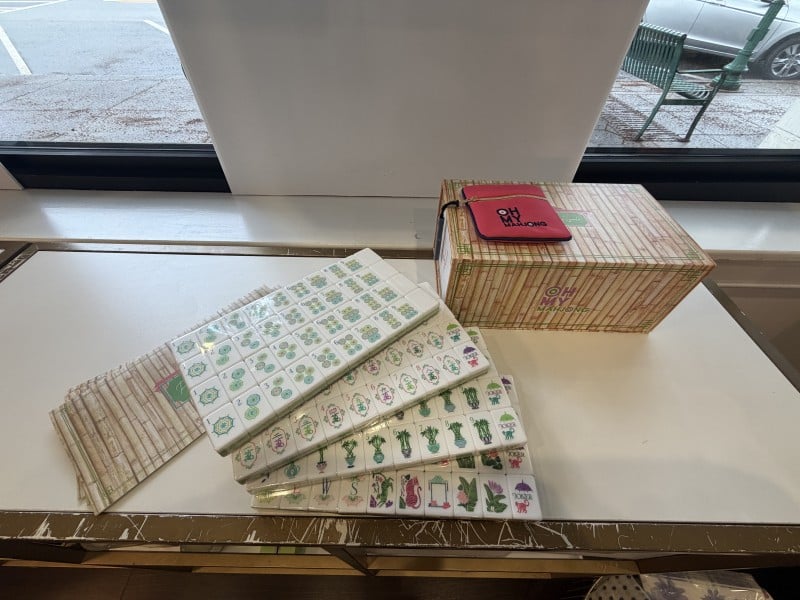
Editor’s Note: Mahjong? Yes, Please
Mahjong has quickly become a popular pastime throughout Dublin/Laurens County. The editor and publisher of The Courier Herald wanted to find out why.