
SLICES OF SPORTS: An appreciation of the offensive line
Offensive line may be an overlooked position, but remains the factor in the NFL that separates the decent teams from the great ones.
No team, in business or sports, is without one or more people that play the role of offensive linemen.
They’re the ones that few see or know about, but they do most of the heavy lifting and dirty work involved in making the product, delivering the service or accomplishing the mission.
Here in the newspaper world, that O-line is our press crew: Ashley, Chris, Matthew, Dave, Tanner and Malcolm.
They handle printing our thrice-weekly editions, as well as 30 or more others that are published by papers within our company or outside contractors, between presses here in Dublin, and over in Perry.
These dedicated co-workers in the back do much more than we here in the front of the office to deserve the title of ink-stained wretches, since they have their hands in the sticky stuff daily as they load and unload the press, then count, stack and stuff papers rolling off of it during runs.
Much like your O-linemen in football, they’re among the least appreciated, but also among the first you notice when they’re out, or shorthanded.
On a week when we celebrate some exciting awards across our newsroom from the past year, we’d be remiss not to tip a cap to those invaluable members of our team, without whom little if any of our work would ever be read.
Offensive lines, and any department you might compare outside of football, are as indispensable as wheels on a car: You literally can’t go anywhere without them.
And while the importance of quality talent up front will only become as lost on NFL teams as the number of games they’re able to lose in a single season, the position too frequently seems to be treated as an afterthought, or – at best – a secondary priority.
It’s more than a bit troubling that first-year Chargers head coach Jim Harbaugh had the need to defend his team’s selection of an offensive tackle – Notre Dame’s Joe Alt – fifth overall in this past year’s draft.
The availability of skill players on the board who might make for a more intriguing pick was brought up in his press conference looking back on the first round, and Harbaugh, anticipating the line of questioning, had the perfect response:
“I know the question’s gonna come up, and you’re gonna say what about a weapon? Offensive linemen, we look at as weapons. That group, we talk about attacking, offensive line is the tip of the spear.”
That premise, truthfully, shouldn’t be an outrageous claim.
But perhaps it takes being summed up by a former quarterback like Harbaugh (who, much like Georgia’s Kirby Smart, never seems to be at a loss for words to articulate the value of under-appreciated details in building an elite team) to make it hit home how much this era of glitz and glamor in offensive football has taken the focus off of the line of scrimmage, where it still belongs.
Though they sell the jerseys, fill the seats and make the highlights, playmaking backs and receivers are a dime a dozen in comparison to the stalwarts in the trenches who block for them.
Teams lack consistency and depth up front not because they don’t accept that truth, but because they don’t hold it firmly enough.
When quality linemen are so hard to find out of college, and even scarcer in free agency cycles when teams who’ve got good ones don’t let them go, you have to get where the getting is good up at the top of the draft, and guard against wasting the opportunity by chasing shiny objects with those prime picks.
I’ll hardly be shocked if the Atlanta Falcons don’t come to regret going with a player from every position on the offensive side other than on the line with their first-round selections the last FOUR drafts.
To their credit, the O-line has been addressed in various ways over those same years, and extensively in the first round before that with players like Jake Matthews, Chris Lindstrom and Kaleb McGary. And hopes are that group continues to develop into the type of unit that you can build an offense around.
But the line of scrimmage, like the team as a whole, has remained on the shaky side more seasons than not in the last several years.
It’s hard not to long a bit for the days of Todd Weiner, Justin Blalock, Todd McClure, Harvey Dahl and Tyson Clabo who protected the pocket in Matt Ryan’s early years, or the set of Jake Matthews, Andy Levitre, Alex Mack, Chris Chester and Andy Levitre that blocked for Devonta Freeman and Tevin Coleman en route to Super Bowl LI, who proved that Atlanta’s best seasons of late were less about elite skill guys handling the football than it was the talent and chemistry of the group leading the way up front.
There’s nothing old-school about controlling the line of scrimmage.
And until winning and losing in the league no longer comes down to the difference of a yard on third down, or providing your quarterback the extra second needed to step into a critical throw rather than release it off his back foot with a rusher in his face, offensive linemen will continue to be the most important players on the field.
Those who don’t adequately invest in the position will only doom themselves to continued irrelevance.
Author

Related Articles

FRIDAY NIGHT SCOREBOARD: Dublin edges Dodge in 100-point thriller; West Laurens picks five to rout Liberty County
A runaway shootout in the Shamrock Bowl and an outstanding night in Hinesville for the West Laurens defense and special teams made for an eventful week 10 in games around the Heart of Georgia.
West Laurens returning to Columbus after late-inning rallies to sweep Adairsville
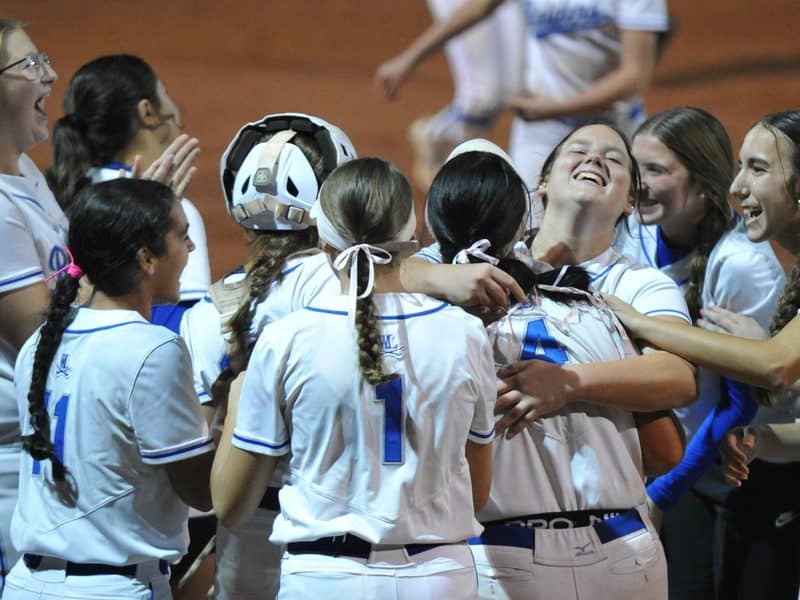
The Raiders’ high-powered lineup proved its mettle with two late-inning comebacks to sweep Adairsville Wednesday in the second round of the GHSA fastpitch softball playoffs.
FOOTBALL OUTLOOK: Region leaders, playoff hopefuls face key tests in week 10
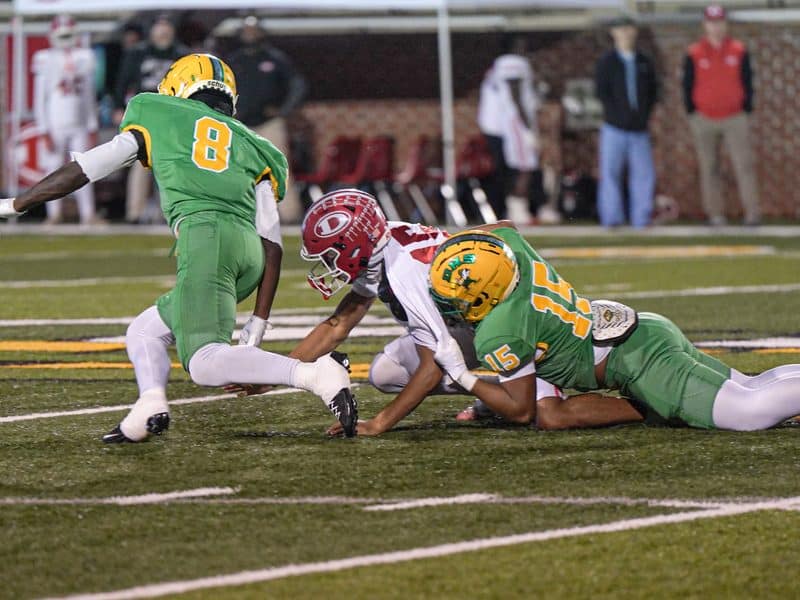
This is the point in the season, only days from Halloween, that top teams have the most to fear, with the risk of spooks, scares and upsets rising higher and higher each Friday as playoff time gets closer.