
MoCo implements higher county employee COLA for 2027
The Montgomery County Board of Commissioners adopted a 3.5 percent Cost of Living Adjustment (COLA) for county employees in fiscal year 2027 during their regular monthly meeting on Oct. 12 in Mount Vernon.
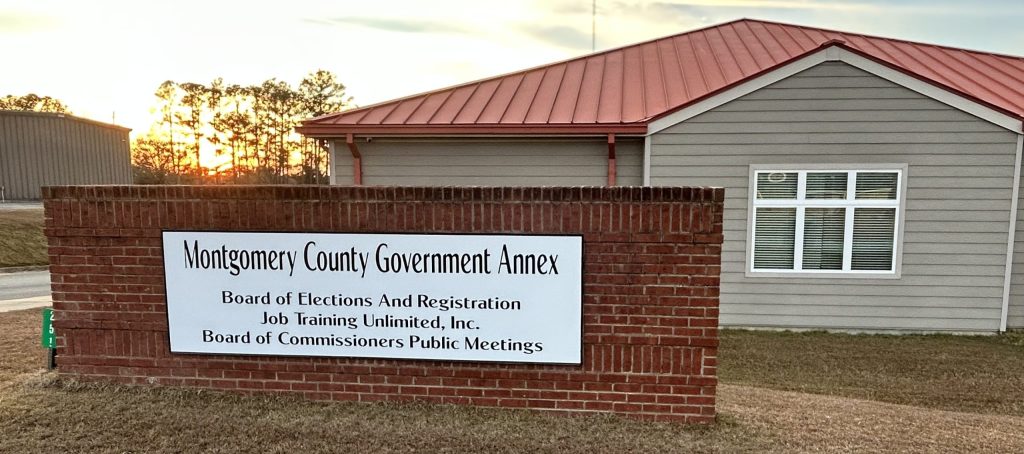
The Montgomery County Board of Commissioners adopted a 3.5 percent Cost of Living Adjustment (COLA) for county employees in fiscal year 2027 during their regular monthly meeting on Oct. 12 in Mount Vernon.
An employee COLA is an increase to employee pay intended to offset rising costs of essential goods and services, such as food or housing. The board have discussed implementing a COLA for fiscal year 2027 in prior meetings with two proposed options: a 2.5 percent COLA or a 3 percent COLA.
The 2.5 percent COLA would cost the county $53,740.18, while the 3 percent COLA would cost $73,985.15. However, Commissioner Amie Vassey proposed a third option: a 3.5 percent COLA to match the federal government’s social security payouts.
“It’s my belief that… our employees should get what social security recipients receive,” said Vassey. “That’s my belief.”
County Manager Heather Scott estimated the increase of 0.5 percent would cost the county an additional $20,000 approximately, with her highest estimation of the cost around $95,000. According to Scott, the increased COLA would be within the county’s budget, and the other commissioners agreed with Vassey’s proposal.
“Everybody’s struggling,” said Vice-Chair Clarence Thomas.
Commissioner Vassey offered a motion to adopt a 3.5 percent employee COLA for 2027, which passed unanimously.
The board was also presented with an updated land use ordinance by County Attorney Ron Daniels. An ordinance regarding the construction of data centers in Montgomery County has been in discussion since May, with commissioners and residents pushing for an ordinance to be passed to serve as a warning system for incoming data centers.
However, while an ordinance had been drafted and approved for readings by August, those readings were halted during the board’s monthly work session on Sept. 10, spurred by Commissioner Leland Adams. He reiterated his stance, which he has maintained for several months, that the proposed ordinance would only provide “hurdles” against data centers.
Adams instead proposed the ordinance be tabled for further revisions to make the legislation more generic rather than focusing solely on the issue of data centers.
“I would like to create this thing to cover more than just data centers,” said Adams during the September work session. “It’s to make it generic enough that you could put solar panels and any other large industrial complex that could come to the county.”
Daniels returned with a new draft covering not only data centers, but any large land use and energy generation projects. According to Daniels, the draft was delivered to the commissioners on the same day as the meeting, as he was waiting on legal answers from a fellow lawyer.
Daniels’ primary concern with the new direction of the ordinance was to prevent the legislation from being overly vague and unenforceable, while also future-proofing the document to lessen the need for future revisions.
“Really, what we needed to do is constrain what this applies to, and we had to have something not subjective to it; it’s objective that we can sort of, if you want to imagine, it’s like lassoing something,” said Daniels. “We had to have kind of a target, something you could identify.”
While no official action was taken on the ordinance during the meeting, the commissioners expressed approval of the new draft’s revisions and coverage.
“Looks pretty good,” said Adams.
Author

Related Articles
Dublin school board OKs tax increase
Board says tax hike is “revenue-neutral” and will offset revenue lost to new senior citizen exemption.

Multiple Treutlen governing bodies propose adjustments to millage rates
Multiple governing bodies in Treutlen County have announced plans to adjust their individual millage rates following reassessments of property values in the area.

Pilot Club Christmas ornament stirs memories of old Claxton Hospital
“We’ve already sold at least 300, and we got them in (last) Wednesday,” Pilot Club member Sherry Mangum said Monday. “It’s been a great response.”