
Franklinia trees return to Dublin as part of Liberty Trees for America’s 250
The Franklinia trees have returned to the city of Dublin during a Liberty Trees for America’s 250 ceremony.
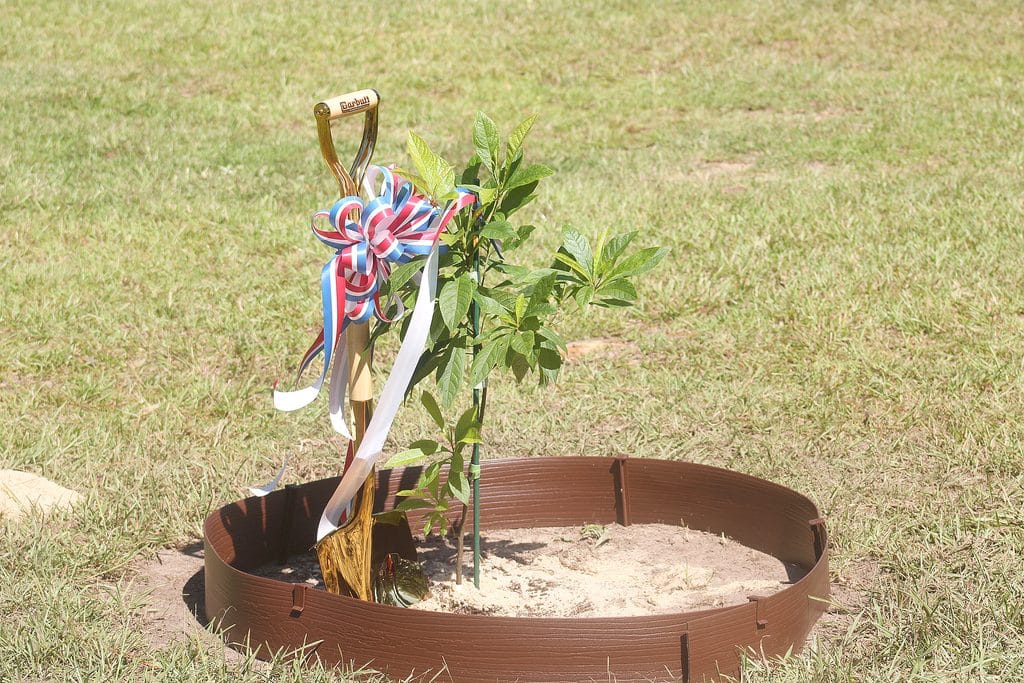
The Franklinia tree is back in Dublin.
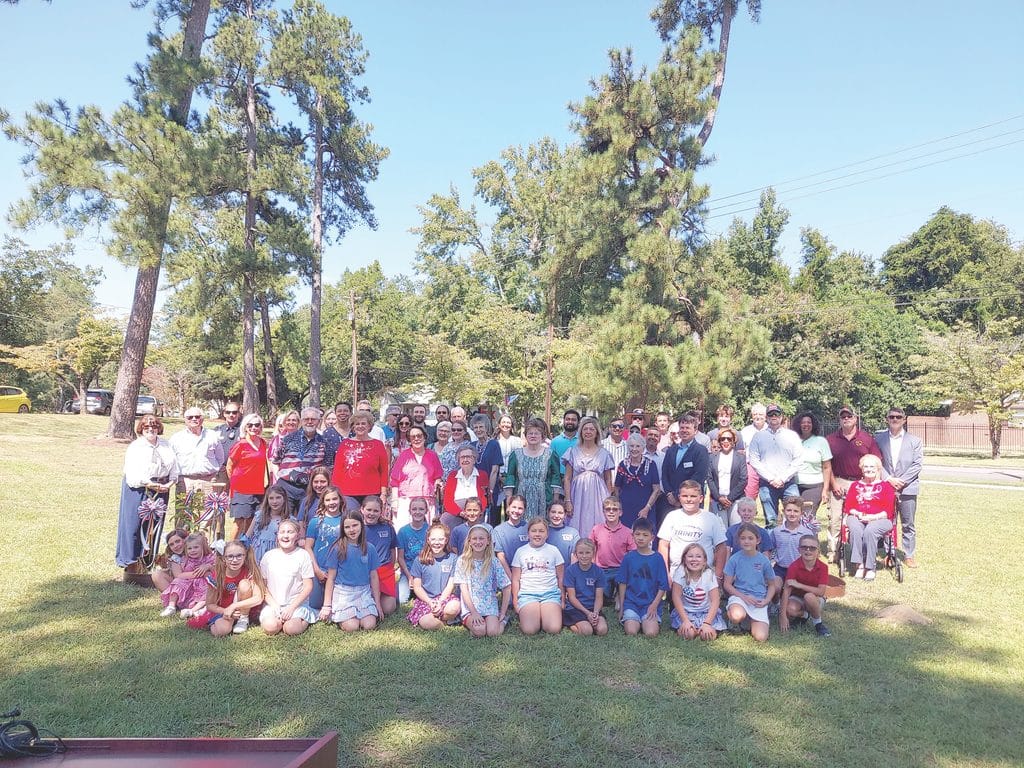
The John Laurens Chapter of the National Society Daughters of the American Revolution, in partnership with the City of Dublin, Erin Garden Club and Home2Suites, held a Liberty Trees for America’s 250 – A Constitution Day Tree Dedication Ceremony on Thursday, Sept. 17 at Mayor Grady Wright Park, 300 North Church St.
Karen Haggard, with the NSDAR, said their organization has been finding ways across the country to find different ways to commemorate the 250th year of America.
“It is our hope that these Liberty trees that we plant today, on Constitution Day, will stand as an example to all of us,” Haggard said. “They will exhibit strength, beauty and a beautiful spirit.”
Dublin Mayor Joshua Kight said the decision to plant Franklinia trees on Constitution Day was because of Benjamin Franklin, one of the founders of America.
“The Declaration of Independence was signed 250 years ago,” Kight said. “Two hundred thirty-nine years ago the Constitution was signed and 238 years ago it was ratified. Dublin became a tree city 26 years ago. So we are part of a great celebration today.”
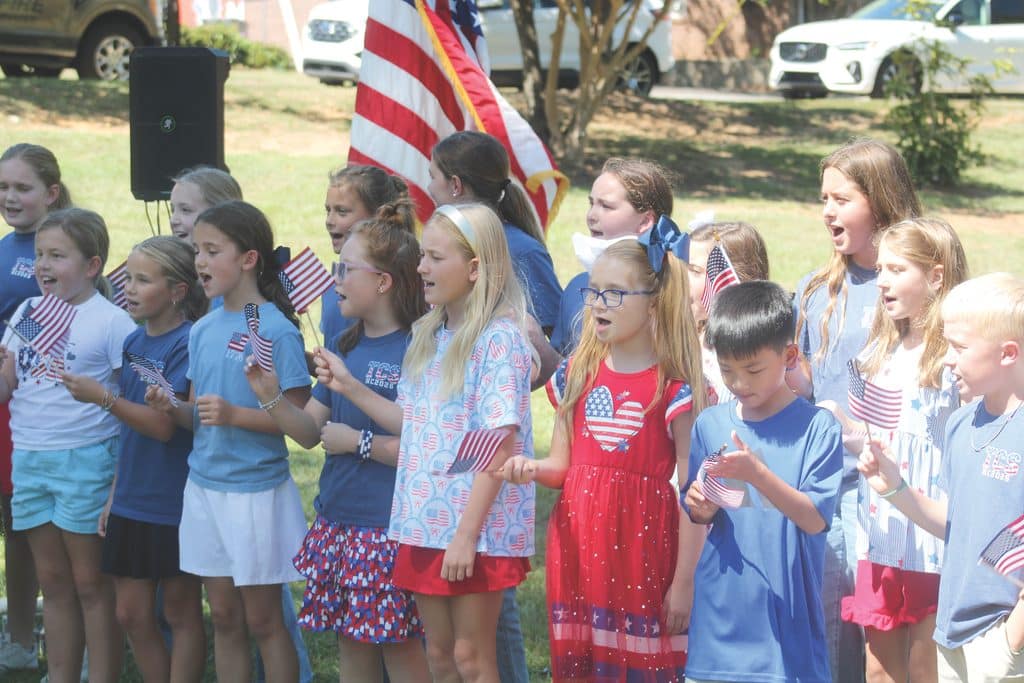
Sgt. Owen Bracewell, with the Dublin Fire Department Honor Guard, presented the American flag, followed by patriotic music from the Trinity Christian School Honor Choir.
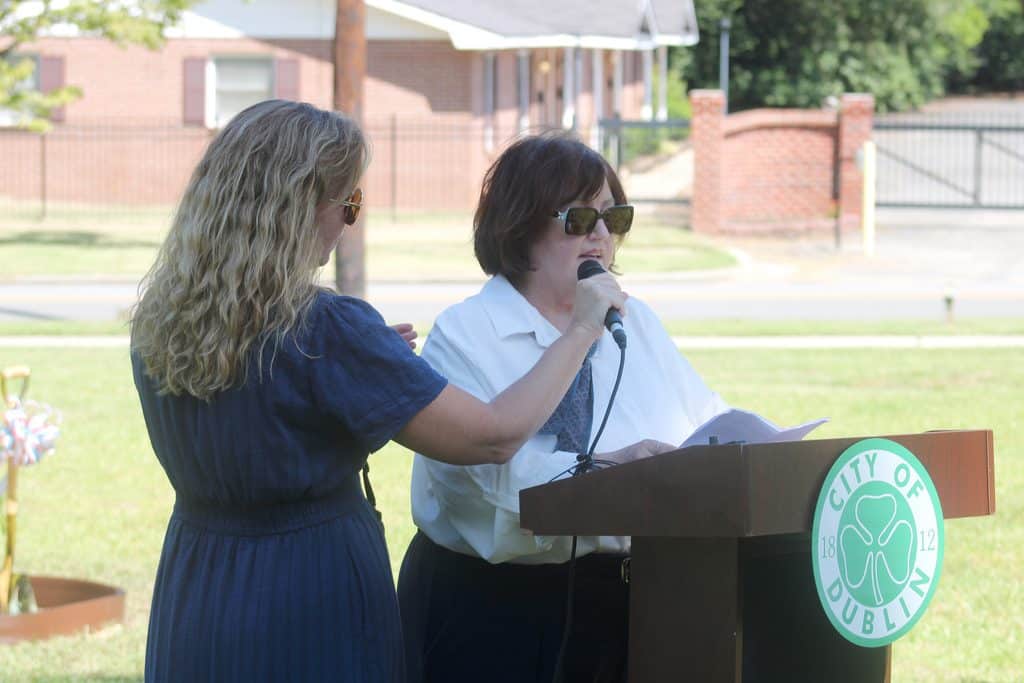
Melodie Smith, with the Erin Garden Club, introduced Heather Gladfelter, who is considered the nation’s expert on the Franklinia tree.
“She has helped tremendously over the summer for this event today,” Smith said. “I am extremely thankful for the guidance and emails between the two of us.”
Gladfelter called the Franklinia tree her favorite.
“This is much more than simply planting a beautiful tree,” Gladfelter said. “We are planting a piece of Georgia history. We are also planting a survivor.”
Franklinia has not been found naturally in the wild for more than two centuries.
“It is extinct in the wild,” Gladfelter said. “And yet, here we are today preparing to put Franklinia into Georgia soil.”
Kight hopes the Franklinia will be rediscovered in the wild again. If not, he knows the city of Dublin is doing its part to preserve the species.
“It took a lot of effort to get this here,” Kight said. “When I became mayor, I told Melodie Smith that I would like to get a Franklinia tree planted. It took years but we found the right person in Dr. Gladfelter.”
Kight said it was not easy to have the tree planted where they wound up. Franklinia trees cannot survive where cotton had previously been and that area used to be a farm.
“We had to send soil samples to Clemson to make sure that the soil was appropriate for the Franklinia trees,” the mayor said. “We are very happy to honor the people that made this possible.”
Gladfelter went over the history of the tree. On Oct. 1, 1765, American botanist John Bartram and his son, William, discovered the Franklinia tree growing along the Altamaha River in Southeastern Georgia.
“They would never find this tree anywhere else,” she said. “William later returned and collected seeds in 1773 and brought it back to the Bartram family garden in Philadelphia. That simple act saved it.”
The last observation of Franklinia in its native habitat was in 1803.
“Despite many searches since then, no naturally occurring population has ever been found,” Gladfelter said. “We still don’t know with certainty why it disappeared. Whatever the cause, it vanished.”
The plants grown from seeds collected by William Bartram became the source of Franklinia.
“Think about how incredible that is,” she said. “Had those plants not been preserved, Franklinia might not exist today. More than 200 years later, we can still see its beautiful white flowers. We can grow it, we can study it and we can conserve it. These trees will have a story of their own. People will see it and a child will ask about Franklinia. Two centuries ago, William Bartram carried those seeds away and he could not have possibly known how important his act was for the future. Today, in our own way, we are doing something similar. We are planting for the future. When you look at these trees, you are looking at a survivor. Today, its story passes into the hands of the people here in Dublin. These trees here are part of the next chapter.”
Author

Related Articles
More than books: Your library card can do so much more
Borrow a book. Visit a state park. Save a life. You can do more with your library card than you realize. And it’s free.
Mayor Coley issues statement following concerns about Redding’s permanent placement
Cochran Mayor Carla Coley says she disagrees with council’s decision to halt partnership with a hiring firm tasked with finding a permanent city manager.
Soperton City Council acquires ‘skeeter sprayer’ and new cameras
The Soperton City Council approved the purchase of new security cameras and a mosquito sprayer during their monthly meeting on Sept. 21 in the Soperton City Hall, adding both items to their agenda following work session discussion.