
Bleckley author and English instructor seeks to inspire his students to love reading and writing
When Wes Young — or as his students know him, Mr. Young — tells his high school students what he did over the summer, it’s not quite what they expect to hear.
On that first day of school in the fall, all anyone can talk about is what they did over the summer.
Did they go to the beach? Take a fun vacation? Sleep all day? Spend every day with their friends?
When Wes Young — or as his students know him, Mr. Young — tells his high school students what he did over the summer, it’s not quite what they expect to hear.
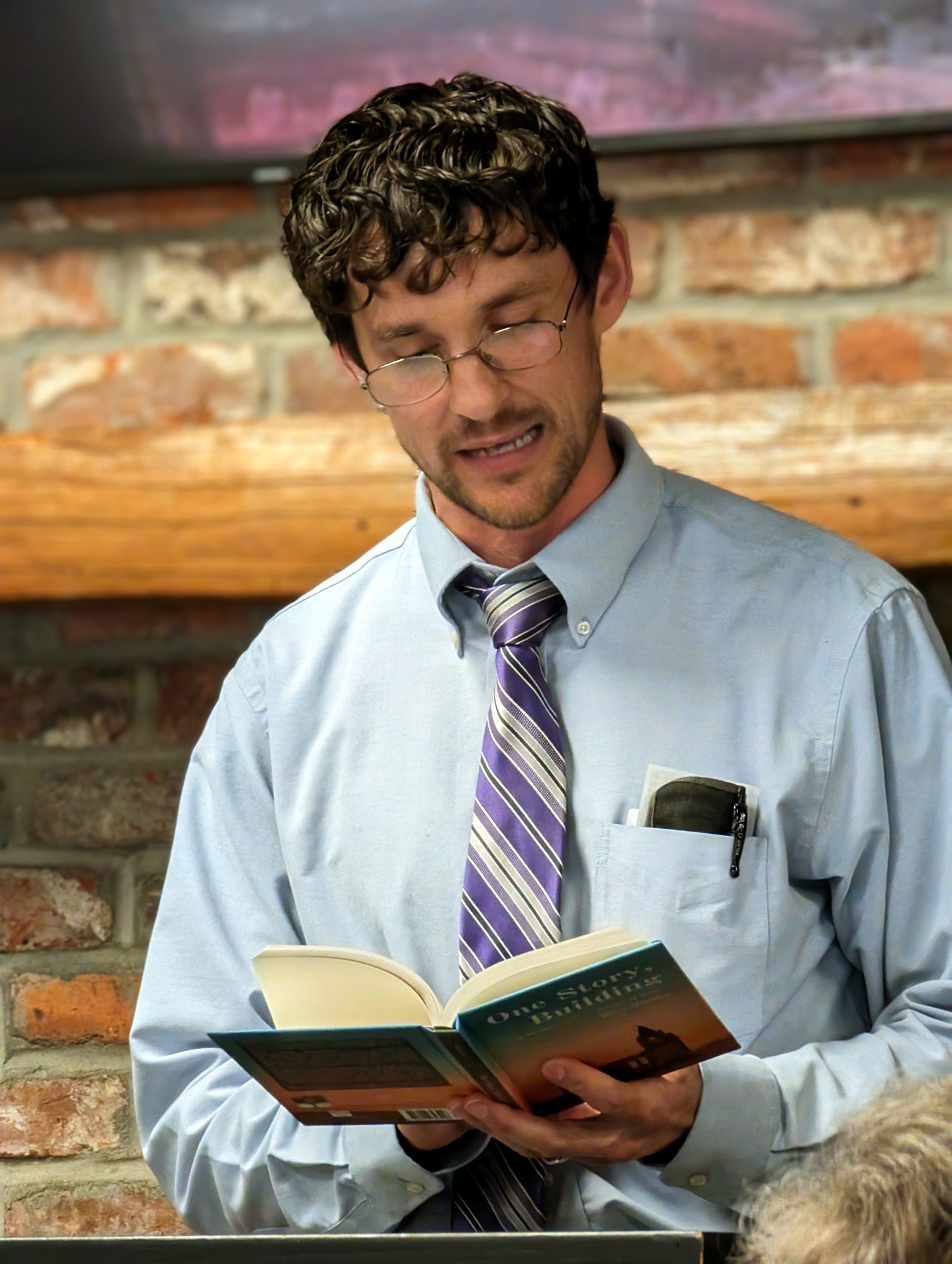
“It always freaks them out when I tell them that I spent a lot of the summer writing,” he said. “First thing in the morning, on most summer days, I go down to my office and write for a few hours, and that just blows their minds … the idea of somebody writing an essay for fun, that would be like telling them go and get a root canal for fun.”
Young is an author and English teacher at Bleckley County High School, which is the same school he went to. It was his dream to come back to his hometown and teach. His goal, however, isn’t just to get his students to ace standardized tests. Rather, he wants to give them the ability to clearly express themselves.
When he started teaching around 16 years ago at Bleckley County Middle School, there were two English teachers: one for writing and one for writing and grammar.
“If I had been given my choice, I would have chosen the reading because that’s what I cared about,” Young said. “But it didn’t work out that way. I got stuck in the writing, grammar side of class, and felt very intimidated by that. I didn’t consider myself a writer or even particularly talented at writing.”
Those first few years of trying to figure out how best to serve his students were pivotal for him. He decided to challenge himself to write in front of his students so they wouldn’t feel so alone in their insecurities about their writing. He crafted essays, poems and stories to show them how it was done.
“That was wildly effective,” he said. “It’s incredibly relieving to them to see, ‘Okay, here’s an adult scholar in this field, and he’s struggling with it right before my eyes.’”
As he became more comfortable with it, he started falling in love with writing. For his New Year’s resolution in 2016, he told his high school students he was going to write a novel — at least one page per day.
“In a sense, they were kind of in it with me, and every now and then asked me how the novel was going,” he said. “Every now and then I’d share a page or tell them what the main character was up to. And I really did stick with it that year.”
What resulted was his first book, “Reaching Sol,” which he describes as a “time travel novel” about a person from the future ending up in Middle Georgia.
The experience humbled Young to what he was asking his students to do for assignments.
“How vulnerable a person feels when they share their writing is something I’ve kind of overlooked with my students,” he said. “It’s not going to be Pulitzer Prize material — nobody expects it to be — but I didn’t really appreciate how when they turn that in and maybe it gets shared with the class or gets put up on the projector or gets read in front of their peers and in front of their teacher, how incredibly vulnerable they can feel in that moment.”
But what he also thinks is vital is teaching his students to love reading, which is something that he experienced when he was younger. Each week, his classes have “Weading Wednesday” — to make a silly alliteration rather than calling it Reading Wednesday — when he and his students bring whatever book they want. The only rules are that they have to use that time to read, and they must use a physical book, not an e-reader or Kindle.
“I pull out a particular chair that I have as my reading chair, I get my little cup of tea, I play the same Mozart album every single week,” Young said. “I’ll make sure they see me smile, make sure they see me laugh because reading is such a private, inside-your-head kind of experience, just like writing is … I tell them it is the best day of the week for me.”
In the beginning, he said, students are usually resistant because they’d rather be doing other things, but as the year goes on, he notices them getting disappointed by the school bell cutting off their reading session.
“That is the most rewarding teacher moment,” he said. “Seeing those kids enjoying something like a book that they never thought they’d enjoy.”
What winds up happening is that some of his students engage with his own writing despite the fact that he doesn’t push his work on them. They’ll leave Amazon reviews on his books or come up to him after class to ask about why he decided to move the story in a specific direction. His first book, for instance, has an ambiguous ending, and students will ask him what it meant.
“I’ve kind of run into that dilemma of authorial intent, you know, should I tell them what I thought it meant, or should the reader interpret it the way they see fit?” he said. “I try to really keep my mouth shut about that.”
And at the end of the day, those critical thinking skills are the kinds of things he wants his students to take away from his class.
Students always want to know how their high school classes will help them in the “real world,” he said. What he wants to tell those students is that the literal reading skills aren’t what they’ll take away — it’s learning how to interpret the world around themselves, especially “as the world gets noisier, and more and more dissonant.”
“I’m trying to figure out a way to say, ‘You’re using it every day.’ You might not use it to literally get your paycheck every day, but you’re using it to exist as a human on this earth every day.
To learn more about Young and his published works, visit wesyoungwriter.com. His books, “Reaching Sol” and “One Story, Building,” are available from the Barnes and Noble website or Amazon.
Young is in the process of writing his third book, a biography of a cross-country coach at Bleckley County High School who has worked there for over 35 years. This will be his first foray into long-form nonfiction.
Author

Related Articles
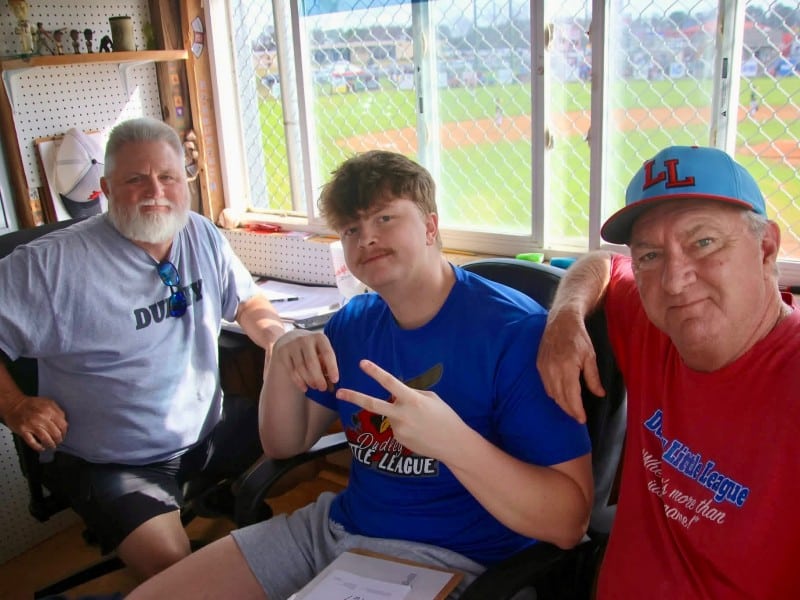
Dudley Little League family remembers longtime icon Bobby Locke as ‘life of the party’
The loss of a beloved member of the league’s founding family in April has left many across the town, and its larger baseball and softball community, with heavy hearts as the 2026 season has wound down.
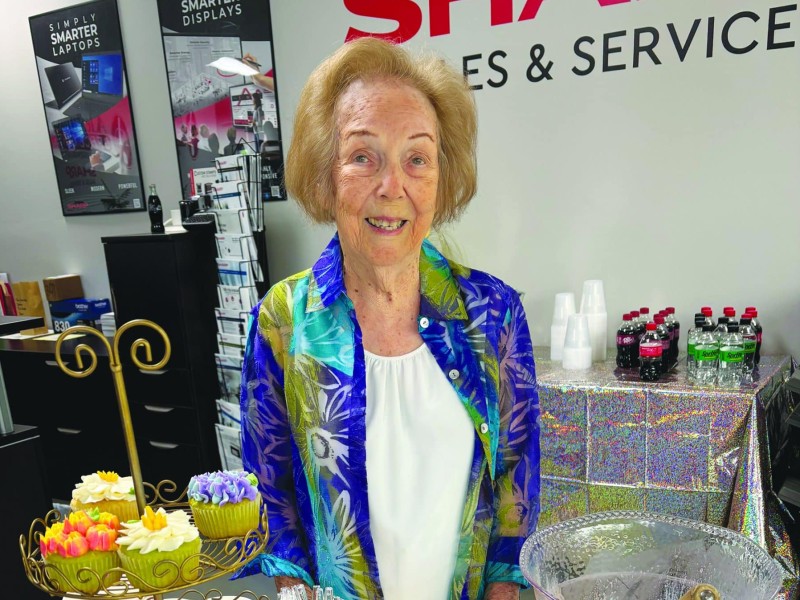
Local entrepreneur, community champion Geva Alexander turns 99
As the owner of Alexander’s, Geva became one of the first successful businesswomen in Dublin. And she never officially retired. She goes to the office most afternoons and greets customers.

Hospice care meets more than just medical needs. Here’s how.
While there have been doctors and nurses caring for people with terminal conditions since the beginning of the organized practice of medicine, modern hospice care can be traced back to the 1960s.