
Local officials open Quentin’s Place crisis center
Many people cheered as Laurens County officials cut the green ribbon for Quentin’s Place.
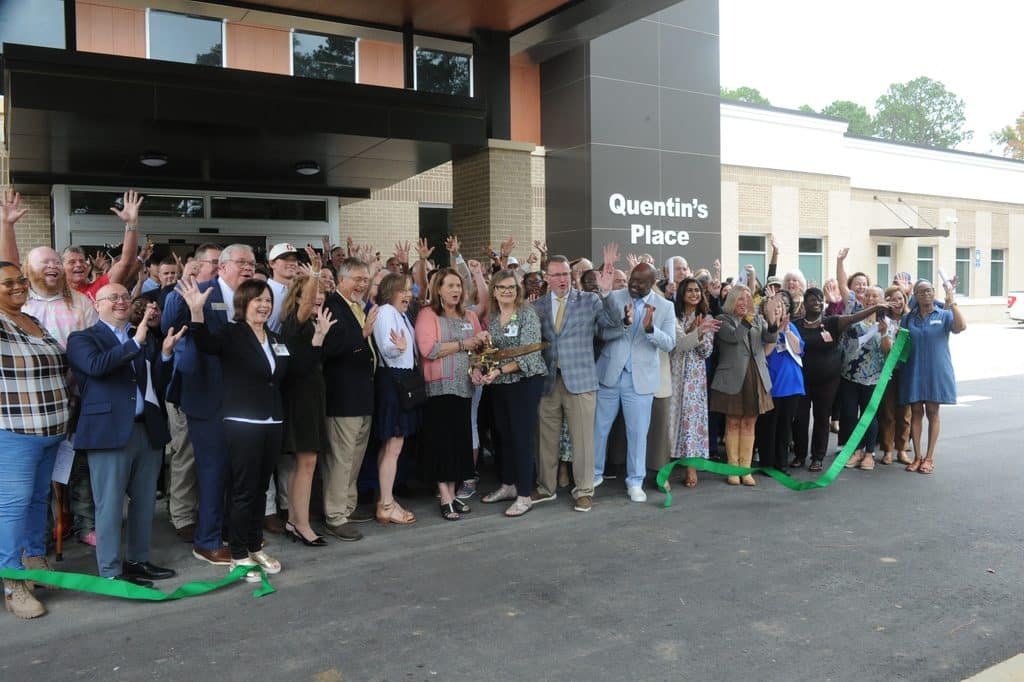
The crowd cheered Wednesday as the green ribbon was cut on Quentin’s Place, a new center where people in a health crisis can look for hope.
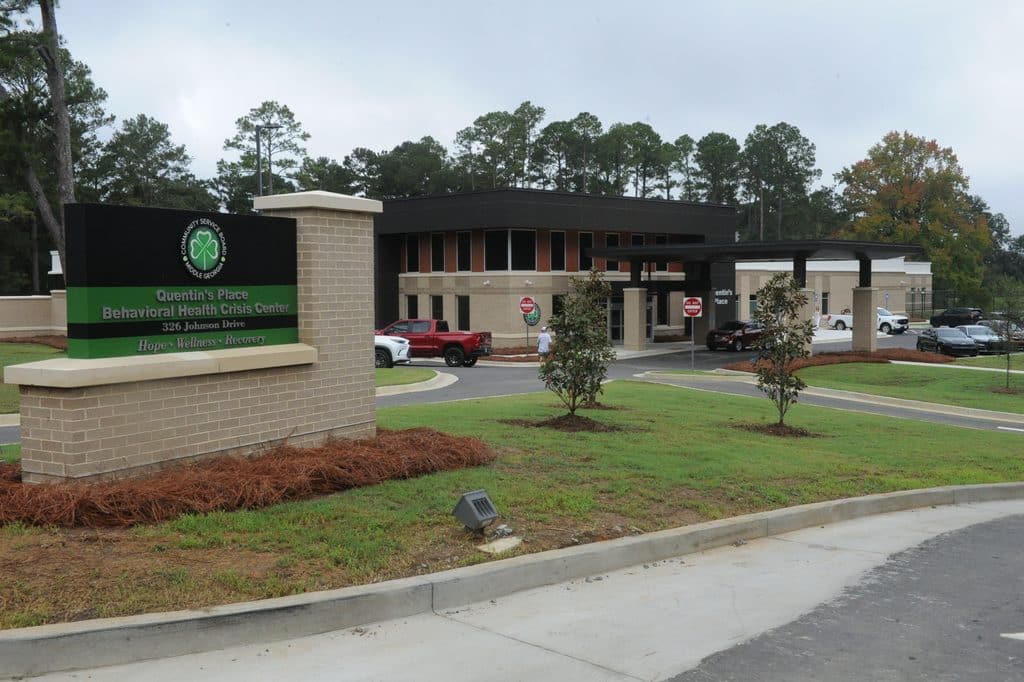
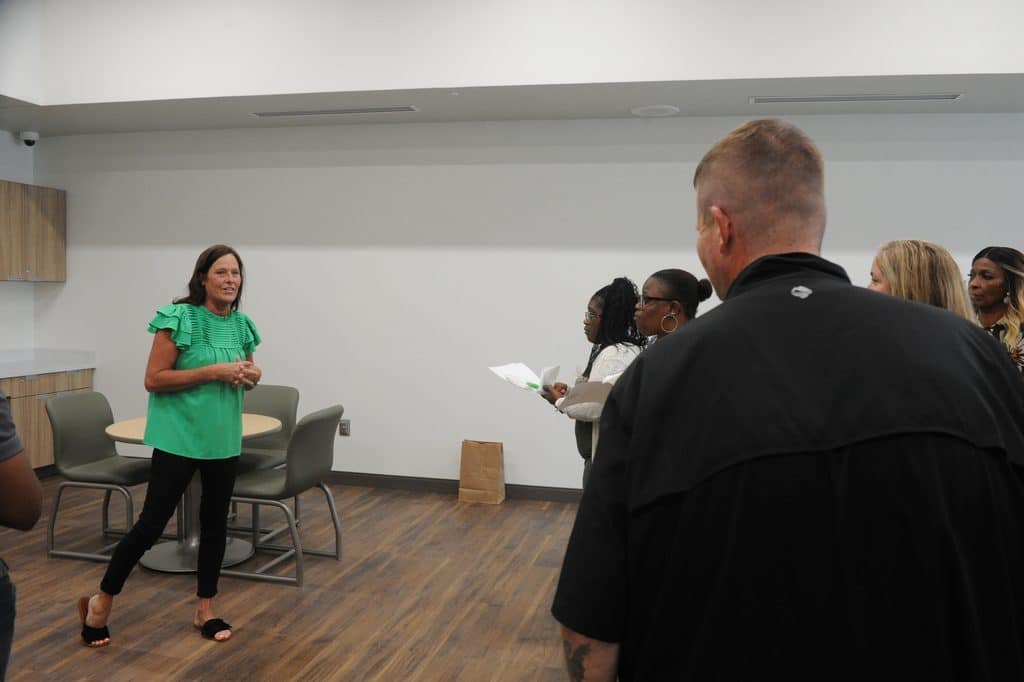
The behavioral health crisis center held a ribbon cutting ceremony at its new location at 326 Johnson Drive. The building, named after the late Dr. Quentin Price, was packed with community leaders, law enforcement officers, Community Service Board of Middle Georgia representatives and other members of the community.
“I remember gathering here May (2025) for a groundbreaking, and there was a plan, vision and commitment for stronger support services in this area,” said Commissioner Kevin Tanner with Georgia Department of Behavioral Health and Developmental Disabilities. “Today, that becomes a reality. This facility is going to give people hope. It is open 24 hours a day, and people will be able to receive care and services.”
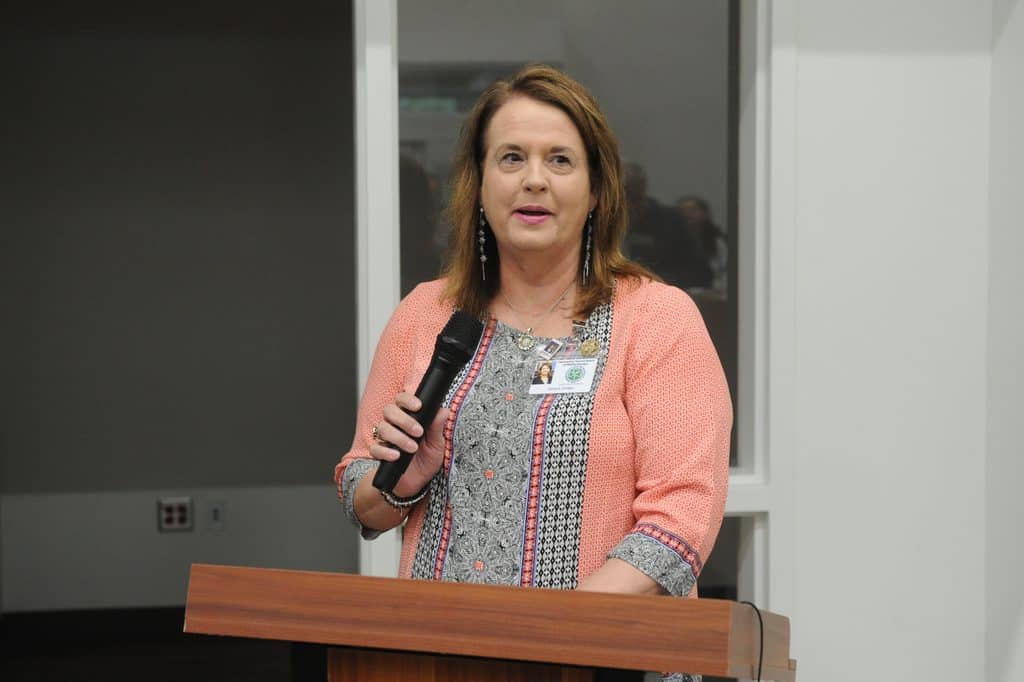
Denise Forbes, chief clinical officer at CSBMG, called Quentin’s Place a client service center with 24-hour access, which includes a 16-bed temporary observation unit and a crisis stabilization unit with 24 beds. She recalled how they gathered on April 12, 2005 to dedicate a different facility to Price, posthumously. He had been a family physician for more than 33 years, and after retirement, worked as a part-time physician with the CSBMG, until passing away at 76.
“For those who had the privilege of knowing and working with Dr. Price, it was easy to see the passion he brought to his work, especially with those dealing with substance use problems,” Forbes said. “He worked tirelessly to ensure that individuals served received the best possible care. He never grew tired of learning and continued to keep up with new techniques and practices in the field of addiction for as long as he worked.”
Twenty-one years later, Forbes noted how they were once again dedicating a new building for Price.
“Though our team held discussions about naming the facility, it was an easy decision that this building would be known as the Quentin Price, MD, Behavioral Health Crisis Center, still affectionally known as Quentin’s Place,” she said. “I’ve often thought of Dr. Price and his time spent with our agency. I know he would be extremely pleased to see the outgrowth of the seeds he sowed in helping those most in need. Through his efforts with public health and mental health initiatives, Dr. Price helped strengthen and expand crisis stabilization services and addiction treatment as important service options for citizens in our rural area.”
Price’s family attended the event. State Rep. Matt Hatchett, of District 155, called on Quentin’s son, Jim, to speak.
“This is a great honor,” Jim said. “This is really, really something.”
Dr. Price worked as a family practitioner from 1960 until he retired. He then went on to work part-time in the prison system and later in mental health.
“To get a place named after you for only working part-time is pretty good,” his son said. “I’d like to thank Matt, Kevin and so many people who worked so hard to get this done.”
Hatchett remembers seeing the budget three or four years ago and saw a new behavioral crisis center to be built in Dublin. It needed the support of Tanner and Kemp. It also needed the support of the leaders of the CSBMG. Hatchett also thanked former Georgia Speaker of the House David Ralston.
“Without him being passionate about helping mental health become recognized as just health, we would not be here,” Hatchett said. “We have put billions of dollars into mental health and without him, we would not be here.”
Tanner thanked Hatchett, saying the new facility would not be where it was without him. Tanner also gave kudos to Gov. Brian Kemp.
“Since 2019, Georgia has invested well over a billion dollars in increase funding in mental health,” Tanner said. “That would not have been possible without Gov. Kemp.”
Lisa Montford, chief executive officer, said Quentin’s Place is the result of a vision that people experiencing a behavioral health crisis deserve a safe, welcoming and dignified place to receive the help and care that is required. She thanked architectural firm Hussey Gay Bell, and Akins, the general contractor. Cindy Levi, former CEO of Avita Community Partners, was thanked for her technical assistance, experience, encouragement and willingness to answer many emails and phone calls.
Montford also thanked Renee Moore, Quentin’s Place program manager, and Nurse Manager Sheree Skipper for working behind the scenes.
“They have spent countless hours … working through the many details that most people will never see – but that are so important to creating a safe environment for individuals in crisis,” Montford said. “Thank you for caring enough to sweat the small stuff, because in a place like this, the small stuff can make a very big difference. Your dedication, your expertise and your commitment to the people we serve are reflected throughout this building.”
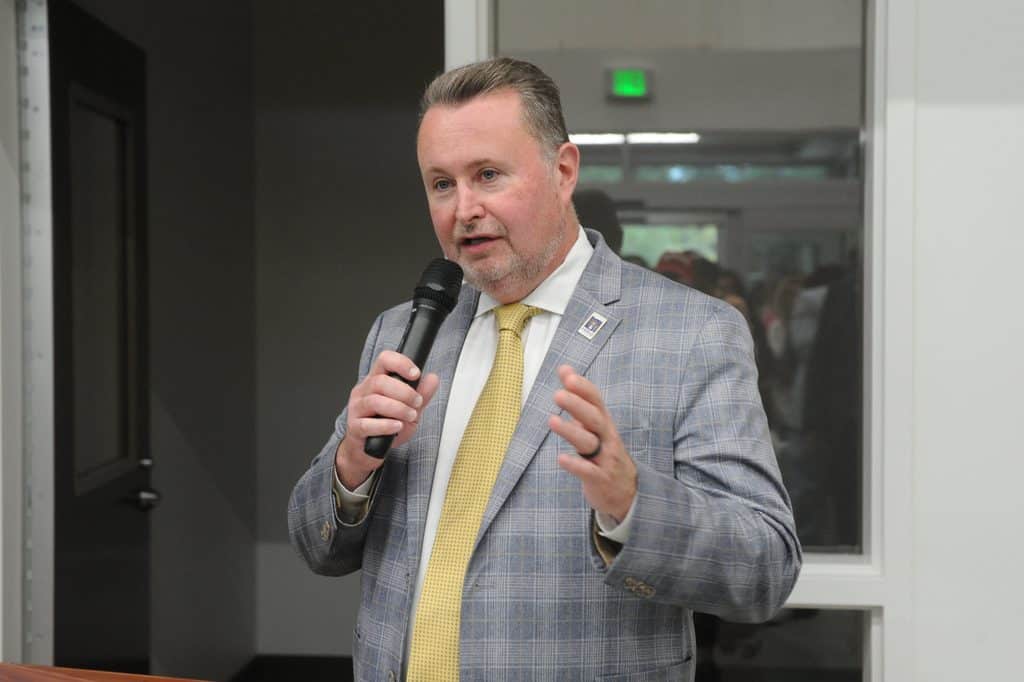
Montford also spotlighted the employees at Quentin’s Place.
“You are the heart of this organization,” she said. “You are the people who will sit with someone when they are hurting. You will listen when they feel no one else will. You will offer reassurance when they are afraid. And sometimes, you may simply be the person who helps someone believe that tomorrow can be better than today.”
Which is the real purpose of the building.
“Someone will walk through these doors on what may be the worst day of their life,” Montford said. “And because of Quentin’s Place, they will have somewhere to go. They will have someone to talk to. They will have an opportunity to stabilize, to heal, and to find a path forward. And perhaps most importantly, they will have hope.”
Author

Related Articles

Dot Foods Delivers Supplies to Local Food Pantries
The Dot Foods Vidalia Distribution Center donated $36,000 in food and supplies to six local food pantries, delivered on the mornings of September 15 and September 17.

Audit report: Dublin schools cut $3 million off deficit
School district spent about $5 million less than revenues received in fiscal year 2026.
Local DA’s expungement workshop gives people ‘hope’
Dublin’s DA was pleased to see people show up for a chance to clear their criminal record.