
Twiggs school district says homestead exemption opt-out necessary for financial stability
Across Middle Georgia, governmental bodies have stated their intent to opt out, including Bibb, Houston and Dublin schools.
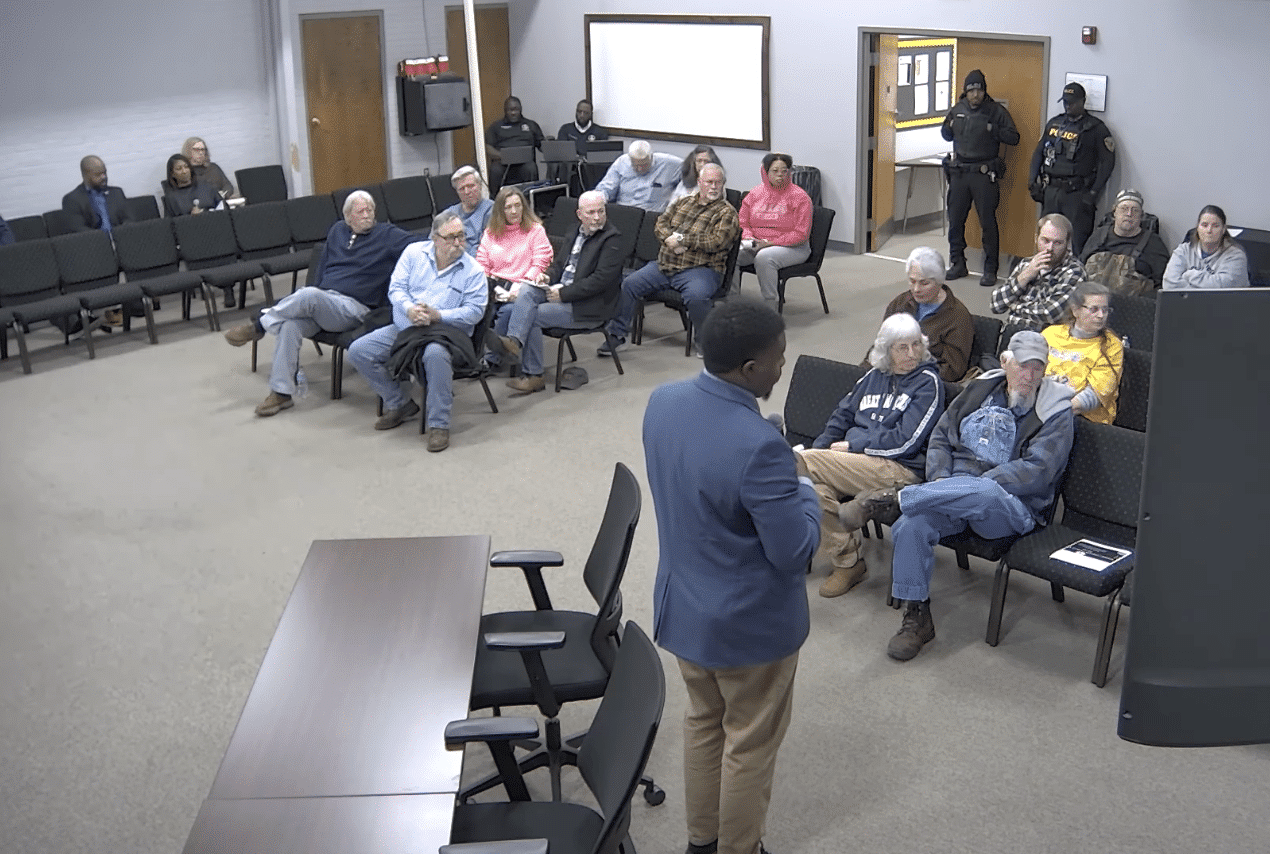
The Twiggs County School District held the first of three mandatory meetings in order to opt out of the recently-passed floating homestead exemption law.
The law, which passed in November with over 60% of the vote across the state, establishes a “floating homestead exemption.” This limits the yearly increase in homestead property tax assessments to the rate of inflation of the previous year.
Local governing bodies, however, are given a one-time chance to opt out of the exemption, meaning the new legislation may not apply to many people across the state. In this case, nothing would change for residents of these areas.
Across the Middle Georgia area, governmental bodies have stated their intent to opt out. Some of these entities include the Bibb, Dublin and Houston school districts, as well as the Cochran city council.
Twiggs Board of Education argues to opt out
Of all these debates on whether or not to opt out, the Twiggs County Board of Education has a particularly heated battle on its hands. The board announced its intent to opt out Jan. 2.
That announcement included no explanation of why the board intended to opt out, but a recent release from the school goes into more detail.
“While the exemption offers tax relief to homeowners, it also results in reduced tax revenue from residential properties,” an advertisement published by the school district in the Times Journal Post earlier this month said. “Local governments, including school systems, must explore options to offset this loss, such as increasing millage rates.”
The school wrote in this ad that their intentions align with 62.8% of school districts across Georgia that have decided to opt out due to financial concerns.
The district must hold three public hearings before they are allowed to pass a resolution to opt out. After that, there are not currently any opportunities to opt back in. If an opportunity arose, it would require a county-wide referendum, the school board said.
The first meeting was scheduled to take place Jan. 10, but it was rescheduled to Jan. 24 due to weather. The next meetings will be Jan. 31 at 9 a.m. and Feb. 7 at 6 p.m. The board must make a decision before March 1.
“We don’t have the luxury of time,” Assistant Superintendent James Austin said at the first hearing on Jan. 24. “The state has provided strict limitations. We could not advertise anything until after January 1.”
Resident dissent
Shortly after the Twiggs Board of Education announced their intent, citizens of the county began discussing frustrations on social media and rallying others to attend the hearings to voice their concerns. In Twiggs County, over 70% of voters were in favor of the statewide ballot measure.
At the first hearing, several citizens took to the podium to inform the board of their stance on opting out of the floating homestead exemption.
“How do y’all as four elected officials go back and pull that power away from the people, whether it’s a good bill or a bad bill. That’s not the point here,” resident Hugh Faulk said. “The point is, what makes our country great and a free country is that, when we vote, our decisions should be upheld.”
Attendees also expressed frustration with their tax dollars not being spent appropriately to improve the county. One speaker said the school needs to improve their academic performance with the money they already have.
“We have no young people and young families moving in here, and that’s why the (county’s population) is getting less and less and less. We’re dying out,” the resident said. “We’re not bringing new people into the county, and they’re not going to come here until the school ratings for this public school system go up … The money is not the problem. We’ve got money. The school system has money. It’s not the problem.”
Other public officials’ opinions
Twiggs Tax Commissioner Buddy Nesmith attended the hearing and shared his take on the law before the public portion of the meeting. He said he was in favor of opting out at first, but after reviewing the bill, he changed his mind.
“I don’t like a floating homestead exemption. I love homestead exemptions for homeowners. Don’t get me wrong. I’m a proponent of that,” Nesmith said. “Floating homestead (exemptions) I don’t like because … it does change year-to-year. But that’s not a bad thing.”
He realized after evaluating the exemption that he couldn’t argue to opt out of the exemption when it was clearly what the people of the county wanted.
“The people in Twiggs County voted for this exemption,” he said. “Now, there’s a lot of things in the exemption that James read out, but that’s not what they saw. What they saw was that this is a homestead exemption, they wanted it, they voted for it.”
Twiggs Commission Chairman Ken Fowler also spoke briefly at the meeting in favor of the exemption.
Twiggs’ status as ‘high wealth’
There are state and federal grants that exist to support smaller, less wealthy counties, but because of the way they were set up when established, Twiggs does not benefit from them.
For example, equalization grants exist in order to help counties with a smaller tax base provide a quality public education. But due to the state formula, Twiggs County is considered a “high wealth” county. Conversely, Houston County is considered “low wealth.” Superintendent Mack Bullard explained that, because of Twiggs County’s wealth status as determined by the formula, the county is required to pay a portion of property tax revenue to the state in order to support low wealth districts.
“They don’t care that we only bring in 32% (in property tax revenue). They charge us the full 40%. So we don’t really pay five, we pay six mills,” Bullard said. The money Twiggs pays out, he said, is around $1.5 million.
He encouraged attendees to write to the state legislature to change the systems.
The full recording of the meeting is available on the Twiggs County Public Schools Facebook page. The next hearing will be Jan. 31 at 9 a.m. in the Board of Education Board Room located at 952 Main St.
Author

Related Articles
Laurens County group leads effort to keep people out of prison
The Compassionate Advocate, Inc. held its second Restoring the Broken Workshop hoping to to keep young people from going to prison.

Daughters, Sons of the American Revolution celebrate Constitution Day with bells ringing, cannons blasting
Group spice up annual Bells Across America program to celebrate country’s 250th year.
Run Clubs are gaining momentum in tri-county area
Middle Georgia is seeing a growing number of run clubs, and the tri-county area recently welcomed two.