
Budget group works to educate public on growing national debt
One national organization is working to educate the public on this growing problem and encourage people to learn more about the federal budget process.
It has been nearly 25 years since the federal government last adopted a balanced budget. After more than two decades of shrinking revenues and rising expenses, affected by geopolitical events at home and abroad, the national debt has crept up to the unfathomable amount of $39.5 trillion.
That’s about $116,000 for every single person in the United States, and seemingly there is no plan to rein in spending anything soon. However, inaction could spell economic disaster in the years to come.
One national organization is working to educate the public on this growing problem and encourage people to learn more about the federal budget process.
“It is pretty clear that Congress isn’t going to fix it,” said Phil Smith, the national field director for Concord Coalition. “So we’re going to their bosses – the people in places like Dublin, Georgia.”
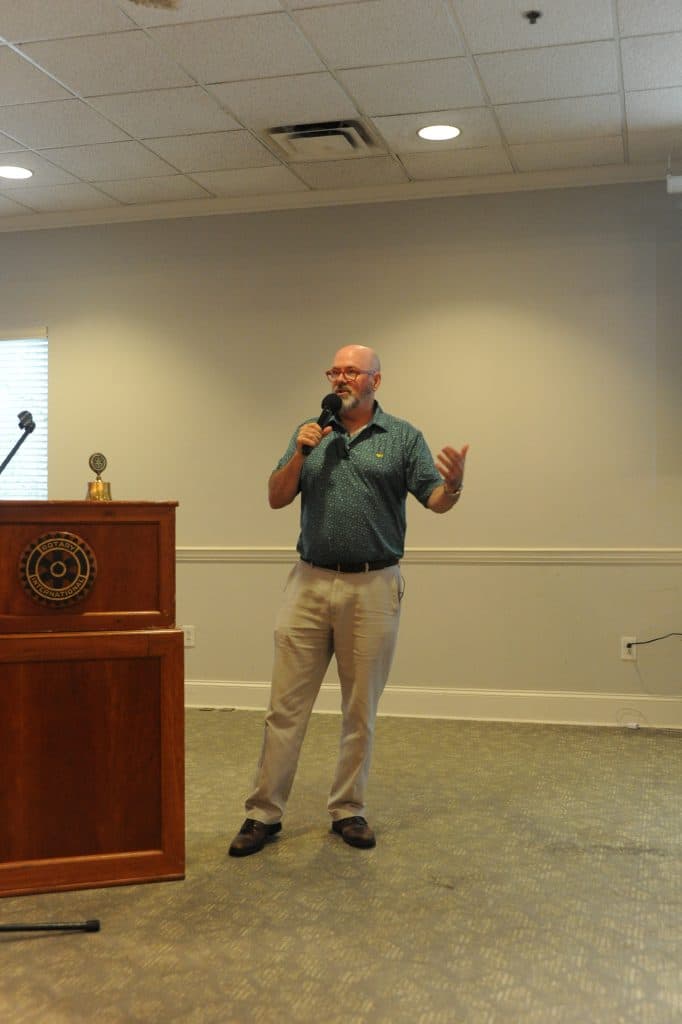
Concord Coalition, along with its sister organization Concord Action, is a nonprofit, non-partisan group using a grassroots effort to spread awareness and encourage action on the federal budget and the potential problems that lie ahead if current deficits aren’t closed. The group is governed by a board consisting of several former economic officials and lawmakers, including former U.S. Sen. Sam Nunn and former Federal Reserve Bank of Atlanta CEO Dennis Lockhart.
Smith made a local stop in his work for the coalition with a recent presentation to the Dublin Rotary Club.
Concord Coalition is working to expand its reach in Georgia. The group is recruiting for a state advisory board, which already includes Lockhart and Watkinsville Mayor Brian Brodrick, and seeking volunteers to present data and coordinate events. The group organizes seminars, conferences and classes where participants role play as members of congress charged with crafting a balanced spending plan.
“I would love to help bring that back to Dublin,” Smith said.
During his presentation to the Rotary Club, Smith outlined data on government spending and the troubling projections ahead if nothing changes.
For fiscal year 2025, the U.S. government outspent revenues by more than $2 trillion. The cost of carrying the nation’s debt, at $970 billion, outweighed almost all other spending, including national defense.
The United States has a long history of debt and deficits. Until modern times, public debt only exceeded gross domestic production during World War II. That changed after the Great Recession, and has only increased since. The last budget surplus was recorded in 2001.
If spending continues with no new initiatives to raise revenue or cut costs, the federal government will spend $94.6 trillion over the next decade, while only bringing in $70.2 trillion. In the meantime, the
national debt will increase by $24.4 trillion.
Current projections have the Social Security trust fund drying up by 2032, while the fund supporting Medicare Hospital Insurance will be depleted in 2033. That would result in 28 percent and 11 percent cuts in benefits respectively. Meanwhile, an aging population will put more strain on such benefit programs.
Without a controlled effort to cut the debt, the country could face a fiscal crisis, such as hyperinflation or crippling economic stagnation. Smith likened the situation to a hospital patient bleeding out on an operating table – the bleeding could be curtailed or the patient could die.
Currently little to no legislation exists to address national spending.
“The answer is not going to come from Washington,” Smith said. “It’s going to come from places like Dublin.”
Author

Related Articles
Dublin school budget aims for better use of sales tax funds after costly coding errors
Struggling school district spent $500,000 from general fund on items that could have been bought with sales tax revenue.

Dublin United Way prepares for new leader, embraces new cancer initiative
The United Way has made changes with a new director and initiative with an Atlanta college to help people with prostate cancer.

South Dakota driver runs stop sign, overturns vehicle in Laurens County
Three people were transported to the local hospital after a man from South Dakota ran a stop sign Thursday evening.